

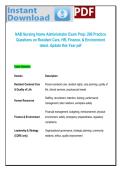
NAB Nursing Home Administrator Exam Prep: 200 Practice
Questions on Resident Care, HR, Finance, & Environment
latest. Update this Year pdf
Exam Domains
Domain Description
Resident Centered Care Person-centered care, resident rights, care planning, quality of
& Quality of Life life, clinical services, psychosocial needs
Staffing, recruitment, retention, training, performance
Human Resources
management, labor relations, workplace safety
Financial management, budgeting, reimbursement, physical
Finance & Environment environment, safety, emergency preparedness, regulatory
compliance
Leadership & Strategy Organizational governance, strategic planning, community
(CORE only) relations, ethics, quality improvement
, SECTION 1: RESIDENT CENTERED CARE & QUALITY OF LIFE (Questions 1-50)
1. The Omnibus Budget Reconciliation Act (OBRA) of 1987 established which of the
following fundamental principles for nursing home care?
A) Residents must be discharged after 30 days
B) Residents have the right to be free from unnecessary restraints
C) Residents must participate in mandatory activities
D) Residents cannot refuse treatment
Answer: B. OBRA 1987 established that residents have the right to be free from
unnecessary physical and chemical restraints.
2. A resident who refuses to participate in a scheduled activity should be:
A) Encouraged to participate for their own good
B) Allowed to refuse and their choice documented
C) Required to participate by facility policy
D) Reported to the ombudsman
Answer: B. Residents have the right to refuse participation in activities, and their choice
should be respected and documented.
3. According to federal regulations, a comprehensive care plan must be developed
within how many days of admission?
A) 7 days
B) 14 days
C) 21 days
D) 30 days
, Answer: C. A comprehensive care plan must be developed within 21 days of admission.
4. The Minimum Data Set (MDS) must be completed within how many days of
admission?
A) 7 days
B) 14 days
C) 21 days
D) 30 days
Answer: A. The MDS must be completed within 7 days of admission.
5. Which of the following is a resident right under federal law?
A) The right to refuse treatment
B) The right to choose their own physician
C) The right to be free from discrimination
D) All of the above
Answer: D. Residents have all of these rights under federal regulations.
6. A resident who is physically restrained must have a physician's order that is
reviewed and renewed at least every:
A) 24 hours
B) 48 hours
C) 7 days
D) 30 days
Answer: A. Restraint orders must be reviewed every 24 hours.
, 7. Chemical restraints include:
A) Physical devices that limit movement
B) Medications used to control behavior
C) Bed rails
D) Wheelchair seat belts
Answer: B. Chemical restraints are medications used for the purpose of controlling
behavior or restricting freedom of movement.
8. A resident's care plan must be reviewed and revised at least:
A) Weekly
B) Monthly
C) Quarterly
D) Annually
Answer: C. Care plans must be reviewed and revised at least quarterly.
9. The primary purpose of a Resident Assessment Instrument (RAI) is to:
A) Determine resident satisfaction
B) Assess resident needs and develop a care plan
C) Evaluate staff performance
D) Determine reimbursement rates
Answer: B. The RAI is used to assess resident needs and develop individualized care
plans.
Questions on Resident Care, HR, Finance, & Environment
latest. Update this Year pdf
Exam Domains
Domain Description
Resident Centered Care Person-centered care, resident rights, care planning, quality of
& Quality of Life life, clinical services, psychosocial needs
Staffing, recruitment, retention, training, performance
Human Resources
management, labor relations, workplace safety
Financial management, budgeting, reimbursement, physical
Finance & Environment environment, safety, emergency preparedness, regulatory
compliance
Leadership & Strategy Organizational governance, strategic planning, community
(CORE only) relations, ethics, quality improvement
, SECTION 1: RESIDENT CENTERED CARE & QUALITY OF LIFE (Questions 1-50)
1. The Omnibus Budget Reconciliation Act (OBRA) of 1987 established which of the
following fundamental principles for nursing home care?
A) Residents must be discharged after 30 days
B) Residents have the right to be free from unnecessary restraints
C) Residents must participate in mandatory activities
D) Residents cannot refuse treatment
Answer: B. OBRA 1987 established that residents have the right to be free from
unnecessary physical and chemical restraints.
2. A resident who refuses to participate in a scheduled activity should be:
A) Encouraged to participate for their own good
B) Allowed to refuse and their choice documented
C) Required to participate by facility policy
D) Reported to the ombudsman
Answer: B. Residents have the right to refuse participation in activities, and their choice
should be respected and documented.
3. According to federal regulations, a comprehensive care plan must be developed
within how many days of admission?
A) 7 days
B) 14 days
C) 21 days
D) 30 days
, Answer: C. A comprehensive care plan must be developed within 21 days of admission.
4. The Minimum Data Set (MDS) must be completed within how many days of
admission?
A) 7 days
B) 14 days
C) 21 days
D) 30 days
Answer: A. The MDS must be completed within 7 days of admission.
5. Which of the following is a resident right under federal law?
A) The right to refuse treatment
B) The right to choose their own physician
C) The right to be free from discrimination
D) All of the above
Answer: D. Residents have all of these rights under federal regulations.
6. A resident who is physically restrained must have a physician's order that is
reviewed and renewed at least every:
A) 24 hours
B) 48 hours
C) 7 days
D) 30 days
Answer: A. Restraint orders must be reviewed every 24 hours.
, 7. Chemical restraints include:
A) Physical devices that limit movement
B) Medications used to control behavior
C) Bed rails
D) Wheelchair seat belts
Answer: B. Chemical restraints are medications used for the purpose of controlling
behavior or restricting freedom of movement.
8. A resident's care plan must be reviewed and revised at least:
A) Weekly
B) Monthly
C) Quarterly
D) Annually
Answer: C. Care plans must be reviewed and revised at least quarterly.
9. The primary purpose of a Resident Assessment Instrument (RAI) is to:
A) Determine resident satisfaction
B) Assess resident needs and develop a care plan
C) Evaluate staff performance
D) Determine reimbursement rates
Answer: B. The RAI is used to assess resident needs and develop individualized care
plans.


