
BIO 002
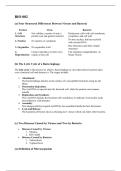
(a) Four Structural Differences Between Viruses and Bacteria
Feature Virus Bacteria
1. Cell Not cellular; consists of only a Prokaryotic cells with cell membrane,
Structure protein coat and genetic material cytoplasm, and cell wall
No true nucleus, but has nucleoid
2. Nucleus No nucleus or cytoplasm
with circular DNA
Has ribosomes and other simple
3. Organelles No organelles at all
structures
4. Cannot reproduce on their own; Can reproduce independently via
Reproduction require a host cell binary fission
(b) The Lytic Cycle of a Bacteriophage
The lytic cycle is the process by which a bacteriophage (a virus that infects bacteria) takes
over a bacterial cell and destroys it. The stages include:
1. Attachment:
The bacteriophage attaches to the surface of a susceptible bacterium using its tail
fibers.
2. Penetration (Injection):
The viral DNA is injected into the bacterial cell, while the protein coat remains
outside.
3. Replication and Synthesis:
The viral DNA hijacks the bacterial cell's machinery to replicate viral nucleic acids
and synthesize viral proteins.
4. Assembly:
New phage particles (capsids and DNA) are assembled inside the host bacterium.
5. Lysis and Release:
The bacterial cell bursts (lyses), releasing new viruses which can infect other bacteria.
(c) Two Diseases Caused by Viruses and Two by Bacteria
• Diseases Caused by Viruses:
1. Measles
2. HIV/AIDS
• Diseases Caused by Bacteria:
1. Tuberculosis
2. Typhoid fever
(a) Definition of Microorganism
, A microorganism is a microscopic organism—that is, an organism too small to be seen
with the naked eye, and which can only be observed with the aid of a microscope.
Microorganisms include bacteria, viruses, fungi, protozoa, and algae.
(b) Five Beneficial Activities of Microorganisms in Industry and Agriculture
In Industry:
1. Fermentation – Microorganisms such as Saccharomyces cerevisiae (yeast) are used
in the fermentation of sugar to produce alcohol.
2. Antibiotic Production – Penicillium species are used to produce penicillin, an
important antibiotic.
3. Bread Making – Yeast causes dough to rise by producing carbon dioxide through
fermentation.
4. Yogurt and Cheese Production – Lactic acid bacteria are used to convert milk into
yogurt and cheese.
5. Vinegar Production – Acetobacter species convert alcohol into acetic acid (vinegar).
In Agriculture:
1. Nitrogen Fixation – Rhizobium bacteria in root nodules of legumes fix atmospheric
nitrogen into usable forms for plants.
2. Composting – Microorganisms break down organic waste into humus, enriching the
soil.
3. Biological Pest Control – Bacillus thuringiensis is used to kill insect pests without
harming crops.
4. Biofertilizers – Cyanobacteria like Anabaena and Nostoc add nutrients to the soil.
5. Biodegradation – Microbes decompose farm waste into less harmful substances.
(c) Aseptic Techniques Used in Microbiology Labs
Aseptic techniques are procedures used to prevent contamination of microbial cultures and
lab equipment. They include:
1. Sterilization of Equipment – Using an autoclave or dry heat to kill all forms of
microbial life.
2. Flaming – Passing tools like inoculating loops through a flame before and after use.
3. Disinfection of Work Surfaces – Using alcohol or bleach to wipe benches before and
after experiments.
4. Use of Gloves and Lab Coats – To avoid contamination and protect the user.
5. Working Near a Flame or in a Laminar Flow Hood – To create an updraft that
reduces airborne contamination.
1.
(a) Four Structural Differences Between Viruses and Bacteria
Feature Virus Bacteria
1. Cell Not cellular; consists of only a Prokaryotic cells with cell membrane,
Structure protein coat and genetic material cytoplasm, and cell wall
No true nucleus, but has nucleoid
2. Nucleus No nucleus or cytoplasm
with circular DNA
Has ribosomes and other simple
3. Organelles No organelles at all
structures
4. Cannot reproduce on their own; Can reproduce independently via
Reproduction require a host cell binary fission
(b) The Lytic Cycle of a Bacteriophage
The lytic cycle is the process by which a bacteriophage (a virus that infects bacteria) takes
over a bacterial cell and destroys it. The stages include:
1. Attachment:
The bacteriophage attaches to the surface of a susceptible bacterium using its tail
fibers.
2. Penetration (Injection):
The viral DNA is injected into the bacterial cell, while the protein coat remains
outside.
3. Replication and Synthesis:
The viral DNA hijacks the bacterial cell's machinery to replicate viral nucleic acids
and synthesize viral proteins.
4. Assembly:
New phage particles (capsids and DNA) are assembled inside the host bacterium.
5. Lysis and Release:
The bacterial cell bursts (lyses), releasing new viruses which can infect other bacteria.
(c) Two Diseases Caused by Viruses and Two by Bacteria
• Diseases Caused by Viruses:
1. Measles
2. HIV/AIDS
• Diseases Caused by Bacteria:
1. Tuberculosis
2. Typhoid fever
(a) Definition of Microorganism
, A microorganism is a microscopic organism—that is, an organism too small to be seen
with the naked eye, and which can only be observed with the aid of a microscope.
Microorganisms include bacteria, viruses, fungi, protozoa, and algae.
(b) Five Beneficial Activities of Microorganisms in Industry and Agriculture
In Industry:
1. Fermentation – Microorganisms such as Saccharomyces cerevisiae (yeast) are used
in the fermentation of sugar to produce alcohol.
2. Antibiotic Production – Penicillium species are used to produce penicillin, an
important antibiotic.
3. Bread Making – Yeast causes dough to rise by producing carbon dioxide through
fermentation.
4. Yogurt and Cheese Production – Lactic acid bacteria are used to convert milk into
yogurt and cheese.
5. Vinegar Production – Acetobacter species convert alcohol into acetic acid (vinegar).
In Agriculture:
1. Nitrogen Fixation – Rhizobium bacteria in root nodules of legumes fix atmospheric
nitrogen into usable forms for plants.
2. Composting – Microorganisms break down organic waste into humus, enriching the
soil.
3. Biological Pest Control – Bacillus thuringiensis is used to kill insect pests without
harming crops.
4. Biofertilizers – Cyanobacteria like Anabaena and Nostoc add nutrients to the soil.
5. Biodegradation – Microbes decompose farm waste into less harmful substances.
(c) Aseptic Techniques Used in Microbiology Labs
Aseptic techniques are procedures used to prevent contamination of microbial cultures and
lab equipment. They include:
1. Sterilization of Equipment – Using an autoclave or dry heat to kill all forms of
microbial life.
2. Flaming – Passing tools like inoculating loops through a flame before and after use.
3. Disinfection of Work Surfaces – Using alcohol or bleach to wipe benches before and
after experiments.
4. Use of Gloves and Lab Coats – To avoid contamination and protect the user.
5. Working Near a Flame or in a Laminar Flow Hood – To create an updraft that
reduces airborne contamination.
1.


