Aggression:
Aggression:
● Aggression; emotional response of antipathy or anger resulting in hostile/
dominating behaviour
● Reactive aggression; ‘hot-blooded’, angry and impulsive
● Proactive aggression; ‘cold-blooded’, planned method
Neural and Hormonal Mechanisms in Aggression:
Neural Mechanisms:
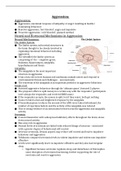
The Limbic System:
● The limbic system; subcortical structures in
the brain thought to be closely involved in
regulating emotional behaviour including
aggression
● The identified the limbic system as
comprising of the – cingulate gyrus,
thalamus, hippocampus, amygdala,
hypothalamus and fornix
Amygdala:
● The amygdala is the most important
structure in aggression
● It has a key role in how humans and nonhuman animals assess and respond to
environmental threats and challenges - unconsciously
● The reactivity of the amygdala is an important predictor in aggressive behaviour
Gospic et al:
● Assessed aggressive behaviour through the ‘ultimate game’, featured 2 players
● The proposer offers to split money in a certain way with the responder (participants
were always the responder, and received fMRI scans)
● If the responder accepts, the money is split, but if they reject, both get nothing
● Scans revealed a fast and heightened response by the amygdala
● If benzodiazepines (reduces the arousal of the ANS) were taken beforehand, the
number of rejections halved, and the activity of the amygdala was reduced
● This is strong evidence of an association between reactive aggression and amygdala
activity
Serotonin:
● A neurotransmitter with widespread inhibitory effects throughout the brain; slows
down neural activity
● Has a key role in aggression
● Normal levels of serotonin are linked with reduced firings of neurons – associated
with a greater degree of behavioural self-control
● Decrease serotonin, Denson argued, may reduce self-control and lead to impulsive
behaviour and aggression
● Virkkunen compared serotonin levels in violent impulsive and violent non-impulsive
offenders
● Levels were significantly lower in impulsive offenders and they also had irregular
sleep
o Significant because serotonin regulates sleep and disturbance of this implies
some disruption of serotonin functioning, further supporting the role of
serotonin and reactive aggression
, Hormonal Mechanisms; Testosterone:
Testosterone:
● A hormone from the androgen group that is produced mainly in the testes (and
female pituitary gland) and is associated with aggression
Giammanco et al:
● Demonstrated experimental increases in testosterone are related to greater
aggressive behaviour
● The opposite effect has been found for castration studies further supporting the role
of testosterone
Dolan et al:
● Found a positive correlation between testosterone levels and aggressive behaviour
in a sample of male offenders in UK max. security hospitals
● These men mostly suffered from personality disorders and had histories of
impulsively violent behaviour – supports the role of testosterone in aggression
● However, the lack of a control group means we can’t be certain that high
testosterone leads to aggression
o Could be the result of personality disorders
Evaluation:
+ Effects of drugs on serotonin; Berman et al gave their patients either a placebo or
paroxine (enhances serotonin levels). In a controlled lab experiment that involved
giving electric shocks of varying levels of harm, those given paroxine consistently
gave fewer and less severe electric shocks. However, this was only true in patients
with a history of aggressive behaviour but does give evidence of a link between
aggression and serotonin function
+ Issues of cause and effect; Most research into the neural and hormonal mechanisms
in aggression is a correlation. While this is good ethically because opportunities to
manipulate the brain or hormones are limited, a correlation between 2 variables
doesn’t explain which causes the other, or if a third factor is a cause instead.
● Role of other brain structures; Recent studies suggest that the amygdala doesn’t
operate in isolation, it appears to function with the orbitofrontal cortex, which isn’t
part of the limbic system. Coccaro et al found that psychiatric patients with
aggression had reduced activity in the OFC, disrupting its impulse-control function
which leads to increased aggression
● Other hormones; Carre and Mehta claim that high testosterone levels lead to
aggression only when cortisol levels are low. Cortisol is a hormone that plays a
central role in the stress response. When cortisol levels are high, testosterone’s
influence on aggression is blocked. The combination of testosterone and cortisol
may be a better predictor of human aggression than testosterone alone.
Genetic Factors in Aggression:
Twin Studies:
● Several twin studies have suggested that heritability accounts for 50% of the
variance in aggressive behaviour
● Coccaro et al found concordance rates for physical assault was 50% for MZ and 19%
for DZ. Concordance rates for verbal aggression were 28% for MZ and 7% for DZ.
Adoption Studies:
● Rhee and Waldman carried out a meta-analysis of adoption studies of direct
aggression and anti-social behaviour
Aggression:
● Aggression; emotional response of antipathy or anger resulting in hostile/
dominating behaviour
● Reactive aggression; ‘hot-blooded’, angry and impulsive
● Proactive aggression; ‘cold-blooded’, planned method
Neural and Hormonal Mechanisms in Aggression:
Neural Mechanisms:
The Limbic System:
● The limbic system; subcortical structures in
the brain thought to be closely involved in
regulating emotional behaviour including
aggression
● The identified the limbic system as
comprising of the – cingulate gyrus,
thalamus, hippocampus, amygdala,
hypothalamus and fornix
Amygdala:
● The amygdala is the most important
structure in aggression
● It has a key role in how humans and nonhuman animals assess and respond to
environmental threats and challenges - unconsciously
● The reactivity of the amygdala is an important predictor in aggressive behaviour
Gospic et al:
● Assessed aggressive behaviour through the ‘ultimate game’, featured 2 players
● The proposer offers to split money in a certain way with the responder (participants
were always the responder, and received fMRI scans)
● If the responder accepts, the money is split, but if they reject, both get nothing
● Scans revealed a fast and heightened response by the amygdala
● If benzodiazepines (reduces the arousal of the ANS) were taken beforehand, the
number of rejections halved, and the activity of the amygdala was reduced
● This is strong evidence of an association between reactive aggression and amygdala
activity
Serotonin:
● A neurotransmitter with widespread inhibitory effects throughout the brain; slows
down neural activity
● Has a key role in aggression
● Normal levels of serotonin are linked with reduced firings of neurons – associated
with a greater degree of behavioural self-control
● Decrease serotonin, Denson argued, may reduce self-control and lead to impulsive
behaviour and aggression
● Virkkunen compared serotonin levels in violent impulsive and violent non-impulsive
offenders
● Levels were significantly lower in impulsive offenders and they also had irregular
sleep
o Significant because serotonin regulates sleep and disturbance of this implies
some disruption of serotonin functioning, further supporting the role of
serotonin and reactive aggression
, Hormonal Mechanisms; Testosterone:
Testosterone:
● A hormone from the androgen group that is produced mainly in the testes (and
female pituitary gland) and is associated with aggression
Giammanco et al:
● Demonstrated experimental increases in testosterone are related to greater
aggressive behaviour
● The opposite effect has been found for castration studies further supporting the role
of testosterone
Dolan et al:
● Found a positive correlation between testosterone levels and aggressive behaviour
in a sample of male offenders in UK max. security hospitals
● These men mostly suffered from personality disorders and had histories of
impulsively violent behaviour – supports the role of testosterone in aggression
● However, the lack of a control group means we can’t be certain that high
testosterone leads to aggression
o Could be the result of personality disorders
Evaluation:
+ Effects of drugs on serotonin; Berman et al gave their patients either a placebo or
paroxine (enhances serotonin levels). In a controlled lab experiment that involved
giving electric shocks of varying levels of harm, those given paroxine consistently
gave fewer and less severe electric shocks. However, this was only true in patients
with a history of aggressive behaviour but does give evidence of a link between
aggression and serotonin function
+ Issues of cause and effect; Most research into the neural and hormonal mechanisms
in aggression is a correlation. While this is good ethically because opportunities to
manipulate the brain or hormones are limited, a correlation between 2 variables
doesn’t explain which causes the other, or if a third factor is a cause instead.
● Role of other brain structures; Recent studies suggest that the amygdala doesn’t
operate in isolation, it appears to function with the orbitofrontal cortex, which isn’t
part of the limbic system. Coccaro et al found that psychiatric patients with
aggression had reduced activity in the OFC, disrupting its impulse-control function
which leads to increased aggression
● Other hormones; Carre and Mehta claim that high testosterone levels lead to
aggression only when cortisol levels are low. Cortisol is a hormone that plays a
central role in the stress response. When cortisol levels are high, testosterone’s
influence on aggression is blocked. The combination of testosterone and cortisol
may be a better predictor of human aggression than testosterone alone.
Genetic Factors in Aggression:
Twin Studies:
● Several twin studies have suggested that heritability accounts for 50% of the
variance in aggressive behaviour
● Coccaro et al found concordance rates for physical assault was 50% for MZ and 19%
for DZ. Concordance rates for verbal aggression were 28% for MZ and 7% for DZ.
Adoption Studies:
● Rhee and Waldman carried out a meta-analysis of adoption studies of direct
aggression and anti-social behaviour