
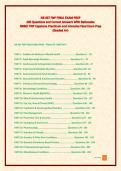
NR 667 FNP FINAL EXAM PREP - TABLE OF CONTENTS
PART 1: Pediatric & Adolescent Mental Health ....................... Questions 1 - 10
PART 2: Adult Neurologic Disorders ................................ Questions 11 - 25
PART 3: Cardiovascular & Respiratory Conditions ................... Questions 26 - 47
PART 4: Endocrine & Metabolic Disorders ........................... Questions 48 - 64
PART 5: Gastrointestinal & Renal Disorders ........................ Questions 65 - 80
PART 6: Musculoskeletal & Autoimmune Disorders .................... Questions 81 - 94
PART 7: Infectious Diseases & Immunology .......................... Questions 95 - 107
PART 8: Dermatologic Conditions ................................... Questions 108 - 119
PART 9: Women's Health (OB/GYN) ................................... Questions 120 - 130
PART 10: Male & Genitourinary Health ............................... Questions 131 - 137
PART 11: Eye, Ear, Nose & Throat (EENT) ............................ Questions 138 - 149
PART 12: Psychiatric & Neurocognitive Disorders .................... Questions 150 - 157
PART 13: Pain Management ........................................... Questions 158 - 162
PART 14: Preventive Care & Vaccines ................................ Questions 163 - 169
PART 15: Emergency & Acute Care .................................... Questions 170 - 175
PART 16: Pharmacology .............................................. Questions 176 - 185
PART 17: Nutrition & Lifestyle ..................................... Questions 186 - 190
PART 18: Genetics & Other Rare Conditions .......................... Questions 191 - 195
PART 19: Research & Evidence-Based Practice ........................ Questions 196 - 200
PART 20: Professional & Legal Issues ............................... Questions 201 - 205
PART 21: Miscellaneous Conditions .................................. Questions 206 - 250
SCHOLARSOURCE 1
,[PART 1: PEDIATRIC & ADOLESCENT MENTAL HEALTH]
1. A school-age child is diagnosed with ADHD (Combined Type). The child's teacher reports
significant difficulty with focus and impulsivity in the classroom. Which medication is
considered first-line pharmacological treatment?
a. Clonidine
b. Methylphenidate (Ritalin)
c. Atomoxetine (Strattera)
d. Fluoxetine (Prozac)
Answer: b. Methylphenidate (Ritalin)
Rationale: CNS stimulants (methylphenidate and amphetamines) are the most efficacious
and first-line medications for ADHD. Atomoxetine is a non-stimulant alternative for
children with tics or anxiety. Clonidine is used for adjunctive treatment or sleep, and
fluoxetine treats depression.
2. A 7-year-old child is diagnosed with ADHD. The practitioner prescribes a long-acting
stimulant. Which side effect is most important to monitor in this child?
a. Bradycardia
b. Weight gain
c. Decreased appetite
d. Hypoglycemia
Answer: c. Decreased appetite
Rationale: Anorexia and subsequent weight loss are the most common dose-limiting side
effects of stimulant medications. Practitioners must monitor height and weight closely,
often recommending medication administration with or after meals.
3. A parent reports that their 6-year-old child "refuses to go to school" every morning,
complaining of stomachaches. The child is fine on weekends. What is the most likely
diagnosis?
SCHOLARSOURCE 2
,a. Social Anxiety Disorder
b. Separation Anxiety Disorder
c. Generalized Anxiety Disorder
d. School Phobia
Answer: b. Separation Anxiety Disorder
Rationale: Separation Anxiety Disorder is characterized by excessive fear/anxiety about
separation from attachment figures, leading to school refusal. Physical complaints like
stomachaches are common on school days. Social anxiety is more about
performance/social scrutiny, and GAD is persistent worry.
4. A 13-year-old child is diagnosed with Major Depressive Disorder. The practitioner is
considering prescribing an SSRI. What must be included in the treatment plan regarding
this medication?
a. A baseline EKG to monitor for QT prolongation.
b. Instructions to monitor for signs of increased energy and talkativeness.
c. A prescription for aripiprazole to augment the antidepressant.
d. Recommendations for a high-fiber diet to manage GI side effects.
Answer: b. Instructions to monitor for signs of increased energy and talkativeness.
Rationale: SSRIs carry a black box warning for increased risk of suicidal ideation in children
and adolescents, which can be preceded by agitation, anxiety, or a switch to mania
(increased energy/talkativeness). While GI side effects are common and EKG monitoring is
not standard for SSRIs, parents must be educated on behavioral activation and mood
changes.
5. A parent brings a 4-year-old to the clinic for a well-child visit. The parent reports the
child has frequent temper tantrums that occur at least 3 times a week and last for 20
minutes. The child is difficult to console. What is the practitioner's initial action?
a. Diagnose the child with Oppositional Defiant Disorder.
b. Refer the child to a pediatric behavioral specialist.
c. Ask the parent about the child's sleep and daily routines.
SCHOLARSOURCE 3
, d. Prescribe a low-dose antipsychotic for severe behavioral issues.
Answer: c. Ask the parent about the child's sleep and daily routines.
Rationale: In a 4-year-old, frequent tantrums are often linked to over-tiredness, hunger, or
inconsistent routines. The initial step is always to assess modifiable environmental factors.
A diagnosis of ODD or referral to a specialist is inappropriate without first ruling out
common triggers.
6. An adolescent female presents with symptoms of depression, including weight loss,
insomnia, and a flat affect. She states she feels "numb." What is the most important initial
question for the practitioner to ask?
a. "Do you have any thoughts of hurting yourself?"
b. "Do you have a boyfriend?"
c. "What is your favorite food?"
d. "How are your grades in school?"
Answer: a. "Do you have any thoughts of hurting yourself?"
Rationale: Safety is the top priority in any psychiatric assessment. With symptoms of
severe depression, the practitioner must screen for suicidal ideation, intent, and plan. This
is a mandatory and life-saving assessment.
7. A newly divorced mother of a toddler reports that the child began having difficulty
sleeping and nightmares along with exhibiting angry outbursts and tantrums 2 months
prior. The primary care pediatric nurse practitioner learns that the child refuses to play
with usual playmates and often spends time sitting quietly. What will the nurse practitioner
do initially?
a. Ask the mother about the child's relationship with the father.
b. Consult with a child psychiatrist to prescribe medications.
c. Recommend cognitive behavioral or psychodynamic therapy.
d. Refer the family to a child behavioral specialist for counseling.
Answer: a. Ask the mother about the child's relationship with the father.
Rationale: The sudden onset of these symptoms following a major family change (divorce)
suggests a reactive adjustment disorder. The initial assessment should focus on the child's
SCHOLARSOURCE 4


