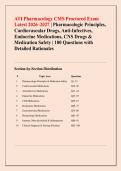
ATI Pharmacology CMS Proctored Exam
Latest 2026–2027 | Pharmacologic Principles,
Cardiovascular Drugs, Anti-Infectives,
Endocrine Medications, CNS Drugs &
Medication Safety | 100 Questions with
Detailed Rationales
Section-by-Section Distribution
# Topic Area Questions
1 Pharmacologic Principles & Medication Safety Q1–15
2 Cardiovascular Medications Q16–30
3 Anti-Infective Medications Q31–44
4 Endocrine Medications Q45–55
5 CNS Medications Q56–67
6 Respiratory Medications Q68–75
7 Gastrointestinal Medications Q76–80
8 Hematologic Medications Q81–85
9 Immune, Musculoskeletal & Inflammatory Q86–91
10 Clinical Judgment & Nursing Priorities Q92–100
,SECTION 1: Pharmacologic Principles & Medication Safety
(Q1–15)
1. A nurse is preparing to administer a medication and notices the dose ordered seems
unusually high. Which action should the nurse take FIRST?
A. Administer the medication as ordered
B. Document the concern in the chart
C. Verify the order with the prescriber
D. Ask a colleague to double-check the dose
Rationale: The nurse must clarify any unclear or potentially harmful orders with the prescriber
before administration to prevent medication errors.
2. A patient is prescribed a drug with a narrow therapeutic index. Which nursing action is
the priority?
A. Administer the drug with food only
B. Monitor serum drug levels closely
C. Instruct the patient to double dose if missed
D. Withhold the drug if the patient reports nausea
Rationale: Drugs with narrow therapeutic indices have little margin between therapeutic and
toxic levels, requiring frequent serum monitoring.
3. A nurse understands that the half-life of a drug determines which of the following?
A. How quickly the drug is absorbed
B. The route of drug elimination
C. How long it takes for the plasma concentration to decrease by 50%
D. The drug's mechanism of action
Rationale: Half-life is the time required for plasma drug concentration to fall by half, guiding
dosing frequency.
4. Which of the following medications is classified as a high-alert medication by ISMP?
,A. Amoxicillin
B. Concentrated potassium chloride (KCl)
C. Ibuprofen
D. Diphenhydramine
Rationale: Concentrated KCl is a high-alert medication that can cause fatal cardiac arrhythmias
if administered incorrectly.
5. A nurse is teaching a patient about first-pass metabolism. Which statement is correct?
A. IV drugs undergo extensive first-pass metabolism
B. First-pass metabolism increases drug bioavailability
C. First-pass metabolism occurs in the kidneys
D. Oral drugs are significantly metabolized by the liver before reaching systemic
circulation
Rationale: First-pass (hepatic) metabolism reduces the bioavailability of orally administered
drugs before they reach the bloodstream.
6. Which of the following is the CORRECT sequence for the "Rights of Medication
Administration"?
A. Right patient, right drug, right dose, right route, right time
B. Right drug, right patient, right time, right dose, right chart
C. Right nurse, right drug, right patient, right route, right time
D. Right patient, right drug, right time, right chart, right route
Rationale: The classic five rights of medication administration guide safe drug delivery and are
foundational to preventing errors.
7. A patient is receiving digoxin. The nurse notes a serum digoxin level of 2.8 ng/mL. What
is the priority action?
A. Continue the medication as prescribed
B. Administer an additional dose to maintain effectiveness
C. Hold the medication and notify the prescriber
D. Encourage oral fluid intake to dilute the drug level
Rationale: The therapeutic digoxin range is 0.5–2.0 ng/mL; a level of 2.8 ng/mL indicates
toxicity requiring immediate provider notification.
, 8. A nurse is reviewing a Black Box Warning for a medication. Which statement BEST
describes a Black Box Warning?
A. The drug has been removed from the market
B. The drug requires a second nurse to co-sign
C. The drug carries the most serious FDA warning for life-threatening risks
D. The drug is contraindicated in all elderly patients
Rationale: Black Box Warnings are the FDA's most serious safety warnings, alerting providers
and patients to potentially life-threatening adverse effects.
9. A patient receives 2 mg of morphine instead of the ordered 4 mg. Which action should
the nurse take FIRST?
A. Document the error and continue monitoring
B. Administer the remaining 2 mg immediately
C. Assess the patient for any adverse effects
D. Notify the pharmacy department
Rationale: Patient safety is the top priority; the nurse must first assess the patient for any
clinical consequences of the medication error.
10. Which pharmacokinetic process is primarily responsible for drug elimination from the
body?
A. Absorption
B. Distribution
C. Excretion
D. Metabolism
Rationale: Excretion (primarily via the kidneys) is the process by which drugs and their
metabolites are permanently removed from the body.
11. A nurse is performing medication reconciliation. What is the PRIMARY purpose of
this process?
Latest 2026–2027 | Pharmacologic Principles,
Cardiovascular Drugs, Anti-Infectives,
Endocrine Medications, CNS Drugs &
Medication Safety | 100 Questions with
Detailed Rationales
Section-by-Section Distribution
# Topic Area Questions
1 Pharmacologic Principles & Medication Safety Q1–15
2 Cardiovascular Medications Q16–30
3 Anti-Infective Medications Q31–44
4 Endocrine Medications Q45–55
5 CNS Medications Q56–67
6 Respiratory Medications Q68–75
7 Gastrointestinal Medications Q76–80
8 Hematologic Medications Q81–85
9 Immune, Musculoskeletal & Inflammatory Q86–91
10 Clinical Judgment & Nursing Priorities Q92–100
,SECTION 1: Pharmacologic Principles & Medication Safety
(Q1–15)
1. A nurse is preparing to administer a medication and notices the dose ordered seems
unusually high. Which action should the nurse take FIRST?
A. Administer the medication as ordered
B. Document the concern in the chart
C. Verify the order with the prescriber
D. Ask a colleague to double-check the dose
Rationale: The nurse must clarify any unclear or potentially harmful orders with the prescriber
before administration to prevent medication errors.
2. A patient is prescribed a drug with a narrow therapeutic index. Which nursing action is
the priority?
A. Administer the drug with food only
B. Monitor serum drug levels closely
C. Instruct the patient to double dose if missed
D. Withhold the drug if the patient reports nausea
Rationale: Drugs with narrow therapeutic indices have little margin between therapeutic and
toxic levels, requiring frequent serum monitoring.
3. A nurse understands that the half-life of a drug determines which of the following?
A. How quickly the drug is absorbed
B. The route of drug elimination
C. How long it takes for the plasma concentration to decrease by 50%
D. The drug's mechanism of action
Rationale: Half-life is the time required for plasma drug concentration to fall by half, guiding
dosing frequency.
4. Which of the following medications is classified as a high-alert medication by ISMP?
,A. Amoxicillin
B. Concentrated potassium chloride (KCl)
C. Ibuprofen
D. Diphenhydramine
Rationale: Concentrated KCl is a high-alert medication that can cause fatal cardiac arrhythmias
if administered incorrectly.
5. A nurse is teaching a patient about first-pass metabolism. Which statement is correct?
A. IV drugs undergo extensive first-pass metabolism
B. First-pass metabolism increases drug bioavailability
C. First-pass metabolism occurs in the kidneys
D. Oral drugs are significantly metabolized by the liver before reaching systemic
circulation
Rationale: First-pass (hepatic) metabolism reduces the bioavailability of orally administered
drugs before they reach the bloodstream.
6. Which of the following is the CORRECT sequence for the "Rights of Medication
Administration"?
A. Right patient, right drug, right dose, right route, right time
B. Right drug, right patient, right time, right dose, right chart
C. Right nurse, right drug, right patient, right route, right time
D. Right patient, right drug, right time, right chart, right route
Rationale: The classic five rights of medication administration guide safe drug delivery and are
foundational to preventing errors.
7. A patient is receiving digoxin. The nurse notes a serum digoxin level of 2.8 ng/mL. What
is the priority action?
A. Continue the medication as prescribed
B. Administer an additional dose to maintain effectiveness
C. Hold the medication and notify the prescriber
D. Encourage oral fluid intake to dilute the drug level
Rationale: The therapeutic digoxin range is 0.5–2.0 ng/mL; a level of 2.8 ng/mL indicates
toxicity requiring immediate provider notification.
, 8. A nurse is reviewing a Black Box Warning for a medication. Which statement BEST
describes a Black Box Warning?
A. The drug has been removed from the market
B. The drug requires a second nurse to co-sign
C. The drug carries the most serious FDA warning for life-threatening risks
D. The drug is contraindicated in all elderly patients
Rationale: Black Box Warnings are the FDA's most serious safety warnings, alerting providers
and patients to potentially life-threatening adverse effects.
9. A patient receives 2 mg of morphine instead of the ordered 4 mg. Which action should
the nurse take FIRST?
A. Document the error and continue monitoring
B. Administer the remaining 2 mg immediately
C. Assess the patient for any adverse effects
D. Notify the pharmacy department
Rationale: Patient safety is the top priority; the nurse must first assess the patient for any
clinical consequences of the medication error.
10. Which pharmacokinetic process is primarily responsible for drug elimination from the
body?
A. Absorption
B. Distribution
C. Excretion
D. Metabolism
Rationale: Excretion (primarily via the kidneys) is the process by which drugs and their
metabolites are permanently removed from the body.
11. A nurse is performing medication reconciliation. What is the PRIMARY purpose of
this process?