

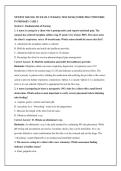
NEWEST 2026 NSG 555 EXAM 3 (WILKES) TEST BANK| NURSE PRACTITIONERS
IN PRIMARY CARE I
Section 1: Fundamentals of Nursing
1. A nurse is caring for a client who is postoperative and reports incisional pain. The
surgeon has ordered morphine sulfate 2 mg IV push every 2 hours PRN. The nurse notes
the client’s respiratory rate is 10 breaths/min. Which action should the nurse take first?
A. Administer the morphine sulfate as ordered.
B. Hold the medication and notify the healthcare provider.
C. Administer half the dose and re-evaluate in 15 minutes.
D. Encourage the client to use non-pharmacological pain management.
Correct Answer: B. Hold the medication and notify the healthcare provider.
Rationale: Morphine sulfate can cause respiratory depression. A respiratory rate of 10
breaths/min is below the normal range (12-20) and indicates a potential adverse effect. The
nurse's priority is patient safety; holding the medication and notifying the provider is the correct
action to prevent further respiratory compromise. Option A is unsafe. Option C is a medication
error as it's not ordered. Option D is appropriate but not the first step.
2. A nurse is preparing to insert a nasogastric (NG) tube for a client with a small bowel
obstruction. Which action is most important to verify correct placement before initiating
tube feeding?
A. Aspirate gastric contents and check pH.
B. Auscultate for a "whooshing" sound over the epigastrium.
C. Measure the length of the tube from the nares.
D. Obtain an abdominal x-ray.
Correct Answer: D. Obtain an abdominal x-ray.
Rationale: An abdominal x-ray is the gold standard for confirming NG tube placement. While
pH testing and auscultation are used as secondary checks, they can be unreliable. An x-ray
provides definitive visual confirmation that the tube is in the stomach and not the lungs. The
"whooshing" sound (Option B) is an outdated and unreliable method.
3. The nurse is caring for a client with a new colostomy. Which assessment finding
indicates a healthy stoma?
A. Dark, purplish color.
,B. Dry, scaly appearance.
C. Moist, pink-red color.
D. Swollen and painful.
Correct Answer: C. Moist, pink-red color.
Rationale: A healthy stoma is moist and pink to red in color, resembling the inside of the mouth.
This indicates good vascularization. A dark, purplish, or black color (A) indicates ischemia. A
dry or scaly appearance (B) suggests dehydration of the stoma, and swelling with pain (D) could
indicate a blockage or necrosis.
4. A client is receiving a blood transfusion. Fifteen minutes after the infusion begins, the
client reports low back pain and chills. What should the nurse do first?
A. Slow the infusion rate.
B. Administer an antihistamine.
C. Stop the transfusion and maintain IV access.
D. Notify the healthcare provider.
Correct Answer: C. Stop the transfusion and maintain IV access.
Rationale: The client is exhibiting signs of a potential acute hemolytic transfusion reaction
(back pain, chills). The immediate priority is to stop the transfusion to prevent further reaction.
The nurse must then maintain IV access with normal saline (not the blood), notify the provider,
and monitor the client. Administering medication (B) comes after assessment and notification.
5. A nurse is teaching a client about a low-sodium diet. Which food choice indicates the
client understands the teaching?
A. Canned vegetable soup.
B. A dill pickle.
C. Fresh grilled salmon.
D. Soy sauce on rice.
Correct Answer: C. Fresh grilled salmon.
Rationale: Fresh, unprocessed foods are naturally low in sodium. Canned soups (A), pickles (B),
and soy sauce (D) are all high in sodium due to processing and preservation methods.
Section 2: Medical-Surgical Nursing
, 6. A nurse is caring for a client with heart failure who is receiving furosemide. Which
laboratory value requires the most immediate attention?
A. Sodium 135 mEq/L.
B. Potassium 3.0 mEq/L.
C. Calcium 9.0 mg/dL.
D. Magnesium 2.0 mEq/L.
Correct Answer: B. Potassium 3.0 mEq/L.
Rationale: Furosemide is a loop diuretic that causes potassium loss in the urine. A serum
potassium of 3.0 mEq/L indicates hypokalemia, which is a critical value. Hypokalemia can lead
to life-threatening cardiac dysrhythmias. The nurse must notify the provider and prepare to
administer potassium supplements. The other values are within or near normal limits.
7. A client with type 1 diabetes mellitus is experiencing polyuria, polydipsia, and
polyphagia. The nurse suspects diabetic ketoacidosis (DKA). Which finding is a hallmark
of DKA?
A. Serum glucose of 250 mg/dL.
B. Serum pH of 7.32.
C. Serum bicarbonate of 22 mEq/L.
D. Urine ketones negative.
Correct Answer: B. Serum pH of 7.32.
Rationale: DKA is characterized by hyperglycemia, ketosis, and metabolic acidosis. A serum
pH below 7.35 indicates acidosis. Serum glucose in DKA is typically >250 mg/dL (A) but can be
much higher. Low serum bicarbonate (C) is also a sign of acidosis, but a pH of 7.32 is a direct
indicator of acidemia. Urine ketones (D) are typically positive.
8. A postoperative client's vital signs are: BP 90/60 mmHg, HR 110 bpm, RR 24/min, and
skin is cool and clammy. What is the priority nursing action?
A. Administer the prescribed PRN antiemetic.
B. Place the client in Trendelenburg position.
C. Notify the healthcare provider immediately.
D. Increase the IV fluid rate.
Correct Answer: C. Notify the healthcare provider immediately.
Rationale: The client is exhibiting classic signs of hypovolemic shock (low BP, tachycardia,
IN PRIMARY CARE I
Section 1: Fundamentals of Nursing
1. A nurse is caring for a client who is postoperative and reports incisional pain. The
surgeon has ordered morphine sulfate 2 mg IV push every 2 hours PRN. The nurse notes
the client’s respiratory rate is 10 breaths/min. Which action should the nurse take first?
A. Administer the morphine sulfate as ordered.
B. Hold the medication and notify the healthcare provider.
C. Administer half the dose and re-evaluate in 15 minutes.
D. Encourage the client to use non-pharmacological pain management.
Correct Answer: B. Hold the medication and notify the healthcare provider.
Rationale: Morphine sulfate can cause respiratory depression. A respiratory rate of 10
breaths/min is below the normal range (12-20) and indicates a potential adverse effect. The
nurse's priority is patient safety; holding the medication and notifying the provider is the correct
action to prevent further respiratory compromise. Option A is unsafe. Option C is a medication
error as it's not ordered. Option D is appropriate but not the first step.
2. A nurse is preparing to insert a nasogastric (NG) tube for a client with a small bowel
obstruction. Which action is most important to verify correct placement before initiating
tube feeding?
A. Aspirate gastric contents and check pH.
B. Auscultate for a "whooshing" sound over the epigastrium.
C. Measure the length of the tube from the nares.
D. Obtain an abdominal x-ray.
Correct Answer: D. Obtain an abdominal x-ray.
Rationale: An abdominal x-ray is the gold standard for confirming NG tube placement. While
pH testing and auscultation are used as secondary checks, they can be unreliable. An x-ray
provides definitive visual confirmation that the tube is in the stomach and not the lungs. The
"whooshing" sound (Option B) is an outdated and unreliable method.
3. The nurse is caring for a client with a new colostomy. Which assessment finding
indicates a healthy stoma?
A. Dark, purplish color.
,B. Dry, scaly appearance.
C. Moist, pink-red color.
D. Swollen and painful.
Correct Answer: C. Moist, pink-red color.
Rationale: A healthy stoma is moist and pink to red in color, resembling the inside of the mouth.
This indicates good vascularization. A dark, purplish, or black color (A) indicates ischemia. A
dry or scaly appearance (B) suggests dehydration of the stoma, and swelling with pain (D) could
indicate a blockage or necrosis.
4. A client is receiving a blood transfusion. Fifteen minutes after the infusion begins, the
client reports low back pain and chills. What should the nurse do first?
A. Slow the infusion rate.
B. Administer an antihistamine.
C. Stop the transfusion and maintain IV access.
D. Notify the healthcare provider.
Correct Answer: C. Stop the transfusion and maintain IV access.
Rationale: The client is exhibiting signs of a potential acute hemolytic transfusion reaction
(back pain, chills). The immediate priority is to stop the transfusion to prevent further reaction.
The nurse must then maintain IV access with normal saline (not the blood), notify the provider,
and monitor the client. Administering medication (B) comes after assessment and notification.
5. A nurse is teaching a client about a low-sodium diet. Which food choice indicates the
client understands the teaching?
A. Canned vegetable soup.
B. A dill pickle.
C. Fresh grilled salmon.
D. Soy sauce on rice.
Correct Answer: C. Fresh grilled salmon.
Rationale: Fresh, unprocessed foods are naturally low in sodium. Canned soups (A), pickles (B),
and soy sauce (D) are all high in sodium due to processing and preservation methods.
Section 2: Medical-Surgical Nursing
, 6. A nurse is caring for a client with heart failure who is receiving furosemide. Which
laboratory value requires the most immediate attention?
A. Sodium 135 mEq/L.
B. Potassium 3.0 mEq/L.
C. Calcium 9.0 mg/dL.
D. Magnesium 2.0 mEq/L.
Correct Answer: B. Potassium 3.0 mEq/L.
Rationale: Furosemide is a loop diuretic that causes potassium loss in the urine. A serum
potassium of 3.0 mEq/L indicates hypokalemia, which is a critical value. Hypokalemia can lead
to life-threatening cardiac dysrhythmias. The nurse must notify the provider and prepare to
administer potassium supplements. The other values are within or near normal limits.
7. A client with type 1 diabetes mellitus is experiencing polyuria, polydipsia, and
polyphagia. The nurse suspects diabetic ketoacidosis (DKA). Which finding is a hallmark
of DKA?
A. Serum glucose of 250 mg/dL.
B. Serum pH of 7.32.
C. Serum bicarbonate of 22 mEq/L.
D. Urine ketones negative.
Correct Answer: B. Serum pH of 7.32.
Rationale: DKA is characterized by hyperglycemia, ketosis, and metabolic acidosis. A serum
pH below 7.35 indicates acidosis. Serum glucose in DKA is typically >250 mg/dL (A) but can be
much higher. Low serum bicarbonate (C) is also a sign of acidosis, but a pH of 7.32 is a direct
indicator of acidemia. Urine ketones (D) are typically positive.
8. A postoperative client's vital signs are: BP 90/60 mmHg, HR 110 bpm, RR 24/min, and
skin is cool and clammy. What is the priority nursing action?
A. Administer the prescribed PRN antiemetic.
B. Place the client in Trendelenburg position.
C. Notify the healthcare provider immediately.
D. Increase the IV fluid rate.
Correct Answer: C. Notify the healthcare provider immediately.
Rationale: The client is exhibiting classic signs of hypovolemic shock (low BP, tachycardia,


