

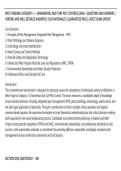
WEST VIRGINIA CATEGORY 3 — ORNAMENTAL AND TURF PEST CONTROL EXAM – QUESTIONS AND ANSWERS |
VERIFIED AND WELL DETAILED ANSWERS | PLUS RATIONALES | GUARANTEED PASS | LATEST EXAM UPDATE
Core Domains:
1. Principles of Pest Management (Integrated Pest Management - IPM)
2. Plant Pathology and Disease Diagnosis
3. Entomology and Insect Identification
4. Weed Science and Control Methods
5. Pesticide Safety and Application Technology
6. Federal and West Virginia Pesticide Laws and Regulations (WAC, FIFRA)
7. Environmental Stewardship and Water Quality Protection
8. Professional Ethics and Standard of Care
Introduction
This comprehensive examination is designed to rigorously assess the competency of individuals seeking certification in
West Virginia Category 3: Ornamental and Turf Pest Control. The exam measures a candidate's depth of knowledge
across essential domains including integrated pest management (IPM), plant pathology, entomology, weed science, and
the safe, legal application of pesticides. Through a combination of direct multiple-choice questions and applied
scenario-based inquiries, the assessment evaluates not only theoretical understanding but also critical decision-making
skills required for real-world professional practice. Candidates must demonstrate proficiency in federal and West
Virginia state pesticide regulations (FIFRA and WAC), environmental stewardship, and professional standards of care.
Success in this examination indicates a commitment to providing effective, responsible, and legally compliant pest
management services within the ornamental and turf industry.
SECTION ONE: QUESTIONS 1 – 100
,1. In Integrated Pest Management (IPM), what is the primary goal of monitoring and identifying pests before
taking action?
A. To increase the frequency of pesticide applications
B. To confirm the presence of a pest and determine if it poses an economic or aesthetic threat
C. To eliminate all insects from the landscape immediately
D. To identify the cheapest pesticide available on the market
🟢 B. To confirm the presence of a pest and determine if it poses an economic or aesthetic threat
🔴 Explanation: The foundation of IPM is accurate pest identification and monitoring to determine if pest
populations have reached a level where control is necessary (action threshold). This prevents unnecessary pesticide
applications and ensures that any intervention is targeted and justified.
2. Which of the following is considered a cultural control method for turfgrass diseases?
A. Applying a systemic fungicide every 14 days
B. Modifying mowing heights and improving drainage
C. Releasing predatory insects into the turf
D. Using insecticidal soap on affected areas
🟢 B. Modifying mowing heights and improving drainage
🔴 Explanation: Cultural controls involve altering the environment to make it less favorable for pests. Proper
mowing heights promote plant vigor and reduce stress, while improving drainage reduces moisture levels that favor
many fungal pathogens. These are non-chemical management tactics.
3. The term "phytotoxicity" refers to:
A. The ability of a pesticide to kill insects
B. The toxic effect of a chemical or substance on a plant
,C. The study of plant diseases
D. The movement of pesticides through the soil
🟢 B. The toxic effect of a chemical or substance on a plant
🔴 Explanation: Phytotoxicity is plant damage caused by a chemical agent, such as an herbicide or pesticide
application. Understanding this risk is crucial in ornamental and turf settings to avoid damaging desirable plant
species during treatment.
4. According to federal pesticide law (FIFRA), what is the minimum age requirement for a certified commercial
applicator?
A. 16 years old
B. 18 years old
C. 21 years old
D. There is no minimum age specified in the law
🟢 B. 18 years old
🔴 Explanation: FIFRA regulations state that a certified commercial applicator must be at least 18 years of age. This
is a minimum standard to ensure a level of maturity and responsibility in handling restricted-use pesticides.
5. A professional applicator notices that a client's dog is tethered in the yard where they are scheduled to apply a
granular insecticide. What is the MOST appropriate course of action?
A. Apply the product on the side of the yard opposite the dog to minimize exposure
B. Inform the client that the dog must be removed from the area during the application and re-entry interval
C. Wait for the dog to be moved by the client before applying
D. Apply the product, as granular formulations are not hazardous to pets
🟢 B. Inform the client that the dog must be removed from the area during the application and re-entry interval
, 🔴 Explanation: Professional standards and safety protocols require that all people and pets be removed from the
treatment area before application begins and remain out for the duration specified on the product label (re-entry
interval). The applicator is responsible for communicating and enforcing this safety measure.
6. What is the primary function of a spreader-sticker adjuvant in a spray solution?
A. To reduce the surface tension of water droplets
B. To increase the pH of the spray mixture
C. To improve the distribution and adhesion of the pesticide on the leaf surface
D. To penetrate the waxy cuticle of the plant
🟢 C. To improve the distribution and adhesion of the pesticide on the leaf surface
🔴 Explanation: Spreader-stickers are adjuvants designed to modify the physical properties of the spray solution.
They help the pesticide spread evenly over the leaf surface and resist being washed off by rain, thereby increasing
the efficacy and residual activity of the pesticide.
7. In a situation where an applicator is applying herbicides and encounters a non-target, desirable plant, which
term describes the unintended harm to that plant?
A. Translocation
B. Drift
C. Off-target injury
D. Resistance
🟢 C. Off-target injury
🔴 Explanation: Off-target injury is damage to any plant or organism that was not intended to be affected by the
pesticide application. This can result from spray drift, volatilization, or root uptake. It is a serious concern in
ornamental settings where delicate, high-value plants are common.
VERIFIED AND WELL DETAILED ANSWERS | PLUS RATIONALES | GUARANTEED PASS | LATEST EXAM UPDATE
Core Domains:
1. Principles of Pest Management (Integrated Pest Management - IPM)
2. Plant Pathology and Disease Diagnosis
3. Entomology and Insect Identification
4. Weed Science and Control Methods
5. Pesticide Safety and Application Technology
6. Federal and West Virginia Pesticide Laws and Regulations (WAC, FIFRA)
7. Environmental Stewardship and Water Quality Protection
8. Professional Ethics and Standard of Care
Introduction
This comprehensive examination is designed to rigorously assess the competency of individuals seeking certification in
West Virginia Category 3: Ornamental and Turf Pest Control. The exam measures a candidate's depth of knowledge
across essential domains including integrated pest management (IPM), plant pathology, entomology, weed science, and
the safe, legal application of pesticides. Through a combination of direct multiple-choice questions and applied
scenario-based inquiries, the assessment evaluates not only theoretical understanding but also critical decision-making
skills required for real-world professional practice. Candidates must demonstrate proficiency in federal and West
Virginia state pesticide regulations (FIFRA and WAC), environmental stewardship, and professional standards of care.
Success in this examination indicates a commitment to providing effective, responsible, and legally compliant pest
management services within the ornamental and turf industry.
SECTION ONE: QUESTIONS 1 – 100
,1. In Integrated Pest Management (IPM), what is the primary goal of monitoring and identifying pests before
taking action?
A. To increase the frequency of pesticide applications
B. To confirm the presence of a pest and determine if it poses an economic or aesthetic threat
C. To eliminate all insects from the landscape immediately
D. To identify the cheapest pesticide available on the market
🟢 B. To confirm the presence of a pest and determine if it poses an economic or aesthetic threat
🔴 Explanation: The foundation of IPM is accurate pest identification and monitoring to determine if pest
populations have reached a level where control is necessary (action threshold). This prevents unnecessary pesticide
applications and ensures that any intervention is targeted and justified.
2. Which of the following is considered a cultural control method for turfgrass diseases?
A. Applying a systemic fungicide every 14 days
B. Modifying mowing heights and improving drainage
C. Releasing predatory insects into the turf
D. Using insecticidal soap on affected areas
🟢 B. Modifying mowing heights and improving drainage
🔴 Explanation: Cultural controls involve altering the environment to make it less favorable for pests. Proper
mowing heights promote plant vigor and reduce stress, while improving drainage reduces moisture levels that favor
many fungal pathogens. These are non-chemical management tactics.
3. The term "phytotoxicity" refers to:
A. The ability of a pesticide to kill insects
B. The toxic effect of a chemical or substance on a plant
,C. The study of plant diseases
D. The movement of pesticides through the soil
🟢 B. The toxic effect of a chemical or substance on a plant
🔴 Explanation: Phytotoxicity is plant damage caused by a chemical agent, such as an herbicide or pesticide
application. Understanding this risk is crucial in ornamental and turf settings to avoid damaging desirable plant
species during treatment.
4. According to federal pesticide law (FIFRA), what is the minimum age requirement for a certified commercial
applicator?
A. 16 years old
B. 18 years old
C. 21 years old
D. There is no minimum age specified in the law
🟢 B. 18 years old
🔴 Explanation: FIFRA regulations state that a certified commercial applicator must be at least 18 years of age. This
is a minimum standard to ensure a level of maturity and responsibility in handling restricted-use pesticides.
5. A professional applicator notices that a client's dog is tethered in the yard where they are scheduled to apply a
granular insecticide. What is the MOST appropriate course of action?
A. Apply the product on the side of the yard opposite the dog to minimize exposure
B. Inform the client that the dog must be removed from the area during the application and re-entry interval
C. Wait for the dog to be moved by the client before applying
D. Apply the product, as granular formulations are not hazardous to pets
🟢 B. Inform the client that the dog must be removed from the area during the application and re-entry interval
, 🔴 Explanation: Professional standards and safety protocols require that all people and pets be removed from the
treatment area before application begins and remain out for the duration specified on the product label (re-entry
interval). The applicator is responsible for communicating and enforcing this safety measure.
6. What is the primary function of a spreader-sticker adjuvant in a spray solution?
A. To reduce the surface tension of water droplets
B. To increase the pH of the spray mixture
C. To improve the distribution and adhesion of the pesticide on the leaf surface
D. To penetrate the waxy cuticle of the plant
🟢 C. To improve the distribution and adhesion of the pesticide on the leaf surface
🔴 Explanation: Spreader-stickers are adjuvants designed to modify the physical properties of the spray solution.
They help the pesticide spread evenly over the leaf surface and resist being washed off by rain, thereby increasing
the efficacy and residual activity of the pesticide.
7. In a situation where an applicator is applying herbicides and encounters a non-target, desirable plant, which
term describes the unintended harm to that plant?
A. Translocation
B. Drift
C. Off-target injury
D. Resistance
🟢 C. Off-target injury
🔴 Explanation: Off-target injury is damage to any plant or organism that was not intended to be affected by the
pesticide application. This can result from spray drift, volatilization, or root uptake. It is a serious concern in
ornamental settings where delicate, high-value plants are common.


