

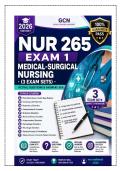
,NUR 265 Exam 1 (3 Exam Sets) – Medical-Surgical
Nursing – (2026) Actual Questions & Answers
(GCN) 100% Guarantee Pass
NUR 265 Exam 1 – Version 1: Renal, Endocrine, &
Diabetes (Questions 1–70)
QUESTION 1
The nurse caring for a client with nephrotic syndrome with severe
proteinuria should take which of the following actions?
A. Administer furosemide
B. Administer lisinopril
C. Restrict fluids
D. Increase protein intake
Correct Answer: B. Administer lisinopril
*Rationale: * ACE inhibitors like lisinopril reduce proteinuria by lowering
intraglomerular pressure, which slows kidney damage progression in
nephrotic syndrome. This is a key intervention in managing nephrotic
,syndrome to preserve renal function. Fluid restriction and increased protein
intake are not primary interventions.
QUESTION 2
The nurse is reviewing labs of assigned clients. Which client requires priority
follow-up with the primary healthcare provider?
A. Temperature of 99.8°F
B. Temperature of 101.4°F
C. Mild fatigue
D. Slight nausea
Correct Answer: B. Temperature of 101.4°F
*Rationale: * Fever above 101°F post-dialysis indicates possible infection
and requires prompt assessment and intervention. This is a red flag for
sepsis or access-related infection and should be addressed immediately.
QUESTION 3
Which finding in a client who had hemodialysis yesterday requires
immediate follow-up?
A. Temperature of 99.8°F
B. Temperature of 101.4°F
, C. Mild fatigue
D. Slight nausea
Correct Answer: B. Temperature of 101.4°F
*Rationale: * Fever post-hemodialysis may indicate infection at the vascular
access site or bacteremia. This requires immediate assessment and
intervention. Mild fatigue and slight nausea are expected post-dialysis.
QUESTION 4
The nurse caring for a client with diabetes insipidus should anticipate which
of the following interventions?
A. Fluid restriction
B. Administration of desmopressin
C. Administration of insulin
D. Increased potassium intake
Correct Answer: B. Administration of desmopressin
*Rationale: * Diabetes insipidus is characterized by excessive thirst and
large volumes of dilute urine due to ADH deficiency or resistance.
Desmopressin (synthetic ADH) is the treatment of choice. Fluid restriction
would worsen dehydration. Insulin is for diabetes mellitus, not diabetes
insipidus.
Nursing – (2026) Actual Questions & Answers
(GCN) 100% Guarantee Pass
NUR 265 Exam 1 – Version 1: Renal, Endocrine, &
Diabetes (Questions 1–70)
QUESTION 1
The nurse caring for a client with nephrotic syndrome with severe
proteinuria should take which of the following actions?
A. Administer furosemide
B. Administer lisinopril
C. Restrict fluids
D. Increase protein intake
Correct Answer: B. Administer lisinopril
*Rationale: * ACE inhibitors like lisinopril reduce proteinuria by lowering
intraglomerular pressure, which slows kidney damage progression in
nephrotic syndrome. This is a key intervention in managing nephrotic
,syndrome to preserve renal function. Fluid restriction and increased protein
intake are not primary interventions.
QUESTION 2
The nurse is reviewing labs of assigned clients. Which client requires priority
follow-up with the primary healthcare provider?
A. Temperature of 99.8°F
B. Temperature of 101.4°F
C. Mild fatigue
D. Slight nausea
Correct Answer: B. Temperature of 101.4°F
*Rationale: * Fever above 101°F post-dialysis indicates possible infection
and requires prompt assessment and intervention. This is a red flag for
sepsis or access-related infection and should be addressed immediately.
QUESTION 3
Which finding in a client who had hemodialysis yesterday requires
immediate follow-up?
A. Temperature of 99.8°F
B. Temperature of 101.4°F
, C. Mild fatigue
D. Slight nausea
Correct Answer: B. Temperature of 101.4°F
*Rationale: * Fever post-hemodialysis may indicate infection at the vascular
access site or bacteremia. This requires immediate assessment and
intervention. Mild fatigue and slight nausea are expected post-dialysis.
QUESTION 4
The nurse caring for a client with diabetes insipidus should anticipate which
of the following interventions?
A. Fluid restriction
B. Administration of desmopressin
C. Administration of insulin
D. Increased potassium intake
Correct Answer: B. Administration of desmopressin
*Rationale: * Diabetes insipidus is characterized by excessive thirst and
large volumes of dilute urine due to ADH deficiency or resistance.
Desmopressin (synthetic ADH) is the treatment of choice. Fluid restriction
would worsen dehydration. Insulin is for diabetes mellitus, not diabetes
insipidus.


