

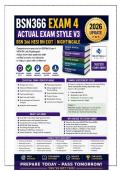
,BSN366 Exam 4 Actual Exam Style V3 | BSN
366 HESI RN Exit | Nightingale 2026
Complete Questions 1-200
QUESTION 1
A patient with heart failure is receiving IV furosemide. Which assessment
finding indicates the medication is having the desired effect?
A. Weight gain of 1 kg
B. Urine output of 50 mL/hr
C. Blood pressure of 90/60 mmHg
D. Crackles in lung bases
Correct Answer: B. Urine output of 50 mL/hr
*Rationale: * Furosemide is a loop diuretic used to reduce fluid volume in
heart failure. The desired effect is increased urine output (diuresis), which
reduces fluid overload. Weight loss (not gain), improved breath sounds
(decreased crackles), and stable blood pressure indicate effectiveness.
,QUESTION 2
A newborn is 24 hours old and has not passed meconium. The nurse notes
abdominal distention and bilious vomiting. Which condition should the
nurse suspect?
A. Meconium ileus
B. Hirschsprung's disease
C. Necrotizing enterocolitis
D. All of the above
*Correct Answer: D. All of the above
*Rationale: * Failure to pass meconium within 24-48 hours, accompanied
by abdominal distention and bilious vomiting, may indicate intestinal
obstruction. Conditions such as meconium ileus (cystic fibrosis),
Hirschsprung's disease, and necrotizing enterocolitis can present with these
symptoms.
QUESTION 3
The nurse is assessing a client at 38 weeks gestation who reports a sudden
gush of fluid from the vagina. Which finding indicates the fluid is amniotic
fluid?
A. Clear fluid with a musty odor
B. Yellow fluid with a foul odor
C. Bloody fluid with a metallic odor
D. Clear fluid with a fruity odor
, *Correct Answer: A. Clear fluid with a musty odor
*Rationale: * Amniotic fluid is typically clear and may have a slightly musty
or sweet odor. Yellow, foul-smelling fluid indicates infection
(chorioamnionitis). Bloody fluid may indicate placental abruption. Fruity
odor is not characteristic of amniotic fluid.
QUESTION 4
A patient with preeclampsia is receiving magnesium sulfate. Which
assessment finding requires immediate intervention?
A. Respiratory rate of 14 breaths/min
B. Urine output of 35 mL/hr
C. Deep tendon reflexes 1+
D. Serum magnesium level of 6 mEq/L
*Correct Answer: C. Deep tendon reflexes 1+
*Rationale: * Magnesium sulfate toxicity is characterized by decreased
deep tendon reflexes (1+ or absent), respiratory depression (<12
breaths/min), and oliguria (<30 mL/hr). Serum magnesium levels above 7-8
mEq/L indicate toxicity. The antidote is calcium gluconate.
QUESTION 5
A patient with a gastric ulcer is prescribed sucralfate. The nurse should
instruct the patient to take this medication:
366 HESI RN Exit | Nightingale 2026
Complete Questions 1-200
QUESTION 1
A patient with heart failure is receiving IV furosemide. Which assessment
finding indicates the medication is having the desired effect?
A. Weight gain of 1 kg
B. Urine output of 50 mL/hr
C. Blood pressure of 90/60 mmHg
D. Crackles in lung bases
Correct Answer: B. Urine output of 50 mL/hr
*Rationale: * Furosemide is a loop diuretic used to reduce fluid volume in
heart failure. The desired effect is increased urine output (diuresis), which
reduces fluid overload. Weight loss (not gain), improved breath sounds
(decreased crackles), and stable blood pressure indicate effectiveness.
,QUESTION 2
A newborn is 24 hours old and has not passed meconium. The nurse notes
abdominal distention and bilious vomiting. Which condition should the
nurse suspect?
A. Meconium ileus
B. Hirschsprung's disease
C. Necrotizing enterocolitis
D. All of the above
*Correct Answer: D. All of the above
*Rationale: * Failure to pass meconium within 24-48 hours, accompanied
by abdominal distention and bilious vomiting, may indicate intestinal
obstruction. Conditions such as meconium ileus (cystic fibrosis),
Hirschsprung's disease, and necrotizing enterocolitis can present with these
symptoms.
QUESTION 3
The nurse is assessing a client at 38 weeks gestation who reports a sudden
gush of fluid from the vagina. Which finding indicates the fluid is amniotic
fluid?
A. Clear fluid with a musty odor
B. Yellow fluid with a foul odor
C. Bloody fluid with a metallic odor
D. Clear fluid with a fruity odor
, *Correct Answer: A. Clear fluid with a musty odor
*Rationale: * Amniotic fluid is typically clear and may have a slightly musty
or sweet odor. Yellow, foul-smelling fluid indicates infection
(chorioamnionitis). Bloody fluid may indicate placental abruption. Fruity
odor is not characteristic of amniotic fluid.
QUESTION 4
A patient with preeclampsia is receiving magnesium sulfate. Which
assessment finding requires immediate intervention?
A. Respiratory rate of 14 breaths/min
B. Urine output of 35 mL/hr
C. Deep tendon reflexes 1+
D. Serum magnesium level of 6 mEq/L
*Correct Answer: C. Deep tendon reflexes 1+
*Rationale: * Magnesium sulfate toxicity is characterized by decreased
deep tendon reflexes (1+ or absent), respiratory depression (<12
breaths/min), and oliguria (<30 mL/hr). Serum magnesium levels above 7-8
mEq/L indicate toxicity. The antidote is calcium gluconate.
QUESTION 5
A patient with a gastric ulcer is prescribed sucralfate. The nurse should
instruct the patient to take this medication:


