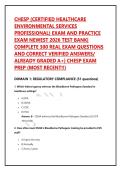
CHESP (CERTIFIED HEALTHCARE
ENVIRONMENTAL SERVICES
PROFESSIONAL) EXAM AND PRACTICE
EXAM NEWEST 2026 TEST BANK|
COMPLETE 300 REAL EXAM QUESTIONS
AND CORRECT VERIFIED ANSWERS/
ALREADY GRADED A+| CHESP EXAM
PREP (MOST RECENT!!)
DOMAIN 1: REGULATORY COMPLIANCE (51 questions)
1. Which federal agency enforces the Bloodborne Pathogens Standard in
healthcare settings?
• A) EPA
• B) OSHA
• C) CDC
• D) FDA
Answer: B – OSHA enforces the Bloodborne Pathogens Standard (29 CFR
1910.1030).
2. How often must OSHA's Bloodborne Pathogens training be provided to EVS
staff?
• A) Upon hire only
• B) Annually
• C) Every 2 years
, • D) Every 3 years
Answer: B – Training must be provided annually and whenever new
tasks/procedures are introduced.
3. Which of the following is a required element of an exposure control plan?
• A) List of all cleaning chemicals used
• B) Engineering controls and work practice controls
• C) Budget for environmental services
• D) Staff vacation schedule
Answer: B – The exposure control plan must include engineering controls, work
practice controls, PPE, and post-exposure follow-up.
4. According to CDC guidelines, what is the minimum concentration of sodium
hypochlorite (bleach) for disinfecting blood spills?
• A) 1:10 dilution (5,000 ppm)
• B) 1:100 dilution (500 ppm)
• C) 1:50 dilution (1,000 ppm)
• D) 1:5 dilution (10,000 ppm)
Answer: A – A 1:10 dilution of household bleach is recommended for blood
spills.
5. Which of the following is considered regulated medical waste (RMW)?
• A) Empty IV bags
• B) Used sharps
• C) Paper towels from a restroom
• D) Food waste
Answer: B – Used sharps are RMW; empty IV bags are not unless contaminated
with infectious agents.
,6. The Joint Commission's Environment of Care (EC) standards require how many
drills per year for hazardous materials spills?
• A) 1
• B) 2
• C) 4
• D) 12
Answer: B – At least 2 drills per year are required.
7. Which OSHA standard covers worker protection from airborne infectious agents
like TB?
• A) Hazard Communication Standard
• B) Respiratory Protection Standard
• C) Lockout/Tagout Standard
• D) Walking-Working Surfaces Standard
Answer: B – 29 CFR 1910.134 covers respiratory protection.
8. What is the maximum allowable temperature for storage of regulated medical
waste before pickup?
• A) Room temperature
• B) 40°F
• C) 60°F
• D) No temperature requirement
Answer: A – Room temperature is acceptable but must be picked up within 7
days in many states.
9. EPA regulations under RCRA classify which of the following as hazardous waste?
• A) Used gauze
• B) Chemotherapy agents
• C) Blood bags
, • D) Culture plates
Answer: B – Chemotherapy agents are RCRA hazardous waste (P-listed or U-
listed).
10. How often must fire extinguishers be inspected in a healthcare facility?
• A) Monthly
• B) Quarterly
• C) Annually
• D) Every 5 years
Answer: A – Monthly visual inspections are required; annual maintenance by a
contractor.
11. Which agency publishes the Guidelines for Environmental Infection Control in
Health-Care Facilities?
• A) OSHA
• B) CDC
• C) EPA
• D) FDA
Answer: B – CDC publishes these guidelines.
12. A healthcare facility must have a hazardous materials communication program
that includes:
• A) SDS for all chemicals
• B) Employee signatures only
• C) A single chemical list
• D) Annual budget approval
Answer: A – Safety Data Sheets (SDS) are required for all hazardous chemicals.
13. What is the maximum time allowed for cleaning a patient room after discharge
under typical regulatory standards?
ENVIRONMENTAL SERVICES
PROFESSIONAL) EXAM AND PRACTICE
EXAM NEWEST 2026 TEST BANK|
COMPLETE 300 REAL EXAM QUESTIONS
AND CORRECT VERIFIED ANSWERS/
ALREADY GRADED A+| CHESP EXAM
PREP (MOST RECENT!!)
DOMAIN 1: REGULATORY COMPLIANCE (51 questions)
1. Which federal agency enforces the Bloodborne Pathogens Standard in
healthcare settings?
• A) EPA
• B) OSHA
• C) CDC
• D) FDA
Answer: B – OSHA enforces the Bloodborne Pathogens Standard (29 CFR
1910.1030).
2. How often must OSHA's Bloodborne Pathogens training be provided to EVS
staff?
• A) Upon hire only
• B) Annually
• C) Every 2 years
, • D) Every 3 years
Answer: B – Training must be provided annually and whenever new
tasks/procedures are introduced.
3. Which of the following is a required element of an exposure control plan?
• A) List of all cleaning chemicals used
• B) Engineering controls and work practice controls
• C) Budget for environmental services
• D) Staff vacation schedule
Answer: B – The exposure control plan must include engineering controls, work
practice controls, PPE, and post-exposure follow-up.
4. According to CDC guidelines, what is the minimum concentration of sodium
hypochlorite (bleach) for disinfecting blood spills?
• A) 1:10 dilution (5,000 ppm)
• B) 1:100 dilution (500 ppm)
• C) 1:50 dilution (1,000 ppm)
• D) 1:5 dilution (10,000 ppm)
Answer: A – A 1:10 dilution of household bleach is recommended for blood
spills.
5. Which of the following is considered regulated medical waste (RMW)?
• A) Empty IV bags
• B) Used sharps
• C) Paper towels from a restroom
• D) Food waste
Answer: B – Used sharps are RMW; empty IV bags are not unless contaminated
with infectious agents.
,6. The Joint Commission's Environment of Care (EC) standards require how many
drills per year for hazardous materials spills?
• A) 1
• B) 2
• C) 4
• D) 12
Answer: B – At least 2 drills per year are required.
7. Which OSHA standard covers worker protection from airborne infectious agents
like TB?
• A) Hazard Communication Standard
• B) Respiratory Protection Standard
• C) Lockout/Tagout Standard
• D) Walking-Working Surfaces Standard
Answer: B – 29 CFR 1910.134 covers respiratory protection.
8. What is the maximum allowable temperature for storage of regulated medical
waste before pickup?
• A) Room temperature
• B) 40°F
• C) 60°F
• D) No temperature requirement
Answer: A – Room temperature is acceptable but must be picked up within 7
days in many states.
9. EPA regulations under RCRA classify which of the following as hazardous waste?
• A) Used gauze
• B) Chemotherapy agents
• C) Blood bags
, • D) Culture plates
Answer: B – Chemotherapy agents are RCRA hazardous waste (P-listed or U-
listed).
10. How often must fire extinguishers be inspected in a healthcare facility?
• A) Monthly
• B) Quarterly
• C) Annually
• D) Every 5 years
Answer: A – Monthly visual inspections are required; annual maintenance by a
contractor.
11. Which agency publishes the Guidelines for Environmental Infection Control in
Health-Care Facilities?
• A) OSHA
• B) CDC
• C) EPA
• D) FDA
Answer: B – CDC publishes these guidelines.
12. A healthcare facility must have a hazardous materials communication program
that includes:
• A) SDS for all chemicals
• B) Employee signatures only
• C) A single chemical list
• D) Annual budget approval
Answer: A – Safety Data Sheets (SDS) are required for all hazardous chemicals.
13. What is the maximum time allowed for cleaning a patient room after discharge
under typical regulatory standards?