

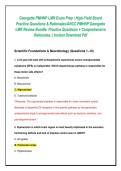
Georgette PMHNP LMR Exam Prep | High-Yield Board
Practice Questions & Rationales/ANCC PMHNP Georgette
LMR Review Bundle: Practice Questions + Comprehensive
Rationales. | Instant Download Pdf
Scientific Foundations & Neurobiology (Questions 1–10)
1. A 24-year-old male with schizophrenia experiences severe extrapyramidal
symptoms (EPS) on haloperidol. Which dopaminergic pathway is responsible for
these motor side effects?
A. Mesolimbic
B. Mesocortical
C. Nigrostriatal
D. Tuberoinfundibular
*Rationale: The nigrostriatal pathway is responsible for motor movement control.
Blockade of dopamine D2 receptors in this specific pathway by first-generation
antipsychotics leads to extrapyramidal side effects such as dystonia, akathisia, and
pseudoparkinsonism.*
2. Dysfunction in which brain region is most heavily implicated in the executive
functioning deficits and lack of impulse control seen in ADHD?
A. Amygdala
B. Prefrontal cortex
C. Hippocampus
,D. Basal ganglia
*Rationale: The prefrontal cortex manages executive functioning, working memory,
attention focus, and impulse control. Decreased dopamine and norepinephrine activity
in this area explains the primary symptoms of ADHD.*
3. A patient presents with profound memory loss and spatial disorientation. A
PET scan reveals a high density of amyloid plaques and neurofibrillary tangles.
What is the primary neurotransmitter deficit associated with this condition?
A. Dopamine
B. Acetylcholine
C. Serotonin
D. Norepinephrine
*Rationale: Alzheimer's disease is pathologically characterized by extracellular amyloid
plaques and intracellular neurofibrillary tangles, which lead to severe degeneration of
cholinergic neurons and a profound deficit in acetylcholine.*
4. Which neuroanatomical structure acts as the primary "alarm system" of the
brain, triggering the fight-or-flight response during panic attacks?
A. Hippocampus
B. Amygdala
C. Thalamus
D. Nucleus accumbens
*Rationale: The amygdala is the emotional processing center of the brain. It coordinates
fear conditioning and evaluates threats, acting as the primary trigger for the autonomic
fight-or-flight cascade during a panic attack.*
,5. What is the mechanism of action of the enzyme Monoamine Oxidase (MAO) in
the synaptic cleft?
A. Synthesizing serotonin from tryptophan
B. Transporting dopamine back into the presynaptic neuron
C. Metabolizing and breaking down monoamine neurotransmitters
D. Activating postsynaptic GABA receptors
*Rationale: Monoamine oxidase is an enzyme responsible for safety-degrading and
breaking down excessive monoamines (like serotonin, norepinephrine, and dopamine)
to keep neurotransmitter levels strictly balanced.*
6. A patient taking an antipsychotic experiences a significant increase in serum
prolactin levels, leading to galactorrhea. Blockade in which dopamine pathway
causes this?
A. Nigrostriatal
B. Mesolimbic
C. Mesocortical
D. Tuberoinfundibular
*Rationale: Dopamine acts as a natural prolactin-inhibiting factor in the
tuberoinfundibular pathway. When an antipsychotic blocks D2 receptors here, prolactin
is released without inhibition, causing galactorrhea, gynecomastia, and amenorrhea.*
7. Benzodiazepines exert their anxiolytic effects by modulating which receptor
complex?
A. NMDA receptor antagonism
B. 5-HT1A receptor agonism
, C. GABA-A receptor positive allosteric modulation
D. Alpha-2 adrenergic agonism
*Rationale: Benzodiazepines bind to specific allosteric sites on the GABA-A receptor
complex. This binding increases the frequency of the chloride channel opening when
GABA is present, hyperpolarizing the neuron and dampening central nervous system
excitability.*
8. Which brain structure is primarily responsible for the consolidation of short-
term memory into long-term memory?
A. Amygdala
B. Hippocampus
C. Hypothalamus
D. Cerebellum
*Rationale: The hippocampus is the primary anatomical hub for memory consolidation.
While long-term memories are eventually stored throughout the cerebral cortex, the
hippocampus must process them from short-term memory first.*
9. Chronic stress and high levels of cortisol have been shown to cause atrophy in
which specific brain region?
A. Hippocampus
B. Ventral tegmental area
C. Locus coeruleus
D. Putamen
A. Hippocampus
*Rationale: Sustained hypercortisolemia caused by chronic stress, severe depression,
Practice Questions & Rationales/ANCC PMHNP Georgette
LMR Review Bundle: Practice Questions + Comprehensive
Rationales. | Instant Download Pdf
Scientific Foundations & Neurobiology (Questions 1–10)
1. A 24-year-old male with schizophrenia experiences severe extrapyramidal
symptoms (EPS) on haloperidol. Which dopaminergic pathway is responsible for
these motor side effects?
A. Mesolimbic
B. Mesocortical
C. Nigrostriatal
D. Tuberoinfundibular
*Rationale: The nigrostriatal pathway is responsible for motor movement control.
Blockade of dopamine D2 receptors in this specific pathway by first-generation
antipsychotics leads to extrapyramidal side effects such as dystonia, akathisia, and
pseudoparkinsonism.*
2. Dysfunction in which brain region is most heavily implicated in the executive
functioning deficits and lack of impulse control seen in ADHD?
A. Amygdala
B. Prefrontal cortex
C. Hippocampus
,D. Basal ganglia
*Rationale: The prefrontal cortex manages executive functioning, working memory,
attention focus, and impulse control. Decreased dopamine and norepinephrine activity
in this area explains the primary symptoms of ADHD.*
3. A patient presents with profound memory loss and spatial disorientation. A
PET scan reveals a high density of amyloid plaques and neurofibrillary tangles.
What is the primary neurotransmitter deficit associated with this condition?
A. Dopamine
B. Acetylcholine
C. Serotonin
D. Norepinephrine
*Rationale: Alzheimer's disease is pathologically characterized by extracellular amyloid
plaques and intracellular neurofibrillary tangles, which lead to severe degeneration of
cholinergic neurons and a profound deficit in acetylcholine.*
4. Which neuroanatomical structure acts as the primary "alarm system" of the
brain, triggering the fight-or-flight response during panic attacks?
A. Hippocampus
B. Amygdala
C. Thalamus
D. Nucleus accumbens
*Rationale: The amygdala is the emotional processing center of the brain. It coordinates
fear conditioning and evaluates threats, acting as the primary trigger for the autonomic
fight-or-flight cascade during a panic attack.*
,5. What is the mechanism of action of the enzyme Monoamine Oxidase (MAO) in
the synaptic cleft?
A. Synthesizing serotonin from tryptophan
B. Transporting dopamine back into the presynaptic neuron
C. Metabolizing and breaking down monoamine neurotransmitters
D. Activating postsynaptic GABA receptors
*Rationale: Monoamine oxidase is an enzyme responsible for safety-degrading and
breaking down excessive monoamines (like serotonin, norepinephrine, and dopamine)
to keep neurotransmitter levels strictly balanced.*
6. A patient taking an antipsychotic experiences a significant increase in serum
prolactin levels, leading to galactorrhea. Blockade in which dopamine pathway
causes this?
A. Nigrostriatal
B. Mesolimbic
C. Mesocortical
D. Tuberoinfundibular
*Rationale: Dopamine acts as a natural prolactin-inhibiting factor in the
tuberoinfundibular pathway. When an antipsychotic blocks D2 receptors here, prolactin
is released without inhibition, causing galactorrhea, gynecomastia, and amenorrhea.*
7. Benzodiazepines exert their anxiolytic effects by modulating which receptor
complex?
A. NMDA receptor antagonism
B. 5-HT1A receptor agonism
, C. GABA-A receptor positive allosteric modulation
D. Alpha-2 adrenergic agonism
*Rationale: Benzodiazepines bind to specific allosteric sites on the GABA-A receptor
complex. This binding increases the frequency of the chloride channel opening when
GABA is present, hyperpolarizing the neuron and dampening central nervous system
excitability.*
8. Which brain structure is primarily responsible for the consolidation of short-
term memory into long-term memory?
A. Amygdala
B. Hippocampus
C. Hypothalamus
D. Cerebellum
*Rationale: The hippocampus is the primary anatomical hub for memory consolidation.
While long-term memories are eventually stored throughout the cerebral cortex, the
hippocampus must process them from short-term memory first.*
9. Chronic stress and high levels of cortisol have been shown to cause atrophy in
which specific brain region?
A. Hippocampus
B. Ventral tegmental area
C. Locus coeruleus
D. Putamen
A. Hippocampus
*Rationale: Sustained hypercortisolemia caused by chronic stress, severe depression,


