

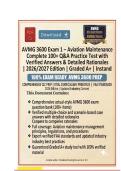
,AVMG 3600 Exam 1 – Aviation Maintenance Management: Complete
100+ Q&A Practice Test with Verified Answers & Detailed Rationales |
2026/2027 Edition | Graded A+ | Instant Download
1. Which Federal Aviation Regulation (FAR) governs the rules for
maintenance, preventive maintenance, rebuilding, and alteration of
civil aircraft?
• A. FAR Part 21
• B. FAR Part 43
• C. FAR Part 91
• D. FAR Part 145
• Answer: B
• Rationale: FAR Part 43 prescribes rules governing maintenance,
preventive maintenance, rebuilding, and alteration of aircraft,
powerplants, propellers, and appliances.
2. Who holds the ultimate legal responsibility for maintaining an
aircraft in an airworthy condition during commercial operations?
• A. The designated FAA inspector (PMI)
• B. The certified repair station performing the work
• C. The aircraft owner or operator
• D. The lead A&P mechanic signing off the work order
• Answer: C
, • Rationale: Under FAR Part 91 and Part 121, the owner or operator
of the aircraft has primary and ultimate legal responsibility for
maintaining the aircraft in an airworthy condition.
3. What is the primary purpose of an Airworthiness Directive (AD)?
• A. To provide optional manufacturer recommendations for cabin
upgrades
• B. To mandate legally enforceable corrective actions for unsafe
conditions found in aircraft, engines, propellers, or appliances
• C. To specify pricing guidelines for spare parts
• D. To outline routine cleaning schedules for airframes
• Answer: B
• Rationale: Airworthiness Directives (ADs) are legally enforceable
regulations issued by the FAA to correct unsafe conditions that
have been found in a product (aircraft, engine, propeller, or
appliance).
4. Which FAR part outlines the certification and operational
requirements for FAA-approved repair stations?
• A. FAR Part 39
• B. FAR Part 65
• C. FAR Part 121
• D. FAR Part 145
• Answer: D
, • Rationale: FAR Part 145 prescribes the requirements for issuing
repair station certificates and governs the general operating rules
for certified repair stations.
5. What is the distinction between a Service Bulletin (SB) and an
Airworthiness Directive (AD)?
• A. SBs are issued by manufacturers and are generally advisory
unless mandated by an associated AD issued by the FAA.
• B. ADs are optional guidelines, while SBs are strictly mandatory by
law.
• C. SBs are issued exclusively by government aviation authorities,
whereas ADs come from airlines.
• D. There is no legal or operational difference between the two.
• Answer: A
• Rationale: Service Bulletins are released by manufacturers to
describe product improvements or inspection procedures. They
only become mandatory when the FAA incorporates them into a
legally binding Airworthiness Directive (AD).
6. What document must be completed when a major repair or major
alteration is performed on an aircraft?
• A. FAA Form 8130-3
• B. FAA Form 337 (Major Repair and Alteration)
• C. Logbook entry sticker only
• D. FAA Form 7233-1
• Answer: B
100+ Q&A Practice Test with Verified Answers & Detailed Rationales |
2026/2027 Edition | Graded A+ | Instant Download
1. Which Federal Aviation Regulation (FAR) governs the rules for
maintenance, preventive maintenance, rebuilding, and alteration of
civil aircraft?
• A. FAR Part 21
• B. FAR Part 43
• C. FAR Part 91
• D. FAR Part 145
• Answer: B
• Rationale: FAR Part 43 prescribes rules governing maintenance,
preventive maintenance, rebuilding, and alteration of aircraft,
powerplants, propellers, and appliances.
2. Who holds the ultimate legal responsibility for maintaining an
aircraft in an airworthy condition during commercial operations?
• A. The designated FAA inspector (PMI)
• B. The certified repair station performing the work
• C. The aircraft owner or operator
• D. The lead A&P mechanic signing off the work order
• Answer: C
, • Rationale: Under FAR Part 91 and Part 121, the owner or operator
of the aircraft has primary and ultimate legal responsibility for
maintaining the aircraft in an airworthy condition.
3. What is the primary purpose of an Airworthiness Directive (AD)?
• A. To provide optional manufacturer recommendations for cabin
upgrades
• B. To mandate legally enforceable corrective actions for unsafe
conditions found in aircraft, engines, propellers, or appliances
• C. To specify pricing guidelines for spare parts
• D. To outline routine cleaning schedules for airframes
• Answer: B
• Rationale: Airworthiness Directives (ADs) are legally enforceable
regulations issued by the FAA to correct unsafe conditions that
have been found in a product (aircraft, engine, propeller, or
appliance).
4. Which FAR part outlines the certification and operational
requirements for FAA-approved repair stations?
• A. FAR Part 39
• B. FAR Part 65
• C. FAR Part 121
• D. FAR Part 145
• Answer: D
, • Rationale: FAR Part 145 prescribes the requirements for issuing
repair station certificates and governs the general operating rules
for certified repair stations.
5. What is the distinction between a Service Bulletin (SB) and an
Airworthiness Directive (AD)?
• A. SBs are issued by manufacturers and are generally advisory
unless mandated by an associated AD issued by the FAA.
• B. ADs are optional guidelines, while SBs are strictly mandatory by
law.
• C. SBs are issued exclusively by government aviation authorities,
whereas ADs come from airlines.
• D. There is no legal or operational difference between the two.
• Answer: A
• Rationale: Service Bulletins are released by manufacturers to
describe product improvements or inspection procedures. They
only become mandatory when the FAA incorporates them into a
legally binding Airworthiness Directive (AD).
6. What document must be completed when a major repair or major
alteration is performed on an aircraft?
• A. FAA Form 8130-3
• B. FAA Form 337 (Major Repair and Alteration)
• C. Logbook entry sticker only
• D. FAA Form 7233-1
• Answer: B


