

BMGT 364 exam 1
Study online at https://quizlet.com/_4ksrq7
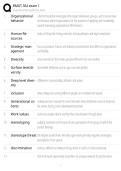
1. Organizational a field of study that investigates the impact individuals, groups, and structure have
behavior on behavior within organizations, for the purpose of applying such knowledge
toward improving organizational effectiveness
2. Human Re- looks at things like hiring protocols, training designs and legal compliance
sources
3. Strategic man- focus on product choices and industry characteristics that affect an organizations
agement profitability
4. Diversity any characteristic that makes people different from one another
5. Surface level di- observable attributes such as age, race and gender
versity
6. Deep level diver- differences in personality, attitudes and values
sity
7. inclusion when viewpoints among different people are included and valued
8. Generational co- individuals born around the same time who share distinctive social or historical
horts life events during critical development periods
9. Work values outcomes people desire and feel they should attain through work
10. stereotyping judging someone on the basis of ones perception of the group to which the
person belongs
11. stereotype threat the degree to which we internally agree with generally negative stereotypes
perceptions of our group
12. discrimination noting a difference between things which in itself isn't necessarily bad
13. denial of equal opportunity to perform or unequal rewards for performance
, BMGT 364 exam 1
Study online at https://quizlet.com/_4ksrq7
discriminatory
policies or
practices
14. sexual harass- unwanted sexual advances and other verbal or physical conduct of a sexual nature
ment that creates a hostile or offensive work environment
15. intimidation overt threats or bullying directed at members of a specific group of employees
16. mockery and in- jokes of negative stereotypes: sometimes the result of a joke being taken too far
sults
17. exclusion exclusion of certain people from job opportunities, social events, discussions etc
18. incivility disrespectful treatment
19. affirmative ac- social policy aimed at reducing the effects of prior discrimination by taking extra
tion effort to attract and retain minority employees
20. cognitive disso- tension from incompatibility between behavior and attitudes
nance
21. perception a process by which individuals organize and interpret their sensory impressions
in order to give meaning to their environment
22. attribution theo- perceivers try to attribute the observed behavior to a type of cause (internal or
ry external)
23. internal cause behavior is believed to be under the personal control of the individual
24. external cause the person is forced into the behavior by outside events/ causes
25. determinants of -distinctiveness
attribution -consensus
-consistency
, BMGT 364 exam 1
Study online at https://quizlet.com/_4ksrq7
26. distinctiveness whether an individual displays different behaviors in different situations
27. consensus does everyone who faces a similar situation respond in the same way as the
individual did?
28. consistency does the person respond the same way over time?
29. fundamental at- tendency to under estimate the influence of external factors and overestimate that
tribution error of internal factors
30. self serving bias occurs when individuals over estimate their own (intern) influence on successes
and overestimate the external influences on their failures
31. selective percep- a perceptual filtering process based on interests, background and attitude
tion
32. halo effect drawing a general impression based on a single characteristic
33. contrast effects our reaction if influences by other we have recently encountered
34. rational decision 1) define the problem
making model 2) identify the decision criteria
3) allocate weights to the criteria
4) develop alternatives
5) evaluate alternatives
6) select best alternative
35. bounded ratio- constructing simplified models that extract the essential features from problems
nality without capturing all their complexity
36. confirmation seeking out information that reaffirms our past choices and discounting informa-
bias tion that contradicts past judgments
37. availability bias basing judgments on readily available information
Study online at https://quizlet.com/_4ksrq7
1. Organizational a field of study that investigates the impact individuals, groups, and structure have
behavior on behavior within organizations, for the purpose of applying such knowledge
toward improving organizational effectiveness
2. Human Re- looks at things like hiring protocols, training designs and legal compliance
sources
3. Strategic man- focus on product choices and industry characteristics that affect an organizations
agement profitability
4. Diversity any characteristic that makes people different from one another
5. Surface level di- observable attributes such as age, race and gender
versity
6. Deep level diver- differences in personality, attitudes and values
sity
7. inclusion when viewpoints among different people are included and valued
8. Generational co- individuals born around the same time who share distinctive social or historical
horts life events during critical development periods
9. Work values outcomes people desire and feel they should attain through work
10. stereotyping judging someone on the basis of ones perception of the group to which the
person belongs
11. stereotype threat the degree to which we internally agree with generally negative stereotypes
perceptions of our group
12. discrimination noting a difference between things which in itself isn't necessarily bad
13. denial of equal opportunity to perform or unequal rewards for performance
, BMGT 364 exam 1
Study online at https://quizlet.com/_4ksrq7
discriminatory
policies or
practices
14. sexual harass- unwanted sexual advances and other verbal or physical conduct of a sexual nature
ment that creates a hostile or offensive work environment
15. intimidation overt threats or bullying directed at members of a specific group of employees
16. mockery and in- jokes of negative stereotypes: sometimes the result of a joke being taken too far
sults
17. exclusion exclusion of certain people from job opportunities, social events, discussions etc
18. incivility disrespectful treatment
19. affirmative ac- social policy aimed at reducing the effects of prior discrimination by taking extra
tion effort to attract and retain minority employees
20. cognitive disso- tension from incompatibility between behavior and attitudes
nance
21. perception a process by which individuals organize and interpret their sensory impressions
in order to give meaning to their environment
22. attribution theo- perceivers try to attribute the observed behavior to a type of cause (internal or
ry external)
23. internal cause behavior is believed to be under the personal control of the individual
24. external cause the person is forced into the behavior by outside events/ causes
25. determinants of -distinctiveness
attribution -consensus
-consistency
, BMGT 364 exam 1
Study online at https://quizlet.com/_4ksrq7
26. distinctiveness whether an individual displays different behaviors in different situations
27. consensus does everyone who faces a similar situation respond in the same way as the
individual did?
28. consistency does the person respond the same way over time?
29. fundamental at- tendency to under estimate the influence of external factors and overestimate that
tribution error of internal factors
30. self serving bias occurs when individuals over estimate their own (intern) influence on successes
and overestimate the external influences on their failures
31. selective percep- a perceptual filtering process based on interests, background and attitude
tion
32. halo effect drawing a general impression based on a single characteristic
33. contrast effects our reaction if influences by other we have recently encountered
34. rational decision 1) define the problem
making model 2) identify the decision criteria
3) allocate weights to the criteria
4) develop alternatives
5) evaluate alternatives
6) select best alternative
35. bounded ratio- constructing simplified models that extract the essential features from problems
nality without capturing all their complexity
36. confirmation seeking out information that reaffirms our past choices and discounting informa-
bias tion that contradicts past judgments
37. availability bias basing judgments on readily available information


