

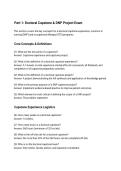
Part 1: Doctoral Capstone & DNP Project Exam
This section covers the key concepts for a doctoral capstone experience, common in
nursing (DNP) and occupational therapy (OTD) programs.
Core Concepts & Definitions
Q1: What are the two parts of a capstone?
Answer: Capstone experience and capstone project.
Q2: What is the definition of a doctoral capstone experience?
Answer: A 14-week, on-site experience started after all coursework, all fieldwork, and
completion of all capstone preparatory activities.
Q3: What is the definition of a doctoral capstone project?
Answer: A project demonstrating the full synthesis and application of knowledge gained.
Q4: What is the primary purpose of a DNP capstone project?
Answer: Implement evidence-based practice to improve patient outcomes.
Q5: Which element is most critical in defining the scope of a DNP project?
Answer: The problem statement.
Capstone Experience Logistics
Q6: How many weeks is a doctoral capstone?
Answer: 14 weeks.
Q7: How many hours is a doctoral capstone?
Answer: 560 hours (minimum of 32 hrs/wk).
Q8: What is the off-site rule for a doctoral capstone?
Answer: No more than 20% of the 560 hours can be completed off-site.
Q9: Who is on the doctoral capstone team?
Answer: Site mentor, faculty advisor, and capstone coordinator.
, Roles & Responsibilities
Q10: What is the role of the site mentor?
Answer: To serve as a context expert in the student's concentrated area of study who
directly oversees their performance during the experience.
Q11: What is the learning contract developed between the student and site mentor
called?
Answer: Memorandum of Understanding (MOU).
Q12: What is the role of the capstone coordinator?
Answer: A faculty member responsible for the OT program's compliance with
accreditation standards associated with the DC.
Needs Assessment & Project Planning
Q13: What three areas go into the collaborative planning of a Doctoral Capstone?
Answer: The site's unmet needs, student interests, and faculty mentor's expertise.
Q14: What are the components of a needs assessment?
Answer: Literature review, discussion with mentors, interviews with stakeholders, and
SWOT analysis.
Q15: What is a Logic Model and its purpose in a DNP project?
Answer: A visual representation of how project inputs, activities, and outputs lead to
outcomes.
Q16: During a DNP project defense, the committee asks about ethical considerations.
Which is the best response?
Answer: "Ethical approval and patient safety measures were integrated throughout the
project."
Q17: What is the most common method of data collection in a practice-focused DNP
project?
Answer: Surveys, chart reviews, and clinical assessments.
Q18: Which metric is most appropriate for evaluating workflow improvement?
Answer: Time taken to complete tasks or error rates.
This section covers the key concepts for a doctoral capstone experience, common in
nursing (DNP) and occupational therapy (OTD) programs.
Core Concepts & Definitions
Q1: What are the two parts of a capstone?
Answer: Capstone experience and capstone project.
Q2: What is the definition of a doctoral capstone experience?
Answer: A 14-week, on-site experience started after all coursework, all fieldwork, and
completion of all capstone preparatory activities.
Q3: What is the definition of a doctoral capstone project?
Answer: A project demonstrating the full synthesis and application of knowledge gained.
Q4: What is the primary purpose of a DNP capstone project?
Answer: Implement evidence-based practice to improve patient outcomes.
Q5: Which element is most critical in defining the scope of a DNP project?
Answer: The problem statement.
Capstone Experience Logistics
Q6: How many weeks is a doctoral capstone?
Answer: 14 weeks.
Q7: How many hours is a doctoral capstone?
Answer: 560 hours (minimum of 32 hrs/wk).
Q8: What is the off-site rule for a doctoral capstone?
Answer: No more than 20% of the 560 hours can be completed off-site.
Q9: Who is on the doctoral capstone team?
Answer: Site mentor, faculty advisor, and capstone coordinator.
, Roles & Responsibilities
Q10: What is the role of the site mentor?
Answer: To serve as a context expert in the student's concentrated area of study who
directly oversees their performance during the experience.
Q11: What is the learning contract developed between the student and site mentor
called?
Answer: Memorandum of Understanding (MOU).
Q12: What is the role of the capstone coordinator?
Answer: A faculty member responsible for the OT program's compliance with
accreditation standards associated with the DC.
Needs Assessment & Project Planning
Q13: What three areas go into the collaborative planning of a Doctoral Capstone?
Answer: The site's unmet needs, student interests, and faculty mentor's expertise.
Q14: What are the components of a needs assessment?
Answer: Literature review, discussion with mentors, interviews with stakeholders, and
SWOT analysis.
Q15: What is a Logic Model and its purpose in a DNP project?
Answer: A visual representation of how project inputs, activities, and outputs lead to
outcomes.
Q16: During a DNP project defense, the committee asks about ethical considerations.
Which is the best response?
Answer: "Ethical approval and patient safety measures were integrated throughout the
project."
Q17: What is the most common method of data collection in a practice-focused DNP
project?
Answer: Surveys, chart reviews, and clinical assessments.
Q18: Which metric is most appropriate for evaluating workflow improvement?
Answer: Time taken to complete tasks or error rates.


