

Written by students who passed Immediately available after payment Read online or as PDF Wrong document? Swap it for free 4.6 TrustPilot
logo-home
Document preview thumbnail
Preview 3 out of 27 pages
Exam (elaborations)

Exam 3: NURS 663/ NURS663 (2026/ 2027 Updated) Psychiatric Mental Health Diagnosis and Management II Review with Q&A Grade A (Accurate Answers) - Maryville

Document preview thumbnail
Preview 3 out of 27 pages

Exam 3: NURS 663/ NURS663 (2026/ 2027 Updated) Psychiatric Mental Health Diagnosis and Management II Review with Q&A Grade A (Accurate Answers) - Maryville. Q. Med tx is focused on diminishing intrusive thoughts, hyperarousal, and avoidance, with some success and mixed results ANSWER pharmacologic agents for PTSD Q. Depressive disorder, anxiety disorders, and behavioral problems associated with ______________ ANSWER PTSD frequent comorbidity Q. That __________and ______________ are approved by the Food and Drug Administration (FDA) in the treatment of PTSD in adults, there is scant evidence to support its use for the core symptoms of PTSD in youth s ANSWER ertraline and paroxetine Q. FDA approval for use in children and adolescents with aggression, severe behavioral dyscontrol, and severe psychiatric disorders ANSWER Risperidone and aripiprazole Q. Treat dysregulation of the noradrenergic system in adults and youth with PTSD ANSWER Antiadrenergic agents Q. Alpha2-agonists examples ANSWER clonidine and guanfacine Q. Decrease norepinephrine release, such as, are ANSWER Alpha2 agonists Q. Centrally acting β-antagonists example ANSWER propranolol Q. α-1-antagonists example ANSWER prazosin Q. Hypothesized to improve hyperarousal and intrusive thoughts through attenuation of norepinephrine postsynaptically ANSWER propranolol use Q. Nightmares associated with trauma ANSWER prazosin use Q. Off-label medications including antidepressants, atypical antipsychotics, adrenergic modulators/sympatholytics, and anticonvulsants/mood stabilizers ANSWER Modify PTSD sx Q. Nightmares and exaggerated startle response: some evidence in adults, but children case report only ANSWER clonidine and propanolol Q. __________ may reduce nightmares in children with PTSD and ____________may diminish symptoms of reenactment of traumatic events in children ANSWER guanfacine and clonidine Q. Divalproex, carbamazepine, topiramate, and gabapentin have been utilized for adults with PTSD with modest improvement; some ANSWER Mood-stabilizing agents Q. May provide some relief for the symptoms of hyperarousal, impulsivity, and agitation in young children with PTSD; in children some evidence ANSWER clonidine with dosage ranges of 0.05 to 0.1 mg twice daily Q. No controlled trials supporting use in children ANSWER benzodiazepines Q. 10-16 treatment sessions, including 9 components itemized in the acronym PRACTICE ANSWER Trauma-Focused CBT Q. Exposure and cognitive reprocessing interventions are paired with directed eye movements, alternating tones or tapping ANSWER EMDR Q. Cognitive Behavioral Interventions for Trauma in Schools ANSWER CBITS Q. Intervention that administers treatment in the school setting for children who screen positive for PTSD and whose parents agree to treatment in school. ANSWER CBITS description Q. Consists of 10 weekly group sessions 1-3 individual imaginal exposure sessions 2-4 optional sessions with parents 1 parent education session. Similar to trauma-focused CBT, incorporates psychoeducation, relaxation, training, cognitive coping skills, gradual exposure to traumatic memories ANSWER CBITS elements Q. Structured Psychotherapy for Adolescents Responding to Chronic Stress ANSWER SPARCS Q. -Consists of a group intervention, -16 sessions -focus on the needs of adolescents (12-19 years old) chronic trauma and PTSD. -Utilizes cognitive behavioral techniques, and -incorporates many of the components of TF-CBT -Includes mindfulness techniques and relaxation. ANSWER SPARCS description Q. Trauma Affect Regulation:Guide for Education and Therapy ANSWER TARGET description Q. -affect regulation therapy, -combines CBT components, such as cognitive procession, with affect modulation. -adolescents (13-19) exposed to maltreatment and/or chronic traumatic exposure to such things as community violence or domestic violence. -12 sessions, which focuses on past or current situations. ANSWER TARGET description Q. --Like SPARCS treatment, gradual exposure may occur in the context of recounting past trauma but is not a core component of treatment. --Reduces anxiety, depression, and PTSD --Promising treatment for girls with h/o delinquency, especially to reduce anger and to enhance optimism and self efficacy. ANSWER TARGET efficacy 1. several sessions immediately after an exposure to a traumatic event; encouraged to describe the traumatic event in the context of a supportive environment. 2. Psychoeducation is provided and guidance about the management of initial emotional reactions may be provided. 3. No controlled studies have yet provided evidence that this intervention leads to a more positive outcome Crisis intervention/Psychological Debriefing PTSD criteria add'l info 1. Over 6 years old 2. Sx over 1 month duration, or dx criteria may not have occurred until at least 6 months after the trauma 3. Constricted emotions can show up suddenly after major life event, stressor, or accumulated stressors that challenge defenses. 4. Can hide in somatic complaints or co-occur with depression, substance abuse, anxiety or after head injury PTSD differential diagnosis: Medical hyperthyroidism, caffeinism, migraine, asthma, seizure disorder, and catecholamine or serotonin-secreting tumors. Some prescription medications and even some OTC medications may have similar effects, such as antiasthmatics, sympathomimetics, steroids, SSRIs, and antipsychotics, diet pills, antihistamines, and cold medicines PTSD differential diagnosis anxiety disorders, such as separation anxiety disorder, obsessive-compulsive disorder (OCD) or social phobia, depressive disorders, bereavement trauma, disruptive behavior d/o PTSD-associated psychosis does not respond well to neuroleptic (antipsychotic) medication; may respond better to psychosocial interventions. The hallucinations and delusions connect to the traumatic situation and perpetrators. Older kids show symptoms like adults. PTSD criteria Trauma: occured, witnessed, learned about Harm or threat of harm to self, loved one 1. Re-experiencing traumatic event 2. Sustained high level of anxiety, hyperarousal / hypervigilance / exaggerated startle 3. Avoid activities, people, places, situations, objects that arouse memories 4. A numbing of responsiveness, concentration 5. Re-exp. flashbacks, nightmares, intrusive memories 6. Inability to remember aspects of the trauma 7. Chronic negative emotional state, decreased interest / participation in significant activities 8. Depression, survivor's guilt, relationship problems, panic attacks 9. Substance abuse 10. Anger, aggressive, reckless, thrill-seeking, or self-destructive behavior PTSD stats 20 to 76% _________ children in inpt psych units endorse hallucinations. Psychosis is present in up to 75 to 95% of those diagnosed with dissociative disorders. Traumatized C/A 1. Hear perpetrators frightening them, making derogatory remarks, or announcing / threatening new victimization. 2. See the perpetrator, smell them, fear victimizer will follow them, or feel they will come hurt them again. 3. Hear command hallucinations (by the perpetrator) telling them to harm themselves or others. 4. Hallucinations (PTSD type) are frequently nocturnal. Occur in 9% of abused children. 5. Nightmares are frightening, recurrent PTSD under 6 yo alterations in arousal and reactivity associated with the traumatic event(s) including: irritable behavior and anger outbursts, hypervigilance, exaggerated startle response, problems with concentration, and sleep disturbance. PTSD under 6 yo add'l 1. May have enuresis after they were toilet trained 2. Developmental regression-Stop speaking or forget how to talk - 3. Become very clingy 4. Act out trauma through play or re-enactment 5. Egocentric theory of causality: blame self ODD oppositional defiant disorder ODD criteria A pattern of angry/irritable mood, argumentative/defiant behavior, or vindictiveness lasting at least 6 months as evidenced by at least four symptoms from the categories, and exhibited during interaction with at least one non-sibling ODD categories Angry/Irritable Mood 1. Often loses temper. 2. Is often touchy or easily annoyed. 3. Is often angry and resentful. Argumentative/Defiant Behavior 4. Often argues with authority figures or, for children and adolescents, with adults. 5. Often actively defies or refuses to comply with requests from authority figures or with rules. 6. Often deliberately annoys others. 7. Often blames others for his or her mistakes or misbehavior. Vindictiveness 8. Has been spiteful or vindictive at least twice within the past 6 months. ODD add'l criteria children younger than 5 years, the behavior should occur on most days for a period of at least 6 months 5 years or older, the behavior should occur at least once per week for at least 6 months ODD severity Specify number of settings for severity: Mild: one setting (e.g., at home, at school, at work, with peers). Moderate: at least two settings. Severe: three or more settings Conduct Disorder (CD) A. Repetitive/persistent pattern of behavior in which basic rights of others or major societal norms/rules are violated B. at least 3 of following 15 criteria in past 12 mo, with at least 1 criterion present in the last 6 mo CD aggression 1. Bullies, threatens, or intimidates others 2. Initiates physical fights 3. Used a weapon that can cause serious physical harm to others (bat, brick, knife, gun etc.) 4. Physically cruel to people 5. physically cruel to animals 6. Steals while confronting a victim (mugging, purse snatching, armed robbery, extortion, etc.) 7. Forced someone into sexual activity CD prop destruction 8. Has deliberately engaged in fire setting with intention of causing serious damage 9. Has deliberately destroyed others' property (other than setting fire) CD: Deceitfulness or theft 10. Breaks into someone else's house, bldg, or car 11. Often lies to obtain goods or favors or to avoid obligations ("cons" others) 12. Has stolen items of nontrivial value without confronting a victim (shoplifting, forgery etc; no B & E) CD serious rule violation 13. Often stays out at night despite parental prohibitions, beginning before age 13. 14. Has run away from home overnight at least twice from home, or once without returning for a lengthy period 15. Is often truant from school, beginning before age 13. CD onset childhood before 10 yo adolescent after 10yo Over 18 yo: antisocial personality disorder CD with limited prosocial emotions Lack of remorse or guilt Callous-lack of empathy Unconcerned about performance Shallow or deficient affect Reactive attachment disorder --children: received grossly negligent care and do not form a healthy emotional attachment with their primary caregivers before age 5. --absence of emotional warmth during the first few years of life can negatively affect a child's entire future Attachment --develops when a child is repeatedly soothed, comforted, and cared for, and when the caregiver consistently meets the child's needs --creates love and trust others, to become aware of others' feelings and needs, to regulate his or her emotions, and to develop healthy relationships and a positive self-image RAD criteria A Consistent pattern of inhibited, emotionally withdrawn behavior toward adult caregivers: 1. The child rarely or minimally seeks comfort when distressed. 2. The child rarely or minimally responds to comfort when distressed. RAD criteria B A persistent social and emotional disturbance characterized by at least two of the following: 1. Minimal social and emotional responsiveness to others. Limited positive affect. 2. Episodes of unexplained irritability, sadness, or fearfulness that are evident even during nonthreatening interaction with adult caregivers. RAD criteria C The child has experienced a pattern of extremes of insufficient care as evidenced by at least one of the following: 1. Social neglect or deprivation in the form of persistent lack of having basic emotional needs for comfort, stimulation, and affection met by caregiving adults. 2. Repeated changes of primary caregivers that limit opportunities to form stable attachments (e.g., frequent changes in foster care.) 3. Rearing in unusual settings that severely limit opportunities to form selective attachments (e.g. institutions with child-to-caregiver-ratios.) RAD add'l The criteria are not met for autism spectrum disorder. The disturbance is evident before age 5 years. The child has a developmental age of at least 9 months. Specify if: Persistent: The order has been present for more than 12 months. Specify current severity: specified as severe when a child exhibits all symptoms of the disorder, with each symptom manifesting at relatively high levels DMDD disruptive mood dysregulation disorder DMDD developed to Addresses concerns of over diagnosing or over treating bipolar disorder in children DMDD def Pattern of mood dysregulation, chronic and persistent irritability, and frequent extreme behavioral dyscontrol in children who do not present with typical, classic, distinct episodes of mania or hypomania. Should not be made for the first time before age 6 years or after age 18 years. Onset of sx of temper outbursts and chronic irritable/ angry mood has to be before age 10 DMDD criteria A. Severe recurrent temper outbursts manifested verbally (e.g., verbal rages) and/or behaviorally (e.g., physical aggression toward people or property) that are grossly out of proportion in intensity or duration to the situation or provocation. B. outbursts inconsistent with developmental level. C. outbursts occur three or more times per week. D. The mood persistently irritable or angry most of the day, nearly every day, and is observable by others (e.g., parents, teachers, peers). DMDD dx 1. can' t coexist with ODD, IED, or bipolar disorder, 2. can coexist with MDD, ADHD, conduct disorder, and SUD. 3. IF meet criteria for both ________and ODD, then give DX of _________________ DMDD add'l 1. dx not be made for the first time before age 6 years or after age 18 years. 2. age of onset of Criteria A-E is before 10 years 3. never been a distinct period lasting more than 1 day during which the full symptom criteria, for a manic or hypomanic episode have been met PTSD neuropsych 1. noradrenergic and endogenous opiate systems, as well as the HPA axis, are hyperactive in at least some 2. increased activity/responsiveness of the autonomic nervous system, AEB elevated HR rates and BP and by abnormal sleep architecture 3. increased 24-hour urine epinephrine concentrations in veterans 4. increased urine catecholamine concentrations in sexually abused girls 5. platelet α2- and lymphocyte β-adrenergic receptors are downregulated in _______ possibly in response to chronically elevated catecholamine concentrations PTSD HPA axis 1. low plasma and urinary free cortisol concentrations. 2. More glucocorticoid receptors are found on lymphocytes 3. challenge with exogenous corticotropin-releasing factor (CRF) yields a blunted corticotropin (ACTH) response PTSD other neuropsych 1. hippocampus received increased attention, although the issue remains controversial. 2. Structural changes in the amygdala, an area of the brain associated with fear, have also been demonstrated ODD neuropsych 1. No specific laboratory tests or pathological findings 2. may share some characteristics with people with high levels of aggression, such as low central nervous system serotonin 3. Brain imaging studies suggest may have subtle differences in the part of the brain responsible for reasoning, judgment and impulse control ODD heredity tends to occur in families with a history of Attention Deficit Hyperactivity Disorder (ADHD), substance use disorders, or mood disorders such as depression or bipolar disorder. Explanatory models of ODD/CD focus on executive functions (EFs) Hot EF 1. comprises motivational, affective, and emotional aspect of cognition 2. The amygdala, anterior cingulate cortex, insula, and orbitofrontal cortex are responsible for ____ EF functioning Cold EF 1. focuses on inhibition, planning, working memory, and flexibility, which are basically top-down control mechanisms of cognition 2. dorsolateral prefrontal cortex and cerebellum control _____ EF CD neuropsych 1. decreased gray matter in limbic brain structures, and in the bilateral anterior insula and left amygdala compared to healthy controls 2. Neurotransmitter studies suggest low level of plasma dopamine β-hydroxylase, an enzyme that converts dopamine to norepinephrine, leading to a hypothesis of decreased noradrenergic function 3. juvenile offenders have found high plasma serotonin levels in blood cerebrospinal fluid (CSF) blood serotonin levels correlate inversely with levels of 5-HIAA in the _______________and that low 5-HIAA levels in __________correlate with aggression and violence aggressive children had significantly greater relative right frontal brain activity at rest comparitively. Frontal resting brain electrical activity has been hypothesized to reflect the ability to regulate emotion RAD neuropsych 1. no single specific laboratory test is used to make a diagnosis, 2. Many have disturbances of growth and development 3. If incoming early sensory input is inadequate or creates pandemonium, neural org will reflect this disarray. 4. Lower brain region disorganization automatically compromise higher brain regions Attachment Neuropsych 1. right hemispheres forge neural connections between infants subcortical, bodily-based affective states with conscious emotional states in the higher brain regions of the right hemisphere; 2. these circuits are vital to emotional processing, empathy and development of self 3. Right hemisphere and limbic system develop rapidly during the first year and responsible for habitual responses to stress Play vital to brain development Brain stem 0-9mo, critical role in regulation of arousal, sleep, heart rate, body temp, fear states Diencephalon 6mo-2yrs fine motor skills, promoting sensory integration, controlling motor functioning and facilitating flexibility in relational exchanges. Limbic system 1-4yrs regulate emotions, interpret non-verbal information, experience empathy for others, feel a sense of social connectedness, tolerate distress and differences Cortex 3-6yrs, highest and most complex, abstract cognitive processing and integration of social-emotional information. Violence seems to originate in the prefrontal cortex DMDD neuropsych 1. no study has yet been conducted specifically on children meeting the diagnostic criteria for ________ 2. abnormally reduced activation in neural regions associated with emotional salience, spatial attention, and reward processing in response to frustration tasks 3. facial affect recognition task, the participants' level of irritability correlated with amygdala activity across all intensities for all emotions (happy, fearful, and angry faces) in the _________ group 4. Event-related potential study: impairment in reward processing may be more salient than just excessive reactivity to loss for ______________ Acute stress disorder dx timeline 3 days to one month PTSD timeline greater than one month Drug route SUD inhaled, snorted, or injected, thus entering the brain in a sudden explosive manner, are usually much more reinforcing than when those same drugs are taken orally--slower absorb Dopamine (DA) 1. has long been recognized as a major player in the regulation of reinforcement and reward 2. mesolimbic pathway from the ventral tegmental area (VTA) to the nucleus accumbens seems to be crucial for reward Drugs of abuse 1. cause DA release in the mesolimbic pathway 2. increase dopamine in a manner that is more explosive and pleasurable than that which occurs naturally. 3. activation caused by drugs of abuse can eventually cause changes in reward circuitry that are associated with a vicious cycle vicious cycle of drug preoccupation, craving, addiction, dependence, and withdrawal ETOH w/d 1. tremulousness 2. psychotic and perceptual symptoms (e.g., delusions and hallucinations), 3. seizures, and 4. the symptoms of delirium tremens (DTs), called alcohol delirium in DSM-5. 5. general irritability, 6. gastrointestinal symptoms (e.g., nausea and vomiting), and 7. sympathetic autonomic hyperactivity 8. alert but may startle easily. ETOH w/d autonomic hyperactivity anxiety, arousal, sweating, facial flushing, mydriasis, tachycardia, and mild hypertension ETOH w/d time Tremulousness develops 6 to 8 hours after the cessation the psychotic and perceptual symptoms begin in 8 to 12 hours seizures in 12 to 24 hours, and DTs anytime during the first 72 hours; watch for the for the first week of w/d; unpredictable ETOH MOA Activates 5 HT3, GABA, dopamine, and serotonin receptors in CNS and inhibits glutamate receptors and voltage gated Ca channels. Potent CNS depressant. ETOH long term effects Wernicke's encephalopathy is completely reversible with treatment, only about 20 percent of patients with Korsakoff's syndrome recover BCA 0.05 % thought, judgment, and restraint are loosened and sometimes disrupted. BCA 0.1% voluntary motor actions usually become perceptibly clumsy BCA 0.1 to 0.15 In most states, legal intoxication ranges BCA 0.2 % the function of the entire motor area of the brain is measurably depressed, and the parts of the brain that control emotional behavior are also affected BCA 0.3% a person is commonly confused or may become stuporous BCA 0.4 to 0.5 % the person falls into a coma. At higher levels, the primitive centers of the brain that control breathing and heart rate are affected, and death ensues secondary to direct respiratory depression or the aspiration of vomitus. ETOH Tolerance Persons with long-term histories of can tolerate much higher concentrations than can _________-naïve persons; their tolerance may cause them to falsely appear less intoxicated than they really are ETOH intoxication sx 1. Slurred speech 2. Dizziness 3. Incoordination 4. Unsteady gait 5. Nystagmus 6. Impairment in attention or memory: anterograde amnesia 7. Stupor or coma 8. Double vision benzodiazepines w/d anxiety, dysphoria, intolerance for bright lights and loud noises, nausea, sweating, muscle twitching, and sometimes seizures Benzos w/d states recurrence: return of the original anxiety sx rebound: worsening of the original anxiety sx rue withdrawal emergence of new sx Benzo w/d mood and cognition Anxiety, apprehension, dysphoria, pessimism, irritability, obsessive rumination, and paranoid ideation Benzo w/d sleep Insomnia, altered sleep-wake cycle, and daytime drowsiness Benzo w/d phys s/sx Tachycardia, elevated blood pressure, hyperreflexia, muscle tension, agitation/motor restlessness, tremor, myoclonus, muscle and joint pain, nausea, coryza, diaphoresis, ataxia, tinnitus, and grand mal seizures Benzo w/d perception Hyperacusis, depersonalization, blurred vision, illusions, and hallucinations Hyperacusis debilitating hearing disorder characterized by an increased sensitivity to certain frequencies and volume ranges of sound. difficulty tolerating everyday sounds Benzo w/d timeline onset of withdrawal symptoms usually occurs 2 to 3 days after the cessation of use, but with long-acting drugs, the latency before onset can be 5 or 6 days Benzo MOA Stimulation of the inhibitory GABAergic activity, either by endogenous ligands or _______ or results in sedation, amnesia and ataxia, while attenuation of the GABAergic system leads to arousal, anxiety, restlessness, insomnia and exaggerated reactivity Benzo immediate risks large margin of safety when taken in overdoses lethal dose to effective dose is about 200 to 1; minimal respiratory depression. Flumazenil reverse the adverse psychomotor, amnestic, and sedative effects of ______ receptor agonists, including _____________, zolpidem, and zaleplon Heroin/opioids w/d Dysphoria, craving, irritable, autonomic hyperactivity; tachycardia, tremor, and sweating. Piloerection ("goose-bumps"), especially if ("cold turkey"). So horrible that opioid abusers stop at nothing to get opioid to relieve sx of w/d. What starts as quest for euphoria ends as a quest to avoid withdrawal heroin w/d clonidine can reduce signs of autonomic hyperactivity during withdrawal and aid in the detoxification process. heroin w/d timeline Starts 6-12 hours, Peak 1-3 days, Subsides in a week - May not be the same for everyone. methadone w/d timeline starts 24-48, peaks in the first few days and lasts 2-4 wks vicodine w/d timeline starts 8-12hrs peaks 12-48 hrs and lasts 5-10 days mu-opioid receptors μ--are involved in the regulation and mediation of analgesia, respiratory depression, constipation, and drug dependence Heroin the most commonly abused opioid, is heroin MOA more lipid soluble than morphine. This allows it to cross the blood-brain barrier faster and have a more rapid and pleasurable onset than morphine. more addictive. Heroin add'l 1. 90 percent of persons with ________________ dependence have an additional psychiatric disorder. 2. most common: major depressive disorder, alcohol use disorders, antisocial personality disorder, and anxiety disorders. 3. 15 % attempt to commit suicide at least once κappa-opioid receptors, κ--with analgesia, diuresis, and sedation; delta-opioid receptors Δ--with analgesia. endorphins are involved in other addictions, such as alcoholism, cocaine, and cannabinoid addiction. naltrexone opioid antagonist--has shown value in mitigating alcohol addiction. Heroin immediate risk 1. Overdose: respiratory depression. 2. intoxication includes maladaptive behavioral 3. changes and specific physical sx altered mood, psychomotor retardation, drowsiness, slurred speech, and impaired memory and attention in the presence of other indicators Cocaine/stimulants Persons aged 18 to 25 (0.9 percent) had the highest rate of past year use/abuse Follow cocaine use disorder development of mood disorders and alcohol-related disorders Precede cocaine use disorder anxiety disorders, antisocial personality disorder, and ADHD comorbid with cocaine use disorder major depressive disorder, bipolar II disorder, cyclothymic disorder, anxiety disorders, and antisocial personality Cocaine w/d immediate "crash" occurs with symptoms of anxiety, tremulousness, dysphoric mood, lethargy, fatigue, nightmares (accompanied by rebound rapid eye movement [REM] sleep), headache, profuse sweating, muscle cramps, stomach cramps, and insatiable hunger cocaine w/d most serious depression, which can be particularly severe after the sustained use of high doses of stimulants and which can be associated with suicidal ideation or behavior cocaine w/d self-medicate alcohol, sedatives, hypnotics, or antianxiety agents such as diazepam (Valium). cocaine w/d timeline generally peak in 2 to 4 days and are resolved in 1 week cocaine w/d from 661 Crash period: 9hrs to 4 days: opposite of stimulant effects: sleep, increased appetite, depressed and agitated. Acute W/D: 1-3 wks: irritability, fatigue, depression, insomnia, anxiety, drug cravings. Extinction: Cravings, depression moods potentially suicidal thoughts for months afterward cocaine crash period 9hrs to 4 days: opposite of stimulant effects: sleep, increased appetite, depressed and agitated. cocaine acute w/d 1-3 wks: irritability, fatigue, depression, insomnia, anxiety, drug cravings. cocaine extinction Cravings, depression moods potentially suicidal thoughts for months afterward cocaine MOA 1. competitive blockade of dopamine reuptake by the dopamine transporter. This blockade increases the concentration of dopamine in the synaptic cleft and results in increased activation of both dopamine type 1 (D1) and type 2 (D2). felt almost immediately and last for a relatively brief time (30 to 60 minutes); 2. metabolites of ____________ can be present in the blood and urine for up to 10 days cocaine immediate risks nasal congestion; serious inflammation, swelling, bleeding, and ulceration of the nasal mucosa can also occur cocaine long term use perforation of the nasal septa cocaine respiratory Freebasing and smoking crack can damage the bronchial passages and the lungs cocaine IV infection, embolisms, and the transmission of human immunodeficiency virus (HIV cocaine neurological acute dystonia, tics, and migraine-like headaches cocaine major complications cerebrovascular, epileptic, and cardiac: two thirds of these acute toxic effects occur within 1 hour of intoxication, about one fifth occur in 1 to 3 hours, and the remainder occurs up to several days later cocaine high doses seizures, respiratory depression, cerebrovascular diseases, and myocardial infarctions—all of which can lead to death Speed ball Deaths have also been reported with the ingestion of ___________________ which are combinations of opioids and cocaine Nicotine dependence is among the most prevalent, deadly, and costly of substance dependencies. Nicotine 1. decreases the blood concentrations of some antipsychotics. 2. increased prevalence in smoking is due, at least in part, to brain abnormalities in ____________receptors. 3. A specific polymorphism in a __________receptor has been linked to a genetic risk for schizophrenia nicotine administration 1. improve some cognitive impairments and parkinsonism in schizophrenia, possibly because of ________________dependent activation of dopamine neurons. 2. ______________ may decrease positive symptoms such as hallucinations in schizophrenia patients by its effect onreceptors in the brain that reduce the perception of outside stimuli, especially noise. nicotine w/d intense craving for _____________, tension, irritability, difficulty concentrating, drowsiness and paradoxical trouble sleeping, decreased heart rate and blood pressure, increased appetite and weight gain, decreased motor performance, and increased muscle tension nicotine w/d timeline W/d within 2 hours of last use generally peak in the first 24 to 48 hours and can last for weeks or months nicotine MOA 1. agonist at the________________subtype of acetylcholine receptors. 2. 25 % reaches the bloodstream, within 15 seconds. 3. activating the dopaminergic pathway projecting from the ventral tegmental area to the cerebral cortex and the limbic system. 4. increase in the concentrations of circulating norepinephrine and epinephrine and an increase in the release of vasopressin, β-endorphin, adrenocorticotropic hormone (ACTH), and cortisol. These hormones contribute to the basic stimulatory effects on the CNS nicotine immediate risks highly toxic alkaloid. Doses of 60 mg in an adult are fatal secondary to respiratory paralysis average dose is 0.5 mg nicotine toxicity--low dose nausea, vomiting, salivation, pallor (caused by peripheral vasoconstriction), weakness, abdominal pain (caused by increased peristalsis), diarrhea, dizziness, headache, increased blood pressure, tachycardia, tremor, and cold sweats nicotine toxicity--also inability to concentrate, confusion, and sensory disturbances nicotine--other risks 1. decrease in the user's amount of rapid eye movement (REM) 2. increased incidence of low birth weight babies 3. increased incidence of newborns with persistent pulmonary hypertension. 4. Increased BP, pulse, stroke, HA. Cannibus 1. most popular illicit drug, with 14.6 million people using it (6.2 percent of the population), 2. two thirds being under the age of 18. 3. 6 percent of 12th graders report daily use Cannibus use 1. heightens sensitivities to external stimuli, reveals new details, makes colors seem brighter and richer, and subjectively slows the appreciation of time. 2. high doses, users may experience depersonalization and derealization. 3. Motor skills impaired remains after the subjective, euphoriant effects have resolved 4. 8 to 12 hours after impaired motor skills interfere with the operation of motor vehicles and other heavy machinery. 5. effects are additive to those of alcohol, commonly used in combination cannibus dependence Tolerance does develop and psychological dependence has been found, although the evidence for physiological dependence is not strong. cannibus w/d irritability, cravings, nervousness, anxiety, insomnia, disturbed or vivid dreaming, decreased appetite, weight loss, depressed mood, restlessness, headache, chills, stomach pain, sweating, and tremors. cannibus w/d timeline w/d within 1 to 2 weeks of cessation. cannibus MOA _________________ receptor is found in highest concentrations in the basal ganglia, the hippocampus, and the cerebellum, with lower concentrations in the cerebral cortex ___________ receptor is not found in the brainstem, a minimal effects on respiratory and cardiac functions. Studies in animals show affec on monoamine and γ-aminobutyric acid GABA. some debate questions whether the ______________stimulate the so-called reward centers of the brain, dopaminergic neurons of the ventral tegmental area cannibus immediate risks Confusion and disorientation. No known safety risks for withdrawal. ___________________ induced psychotic and anxiety disorders DBT skills Mindfulness Distress tolerance Interpersonal effectiveness Emotion regulation Walking the Middle path (reality in balance of oppositional tensions) DBT therapy most empirical support for patients with borderline personality disorder overarching goal of DBT create a life worth living for patients who often suffer tremendously from chronic and pervasive problems across many areas of their live DBT method drawing on concepts derived from supportive, cognitive, and behavioral therapies. Some elements can be traced to Franz Alexander's view of therapy as a corrective emotional experience and other elements from certain Eastern philosophical schools (e.g., Zen) DBT assumes all behavior (including thoughts and feelings) is learned and that patients with borderline personality disorder behave in ways that reinforce or even reward their behavior, regardless of how maladaptive it is DBT five essential "functions" 1) to enhance and expand the patient's repertoire of skillful behavioral patterns; (2) to improve patient motivation to change by reducing reinforcement of maladaptive behavior, including dysfunctional cognition and emotion; (3) to ensure that new behavioral patterns generalize from the therapeutic to the natural environment; (4) to structure the environment so that effective behaviors are reinforced; (5) to enhance the motivation and capabilities of the therapist so that effective treatment is rendered. DBT stage 1 address suicidal behaviors and non-suicidal self injury. Target behaviors are addressed to decrease life-threatening, therapy-interfering, and quality of life interfering behaviors. DBT stage 2 decrease posttraumatic stress and aid clients in emotionally processing historical events DBT stage 3 geared toward increasing self-respect and creating a path forward toward goal achievement DBT stages 4 aims to assist clients in developing a sound sense of self, with capacity for joy and peace DBT Group Therapy 1. behavioral, emotional, cognitive, and interpersonal skills. 2. observations about others in the group are discouraged. 3. didactic approach, using specific exercises taken from a skills training manual: control emotional dysregulation and impulsive behavior. DBT Individual Therapy 1. skills learned during group training reviewed 2. life events from the previous week are examined. 3. Particular attention is paid to pathological behavioral patterns that could have been corrected if learned skills had been put into effect. 4. Patients record their thoughts, feelings, and behaviors on diary cards, which are analyzed in the session. DBT telehphone 1. meant to avert crisis and redirect injurious behavior to themselves or others. 2. brief and usually last about 10 minute DBT weekly consultation team provide support for one another and maintain motivation in their work. The meetings enable them to compare techniques used and to validate those that are most effective Drug dependence the continued use of a drug even though it harms the body, mind, and relationships Need drug in order to function Experience physical, psychological, social probs Denies dependence Can't quit tolerance needs to use more and more of the drug to get the desired effects drug abuse 1. Risk-taking behavior, illegal activity, interpersonal problems and a loss of interest in your usual activities 2. putting you in dangerous situations, jeopardizing your health or making you neglect important commitments at home, school or work drug intoxication a syndrome (e.g., alcohol intoxication or simple drunkenness) characterized by specific signs and symptoms resulting from recent ingestion or exposure to the substance 1. reversible 2. clinically signification maladaptive beh or psych changes 3. Sx not d/t medical or other condition biopsychocial model addiction inherited and an induced biological component to addictive disorders but also psychological-behavioural and social-cultural factors that have a role in the cause, course, and outcome of substance dependence biological factors addiction Genetic vulnerability (accounts for 40-60%). Birth. Adoption. Diet and nutrition. Mental disorders. Disease and illness or other medical disorder. Withdrawals and cravings. psychological factors addiction Childhood influences. Attachment. Anxiety (fears, cognitive distortions). Depression. Defence mechanisms (rationalization, denial, projection, etc). Psychosis. Self awareness. social factors addiction Upbringing/parenting. Education. Housing Urban/rural areas. Employment. Social and cultural norms. Behaviour should be considered in the context from which the person comes. Ethnic background. Socioeconomic status. Law. Political situation. Social network characteristics. Religion. Media. Environmental factors, weather or drought. biopsychosocial advantages Accounts complicating, contributing factors Encourages a complex yet individualized understanding Encourages a broader treatment perspective. Involve addressing more than one problem at a time. Changes at one level influence the other levels, therefore interventions at one level also influence other levels. It is comprehensive. It is the model most widely endorsed by treatment researchers because it can most adequately explain the intricate nature biopsychosocial disadvantages Emphasis may be placed on one aspect of the model without a solid integration of the three aspects. It is difficult to provide interventions on all three aspects at the same time. Some factors, such as risk and protective factors, cannot be changed. Its eclectic freedom has at times been accused of leading to anarchic thinking. Lithium reduces suicide in patients with bipolar disorder Clozapine antisuicidal, anti aggressive effects and efficacy in schizophrenic patients, evidence is not as strong as with lithium, considering the smaller number of large studies. Ketamine very rapidly acting antidepressant and is reported to also have a profound therapeutic benefit for suicidal ideation AMPA receptor antagonist and raises GABA levels and perhaps those properties contribute to its rapid and profound reduction in suicidal ideation No-Suicide contract provide a false sense of assurance to the clinician Suicide safety plan 1. prioritized written list of coping strategies and resources for use during a ______ crisis, 2. provides a sense of control/framework, brief process, accomplished via an easy-to-read format using the patient's own words, 3. involves a commitment to the treatment process (and staying alive). 4. It is developed collaboratively by the clinician and the youth in any clinical setting Suicide safety plan not appropriate when youth are at imminent suicide risk or have profound cognitive impairment involve family Suicide safety plan includes 1. Warning signs (thoughts, images, mood, situation, behavior) that a crisis may be developing 2. Internal coping strategies-things the patient can do to take their mind off of problems without contacting another person (relaxation technique, physical activity) 3. Name at least two people and one social setting that provide distraction 4. Name a few individuals that the patient can talk to and ask for help 5. Name at least two professionals or agencies the patient can contact during a crisis 6. Identify ways the environment can be made safe Suicide risk factors Previous attempts and family history Hopelessness; depression; social isolation Increased life stresses (dysfunctional families) Psychopathology/mental disorder Recent romantic breakup or pregnancy event Substance use/abuse Gay, lesbian, or bisexual orientation, or transgender or gender non-conforming identity History of physical or sexual abuse Suicide: most common symptoms/disorders PTSD, mood disorders, depressive disorders, anxiety disorders Depression with hopelessness Family or peer invalidation Recent exposure to suicide Impulsivity and aggression, lack of coping and problem-solving skills Ask Suicide-Screening Questions (ASQ) toolkit 1. screening youth ages 10-24 (for patients with mental health chief complaints, consider screening below age 10). 2. recommended that screening be conducted without the parent/guardian present. 3. Patients who screen positive should receive a brief suicide safety assessment (BSSA) conducted by a trained clinician to determine if a more comprehensive mental health evaluation is needed Sexual abuse refers to ___________behavior between a child and an adult or between two children when one of them is significantly older or uses coercion. The perpetrator and the victim may be of the same sex or the opposite sex sexual abuse presentation 1. precocious behavior with peers and present a detailed knowledge that reflects exposure beyond their developmental level. 2. Children who endure ________ or __________ often display sadistic and aggressive behaviors themselves 3. anxiety symptoms, dissociative reactions and hysterical symptoms, depression, disturbances in sexual behaviors, and somatic complaints. abused child fear, guilt, anxiety, depression, and ambivalence regarding disclosure sex abuse physical indicators 1. include sexually transmitted diseases (e.g., gonorrhea); pain, irritation, and itching of the genitalia and the urinary tract; and discomfort while sitting and walking 2. include enuresis, encopresis, anal and vaginal itching, anorexia, bulimia, obesity, headache, and stomachache sexual abuse add'l sx not pathognomonic; children often display without the abuse. 1/3 have no sx factors associated with more severe symptoms in the victims of sexual abuse greater frequency and duration of abuse, sexual abuse that involved force or penetration, and sexual abuse perpetrated by the child's father or stepfather Emotional or psychological abuse 1. conveys worthless, flawed, unloved, unwanted, or endangered. 2. spurn, terrorize, ignore, isolate, or berate the child. 3. verbal assaults (e.g., belittling, screaming, threats, blaming, or sarcasm), 4. exposing the child to domestic violence, 5. overpressuring through excessively advanced expectations, 6. enc/instruct to engage in antisocial activities severity of emotional abuse (1) intent to inflict harm (2) whether behaviors are likely to cause harm Physical abuse defined 1. any act that results in a nonaccidental physical injury, such as beating, punching, kicking, biting, burning, and poisoning 2. result of unreasonably severe corporal punishment or unjustifiable punishment Phys abuse risk factors 1. poverty and psychosocial stress, parental substance abuse, and mental illness. 2. less parental education, underemployment, poor housing, welfare reliance, and single parenting. 3. domestic violence, social isolation, parental mental illness, and drug and alcohol abuse. 4. prematurity, intellectual disability, and physical handicap. 5. families with many child Phys abuse signs 1. organized by damage to the site of injury: skin and surface tissue, the head, internal organs, and skeletal; evidence of repeated suspicious injuries 2. unusually fearful, docile, distrustful, and guarded, disruptive and aggressive. 3. wary of physical contact, show no expectation of being comforted 4. on the alert for danger and continually size up the environment 5. afraid to go home. Physically abused children psychopathology depression, conduct disorder, ADHD, oppositional defiant disorder, dissociation, and PTSD psychological consequences of physical abuse and neglect affect dysregulation, insecure and atypical attachment patterns, impaired peer relationships involving increased aggression or social withdrawal, and academic underachievement. Neglect most prevalent form of child maltreatment failure to provide adequate care and protection withholding of physical, emotional, and educational necessities. Physical neglect abandonment, expulsion from home, disruptive custodial care, inadequate supervision, and reckless disregard for a child's safety and welfare Medical neglect refusal, delay, or failure to provide medical care Educational neglect failure to enroll a child in school and allowing chronic truancy. Conduct disorder pathophys decreased dopamine response to reward and increased risk-taking behaviors related to abnormally disrupted frontal activity in the anterior cingulate cortex (ACC), orbitofrontal cortices (OFC), and dorsolateral prefrontal cortex (DLPFC) that worsens over time due to dysphoria activation of brain stress systems and increases in corticotropin-releasing factor (CRF). RAD pathophys amygdala and insula appear to exhibit abnormal function reflected in overall decreases in brain structure RAD pathophys amygdala and insula appear to exhibit abnormal function reflected in overall decreases in brain structure conduct disorder pathophys Decreased dopamine repsonse to reward and increased risk taking behaviors r/t abnormally disrupted frontal activity in the Ant Cingulate Cortex (ACC), orbital frontal cortices (OFC) and dorsolateral prefrontal cortex (DLPFC) that worsens over time due to dysphoria activation of the brain stress systems and incr in coritcotropin-releasing factor (CRF)

Content preview

Exam 3: NURS 663/ NURS663 (2026/ 2027 Updated)
Psychiatric Mental Health Diagnosis and Management II
Review with Q&A Grade A (Accurate Answers) -
Maryville.

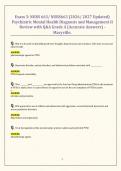
Q. Med tx is focused on diminishing intrusive thoughts, hyperarousal, and avoidance, with some success and
mixed results

ANSWER
pharmacologic agents for PTSD


Q. Depressive disorder, anxiety disorders, and behavioral problems associated with ______________
ANSWER
PTSD frequent comorbidity


Q. That __________and ______________ are approved by the Food and Drug Administration (FDA) in the treatment
of PTSD in adults, there is scant evidence to support its use for the core symptoms of PTSD in youth
s
ANSWER
ertraline and paroxetine


Q. FDA approval for use in children and adolescents with aggression, severe behavioral dyscontrol, and
severe psychiatric disorders

ANSWER
Risperidone and aripiprazole


Q. Treat dysregulation of the noradrenergic system in adults and youth with PTSD
ANSWER
Antiadrenergic agents


1

,Q. Alpha2-agonists examples
ANSWER
clonidine and guanfacine


Q. Decrease norepinephrine release, such as, are
ANSWER
Alpha2 agonists


Q. Centrally acting β-antagonists example
ANSWER
propranolol


Q. α-1-antagonists example
ANSWER
prazosin


Q. Hypothesized to improve hyperarousal and intrusive thoughts through attenuation of norepinephrine
postsynaptically

ANSWER
propranolol use


Q. Nightmares associated with trauma
ANSWER
prazosin use


Q. Off-label medications including antidepressants, atypical antipsychotics, adrenergic
modulators/sympatholytics, and anticonvulsants/mood stabilizers

ANSWER
Modify PTSD sx


2

, Q. Nightmares and exaggerated startle response: some evidence in adults, but children case report only
ANSWER
clonidine and propanolol


Q. __________ may reduce nightmares in children with PTSD and ____________may diminish symptoms of
reenactment of traumatic events in children

ANSWER
guanfacine and clonidine


Q. Divalproex, carbamazepine, topiramate, and gabapentin have been utilized for adults with PTSD with
modest improvement; some

ANSWER
Mood-stabilizing agents


Q. May provide some relief for the symptoms of hyperarousal, impulsivity, and agitation in young children
with PTSD; in children some evidence

ANSWER
clonidine with dosage ranges of 0.05 to 0.1 mg twice daily


Q. No controlled trials supporting use in children
ANSWER
benzodiazepines


Q. 10-16 treatment sessions, including 9 components itemized in the acronym PRACTICE
ANSWER
Trauma-Focused CBT


Q. Exposure and cognitive reprocessing interventions are paired with directed eye movements, alternating
tones or tapping

ANSWER
EMDR


3

Document information

Uploaded on
July 23, 2026
Number of pages
27
Written in
2025/2026
Type
Exam (elaborations)
Contains
Questions & answers
$12.49

Wrong document? Swap it for free Within 14 days of purchase and before downloading, you can choose a different document. You can simply spend the amount again.
Written by students who passed
Immediately available after payment
Read online or as PDF

Sold
4
Followers
0
Items
374
Last sold
2 months ago


Why students choose Stuvia

Created by fellow students, verified by reviews

Quality you can trust: written by students who passed their tests and reviewed by others who've used these notes.

Didn't get what you expected? Choose another document

No worries! You can instantly pick a different document that better fits what you're looking for.

Pay as you like, start learning right away

No subscription, no commitments. Pay the way you're used to via credit card and download your PDF document instantly.

Student with book image

“Bought, downloaded, and aced it. It really can be that simple.”

Alisha Student

Working on your references?

Create accurate citations in APA, MLA and Harvard with our free citation generator.

Working on your references?

Frequently asked questions

