NR667- CEA FNP
Study online at https://quizlet.com/_fctvfl
economics, entrepreneurship, and international business.1.2. Structure of Business ExamsBusiness exams are often a mix of theoretical knowledge and practical
application. Depending on the subject area, these exams can vary significantly in format. Common types of business exams and Writing
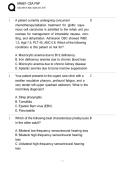
1. A patient currently undergoing concurrent D
chemotherapy/radiation treatment for glottic squa-
mous cell carcinoma is admitted to the rehab unit you
oversee for management of intractable nausea, vom-
iting, and dehydration. Admission CBC showed WBC
1.3, Hgb 7.5, PLT 45, ANC 0.8. Which of the following
conditions is this patient at risk for?
A. Macrocytic anemia due to B12 deficiency
B. Iron deficiency anemia due to chronic blood loss
C. Microcytic anemia due to chronic kidney disease
D. Aplastic anemia due to bone marrow suppression
2. Your patient presents to the urgent care clinic with a C
swollen exudative pharynx, profound fatigue, and a
very tender left upper quadrant abdomen. What is the
most likely diagnosis?
A. Strep pharyngitis
B. Tonsillitis
C. Epstein Barr virus (EBV)
D. Pancreatitis
3. Which of the following best characterizes presbycusis B
in the older adult?
A. Bilateral low-frequency sensorineural hearing loss
B. Bilateral high-frequency sensorineural hearing
loss
C. Unilateral high-frequency sensorineural hearing
loss
, economics, entrepreneurship, and international business.1.2. Structure of Business ExamsBusiness exams are often a mix of theoretical
knowledge and practical application. Depending on the subject area, these exams can vary significantly in format. Common types of
business exams and Writing
D. Unilateral low-frequency sensorineural hearing
loss
4. A 35-year-old woman presents with allergic rhinitis, C
experiencing significant nasal congestion, sneezing,
and itchy eyes. She has tried over-the-counter antihis-
tamines with limited relief. What is the most appropri-
ate next step in management?
A. Oral decongestants
B. Nasal saline irrigation
C. Intranasal corticosteroids
D. Referral to an allergist for immunotherapy
5. A patient currently undergoing concurrent D
chemotherapy/radiation treatment for glottic squa-
mous cell carcinoma is admitted to the rehab unit you
oversee for management of intractable nausea, vom-
iting, and dehydration. Admission CBC showed WBC
1.3, Hgb 7.5, PLT 45, ANC 0.8. Which of the following
conditions is this patient at risk for?
A. Iron deficiency anemia due to chronic blood loss
B. Microcytic anemia due to chronic kidney disease
C. Macrocytic anemia due to B12 deficiency
D. Aplastic anemia due to bone marrow suppression
6. A 78 y.o. M patient reports chronic infections, bruising, B
fatigue, SOB, and fevers. He has a history of rectal ade-
nocarcinoma and completed concurrent chemother-
apy/radiation earlier this year. His CBC shows Hgb
7.5, PLT 88, WBC 1.2, ANC 0.8, and peripheral smear
shows dysplasia. What additional work-up would you
, anticipate for this patient?
A. Colonoscopy and fecal occult blood test
B. Bone marrow biopsy and flow cytometry
C. No additional work-up is required, these are expect-
ed sequela of his oncologic treatment
D. Repeat CBC/CMP/peripheral smear in eight weeks economics, entrepreneurship, and international
business.1.2. Structure of Business ExamsBusiness exams are often a mix of theoretical knowledge and practical application. Depending on the subject area, these exams can vary significantly in
format. Common types of business exams and Writing
7. Progression to Acute Myelogenous Leukemia (AML) is D
a risk for untreated or poorly responsive:
A. Pancytopenia
B. Aplastic anemia
C. Macrocytic anemia
D. Myelodysplastic syndrome
8. Treatment for symptomatic aplastic anemia includes D
all the following except:
A. Bone marrow transplant
B. PRBC/Platelet/WBC transfusions
C. Prophylactic antibiotics
D. Removal of bone marrow stimulants
9. A patient diagnosed with iron deficiency anemia re- A
quires iron supplementation. Which of the following
treatments would likely be ineffective?
A. Ferrous sulfate 325 mg PO BID for a 43 y.o. F s/p
gastric bypass 2 years ago
B. Iron sucrose 200 mg IV infusion weekly x 8 weeks
in a 26 y.o. F at 34 weeks of pregnancy
C. Ferrous sulfate 325 mg PO TID for a 25 y.o. F with
, menorrhagia
D. Ferrous sulfate 325 mg PO BID for a 63 y.o. M with
ulcerative colitis economics, entrepreneurship, and international business.1.2. Structure of Business ExamsBusiness
exams are often a mix of theoretical knowledge and practical application. Depending on the subject area, these exams can vary significantly in format.
Common types of business exams and Writing
10. Which of the following is not a common mechanism of C
neutrophil expenditure and resultant neutropenia?
A. Decreased neutrophil production in the bone mar-
row
B. Redistribution of neutrophils to the spleen or vas-
cular endothelium
C. Loss of circulating neutrophils in acute blood loss
D. Immune destruction
11. Which of the following blood lead levels (BLL) would C
likely require chelation therapy?
A. < 80 mcg/dL
B. 35 mcg/dL
C. >100 mcg/dL
D. 75 mcg/dL
12. A geriatric patient with anemia, back pain, osteo- D
porosis, and elevated erythrocyte sedimentation rate
should be evaluated for:
A. cauda equina syndrome.
B. renal dystrophy.
C. Paget's disease.
D. multiple myeloma.
13. Overactivation of coagulation and fibrinolysis result- D
ing in thrombosis and hemorrhage is a trademark of
Study online at https://quizlet.com/_fctvfl
economics, entrepreneurship, and international business.1.2. Structure of Business ExamsBusiness exams are often a mix of theoretical knowledge and practical
application. Depending on the subject area, these exams can vary significantly in format. Common types of business exams and Writing
1. A patient currently undergoing concurrent D
chemotherapy/radiation treatment for glottic squa-
mous cell carcinoma is admitted to the rehab unit you
oversee for management of intractable nausea, vom-
iting, and dehydration. Admission CBC showed WBC
1.3, Hgb 7.5, PLT 45, ANC 0.8. Which of the following
conditions is this patient at risk for?
A. Macrocytic anemia due to B12 deficiency
B. Iron deficiency anemia due to chronic blood loss
C. Microcytic anemia due to chronic kidney disease
D. Aplastic anemia due to bone marrow suppression
2. Your patient presents to the urgent care clinic with a C
swollen exudative pharynx, profound fatigue, and a
very tender left upper quadrant abdomen. What is the
most likely diagnosis?
A. Strep pharyngitis
B. Tonsillitis
C. Epstein Barr virus (EBV)
D. Pancreatitis
3. Which of the following best characterizes presbycusis B
in the older adult?
A. Bilateral low-frequency sensorineural hearing loss
B. Bilateral high-frequency sensorineural hearing
loss
C. Unilateral high-frequency sensorineural hearing
loss
, economics, entrepreneurship, and international business.1.2. Structure of Business ExamsBusiness exams are often a mix of theoretical
knowledge and practical application. Depending on the subject area, these exams can vary significantly in format. Common types of
business exams and Writing
D. Unilateral low-frequency sensorineural hearing
loss
4. A 35-year-old woman presents with allergic rhinitis, C
experiencing significant nasal congestion, sneezing,
and itchy eyes. She has tried over-the-counter antihis-
tamines with limited relief. What is the most appropri-
ate next step in management?
A. Oral decongestants
B. Nasal saline irrigation
C. Intranasal corticosteroids
D. Referral to an allergist for immunotherapy
5. A patient currently undergoing concurrent D
chemotherapy/radiation treatment for glottic squa-
mous cell carcinoma is admitted to the rehab unit you
oversee for management of intractable nausea, vom-
iting, and dehydration. Admission CBC showed WBC
1.3, Hgb 7.5, PLT 45, ANC 0.8. Which of the following
conditions is this patient at risk for?
A. Iron deficiency anemia due to chronic blood loss
B. Microcytic anemia due to chronic kidney disease
C. Macrocytic anemia due to B12 deficiency
D. Aplastic anemia due to bone marrow suppression
6. A 78 y.o. M patient reports chronic infections, bruising, B
fatigue, SOB, and fevers. He has a history of rectal ade-
nocarcinoma and completed concurrent chemother-
apy/radiation earlier this year. His CBC shows Hgb
7.5, PLT 88, WBC 1.2, ANC 0.8, and peripheral smear
shows dysplasia. What additional work-up would you
, anticipate for this patient?
A. Colonoscopy and fecal occult blood test
B. Bone marrow biopsy and flow cytometry
C. No additional work-up is required, these are expect-
ed sequela of his oncologic treatment
D. Repeat CBC/CMP/peripheral smear in eight weeks economics, entrepreneurship, and international
business.1.2. Structure of Business ExamsBusiness exams are often a mix of theoretical knowledge and practical application. Depending on the subject area, these exams can vary significantly in
format. Common types of business exams and Writing
7. Progression to Acute Myelogenous Leukemia (AML) is D
a risk for untreated or poorly responsive:
A. Pancytopenia
B. Aplastic anemia
C. Macrocytic anemia
D. Myelodysplastic syndrome
8. Treatment for symptomatic aplastic anemia includes D
all the following except:
A. Bone marrow transplant
B. PRBC/Platelet/WBC transfusions
C. Prophylactic antibiotics
D. Removal of bone marrow stimulants
9. A patient diagnosed with iron deficiency anemia re- A
quires iron supplementation. Which of the following
treatments would likely be ineffective?
A. Ferrous sulfate 325 mg PO BID for a 43 y.o. F s/p
gastric bypass 2 years ago
B. Iron sucrose 200 mg IV infusion weekly x 8 weeks
in a 26 y.o. F at 34 weeks of pregnancy
C. Ferrous sulfate 325 mg PO TID for a 25 y.o. F with
, menorrhagia
D. Ferrous sulfate 325 mg PO BID for a 63 y.o. M with
ulcerative colitis economics, entrepreneurship, and international business.1.2. Structure of Business ExamsBusiness
exams are often a mix of theoretical knowledge and practical application. Depending on the subject area, these exams can vary significantly in format.
Common types of business exams and Writing
10. Which of the following is not a common mechanism of C
neutrophil expenditure and resultant neutropenia?
A. Decreased neutrophil production in the bone mar-
row
B. Redistribution of neutrophils to the spleen or vas-
cular endothelium
C. Loss of circulating neutrophils in acute blood loss
D. Immune destruction
11. Which of the following blood lead levels (BLL) would C
likely require chelation therapy?
A. < 80 mcg/dL
B. 35 mcg/dL
C. >100 mcg/dL
D. 75 mcg/dL
12. A geriatric patient with anemia, back pain, osteo- D
porosis, and elevated erythrocyte sedimentation rate
should be evaluated for:
A. cauda equina syndrome.
B. renal dystrophy.
C. Paget's disease.
D. multiple myeloma.
13. Overactivation of coagulation and fibrinolysis result- D
ing in thrombosis and hemorrhage is a trademark of