
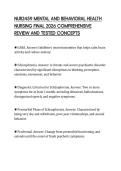
NUR2459 MENTAL AND BEHAVIORAL HEALTH
NURSING FINAL 2026 COMPREHENSIVE
REVIEW AND TESTED CONCEPTS
◉ GABA. Answer: Inhibitory neurotransmitter that helps calm brain
activity and reduce anxiety.
◉ Schizophrenia. Answer: A chronic and severe psychiatric disorder
characterized by significant disruptions in thinking, perception,
emotions, movement, and behavior.
◉ Diagnostic Criterion for Schizophrenia. Answer: Two or more
symptoms for at least 1 month, including delusions, hallucinations,
disorganized speech, and negative symptoms.
◉ Premorbid Phase of Schizophrenia. Answer: Characterized by
being very shy and withdrawn, poor peer relationships, and asocial
behavior.
◉ Prodromal. Answer: Change from premorbid functioning, and
extends until the onset of frank psychotic symptoms.
,◉ Active Psychotic/Acute Schizophrenic phase. Answer: Psychotic
symptoms are typically prominent.
◉ Residual. Answer: Periods of remission and exacerbation,
described as episodic.
◉ Positive Symptoms. Answer: PRESENT but should be ABSENT.
◉ Negative Symptoms. Answer: ABSENT but should be PRESENT.
◉ Medication response for Positive Symptoms. Answer: Respond
WELL to medications.
◉ Medication response for Negative Symptoms. Answer: Often
PERSISTS despite medications.
◉ Positive/Soft Symptoms. Answer: Appear in acute episodes.
◉ Negative/Hard Symptoms. Answer: Present throughout illness.
◉ Delusions. Answer: Fixed false beliefs: persecution, grandiose,
religious, somatic, reference, control.
, ◉ Hallucinations. Answer: False sensory perceptions, auditory,
visual, tactile, and olfactory.
◉ Disorganized speech. Answer: Loose associations, word salad,
neologisms, clang associations, tangentiality.
◉ Disorganized behavior. Answer: Hyperactivity, agitation, childlike
silliness, inappropriate acts.
◉ Catatonia. Answer: Psychologically induced immobility or
excessive movement, waxy flexibility.
◉ Alogia. Answer: Poverty of speech, little substance.
◉ Anhedonia. Answer: No joy or pleasure from life or activities.
◉ Apathy. Answer: Indifference toward people, activities, events.
◉ Asociality. Answer: Social withdrawal; few relationships.
◉ Avolition. Answer: Absence of will or drive to take action.
◉ Affect is blunted. Answer: Restricted emotional range.
NURSING FINAL 2026 COMPREHENSIVE
REVIEW AND TESTED CONCEPTS
◉ GABA. Answer: Inhibitory neurotransmitter that helps calm brain
activity and reduce anxiety.
◉ Schizophrenia. Answer: A chronic and severe psychiatric disorder
characterized by significant disruptions in thinking, perception,
emotions, movement, and behavior.
◉ Diagnostic Criterion for Schizophrenia. Answer: Two or more
symptoms for at least 1 month, including delusions, hallucinations,
disorganized speech, and negative symptoms.
◉ Premorbid Phase of Schizophrenia. Answer: Characterized by
being very shy and withdrawn, poor peer relationships, and asocial
behavior.
◉ Prodromal. Answer: Change from premorbid functioning, and
extends until the onset of frank psychotic symptoms.
,◉ Active Psychotic/Acute Schizophrenic phase. Answer: Psychotic
symptoms are typically prominent.
◉ Residual. Answer: Periods of remission and exacerbation,
described as episodic.
◉ Positive Symptoms. Answer: PRESENT but should be ABSENT.
◉ Negative Symptoms. Answer: ABSENT but should be PRESENT.
◉ Medication response for Positive Symptoms. Answer: Respond
WELL to medications.
◉ Medication response for Negative Symptoms. Answer: Often
PERSISTS despite medications.
◉ Positive/Soft Symptoms. Answer: Appear in acute episodes.
◉ Negative/Hard Symptoms. Answer: Present throughout illness.
◉ Delusions. Answer: Fixed false beliefs: persecution, grandiose,
religious, somatic, reference, control.
, ◉ Hallucinations. Answer: False sensory perceptions, auditory,
visual, tactile, and olfactory.
◉ Disorganized speech. Answer: Loose associations, word salad,
neologisms, clang associations, tangentiality.
◉ Disorganized behavior. Answer: Hyperactivity, agitation, childlike
silliness, inappropriate acts.
◉ Catatonia. Answer: Psychologically induced immobility or
excessive movement, waxy flexibility.
◉ Alogia. Answer: Poverty of speech, little substance.
◉ Anhedonia. Answer: No joy or pleasure from life or activities.
◉ Apathy. Answer: Indifference toward people, activities, events.
◉ Asociality. Answer: Social withdrawal; few relationships.
◉ Avolition. Answer: Absence of will or drive to take action.
◉ Affect is blunted. Answer: Restricted emotional range.


