

INSY 2303 UPDATED ACTUAL EXAM QUESTIONS CORRECT ANSWERS GRADED A PLUS
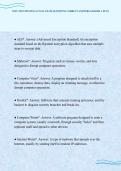
● AES*. Answer: (Advanced Encryption Standard) An encryption
standard based on the Rijndael encryption algorithm that uses multiple
steps to encrypt data.
● Malware*. Answer: Programs such as viruses, worms, and bots
designed to disrupt computer operations.
● Computer Virus*. Answer: A program designed to attach itself to a
file, reproduce, destroy data, display an irritating message, or otherwise
disrupt computer operations.
● Rootkit*. Answer: Software that conceals running processes; used by
hackers to disguise security breaches and break-ins.
● Computer Worm*. Answer: A software program designed to enter a
computer system, usually a network, through security "holes" and then
replicate itself and spread to other devices.
● Internet Worm*. Answer: A type of malware that spreads over the
Internet, usually by sending itself to random IP addresses.
, ● Trojan*. Answer: A computer program that appears to perform one
function while actually doing something else, such as inserting a virus
into a computer system or stealing a password.
● Antivirus Software*. Answer: A computer program used to identify,
isolate, and eliminate viruses by scanning files as they arrive, leave, or
are executed.
● Heuristic Analysis*. Answer: In the context of antivirus software, the
process of identifying malware based not on a signature, but on other
factors, such as context and behavior.
● Ransomware*. Answer: Malware that encrypts files as part of an
exploit to extort money from victims who want to regain use of their
files in unencrypted format.
● Botnet*. Answer: A group of bots under the remote control of a
botmaster, used to distribute spam and denial-of-service attacks.
● Firewall*. Answer: Software or hardware designed to analyze and
control incoming and outgoing packets on a network; used to enhance
security by filtering out potential intrusion attempts.
● Spyware*. Answer: Any software that covertly gathers user
information without the user's knowledge, usually for advertising
purposes.
● AES*. Answer: (Advanced Encryption Standard) An encryption
standard based on the Rijndael encryption algorithm that uses multiple
steps to encrypt data.
● Malware*. Answer: Programs such as viruses, worms, and bots
designed to disrupt computer operations.
● Computer Virus*. Answer: A program designed to attach itself to a
file, reproduce, destroy data, display an irritating message, or otherwise
disrupt computer operations.
● Rootkit*. Answer: Software that conceals running processes; used by
hackers to disguise security breaches and break-ins.
● Computer Worm*. Answer: A software program designed to enter a
computer system, usually a network, through security "holes" and then
replicate itself and spread to other devices.
● Internet Worm*. Answer: A type of malware that spreads over the
Internet, usually by sending itself to random IP addresses.
, ● Trojan*. Answer: A computer program that appears to perform one
function while actually doing something else, such as inserting a virus
into a computer system or stealing a password.
● Antivirus Software*. Answer: A computer program used to identify,
isolate, and eliminate viruses by scanning files as they arrive, leave, or
are executed.
● Heuristic Analysis*. Answer: In the context of antivirus software, the
process of identifying malware based not on a signature, but on other
factors, such as context and behavior.
● Ransomware*. Answer: Malware that encrypts files as part of an
exploit to extort money from victims who want to regain use of their
files in unencrypted format.
● Botnet*. Answer: A group of bots under the remote control of a
botmaster, used to distribute spam and denial-of-service attacks.
● Firewall*. Answer: Software or hardware designed to analyze and
control incoming and outgoing packets on a network; used to enhance
security by filtering out potential intrusion attempts.
● Spyware*. Answer: Any software that covertly gathers user
information without the user's knowledge, usually for advertising
purposes.


