PATH INTL CTRI EXAM |COMPLETE QUESTIONS WITH 100% RATED EXPERT
SOLUTIONS |2026 LATEST UPDATED
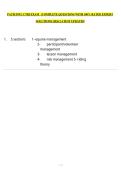
1. 5 sections 1- equine management
2- participant/volunteer
management
3- lesson management
4- risk management 5- riding
theory
,2. 1- equine handling 1- identify unsoundness
2- manage equine
behavior 3- basic
3. 2-
anatomy
participant/volunteer
management 1- participant issues
2- effective teaching
4. 3- lesson 3- volunteer management
management
1- assess participant suitability
2- create lesson plan/adjust as needed
5. 4- risk management 3- progress notes
4- fit equipment (horse and rider)
6. 5- riding theory 1- safety checks
2- identify alignment issues
7. what influences the 3- respond to emergencies
topline? 1- tack up
2- arena etiquette
"tangs"
-training regimen
-age
-nutrition
-genetics
-saddle fit
8. equine behavior "swerv"
(causes and solu- -
soundness
, tions) -working environment
-equipment fit
-rider balance/behavior
-volunt influences
9. how is topline de- "thlbs"
veloped? -transitions
-hills
-lateral movement (leg yields)
-bending
-body stretches
10. what ensures - breaks
equine wellness? - workload
-pairing (with participants)
- relationships
- stressors
-routine
-fitness
-nutrition
11. front conforma- "wcs
hds"
tion -width of chest
-correctness of legs
-spring of rib
-head
-depth of body
-symmetry
, 12.
rear conforma- "mcds"
tion -muscle definition
-correctness of legs
-depth of body
-symmetry
13. side conforma- "bcn tpl dj"
tion -balance/symmetry -
correctness of legs
-neck length/thickness
-topline length and lie
-legs length of bone
-depth of body
-joint angles
14. way of going con- uwfff
formation unsoundness, way of going, footfall patterns on two
tracks, freedom of movement/bend, frame
1. bowed tendon -unsoundne
5 -Thickening
ss of the back of the leg above the
fetlock
16. bone spavin -unsoundness
SOLUTIONS |2026 LATEST UPDATED
1. 5 sections 1- equine management
2- participant/volunteer
management
3- lesson management
4- risk management 5- riding
theory
,2. 1- equine handling 1- identify unsoundness
2- manage equine
behavior 3- basic
3. 2-
anatomy
participant/volunteer
management 1- participant issues
2- effective teaching
4. 3- lesson 3- volunteer management
management
1- assess participant suitability
2- create lesson plan/adjust as needed
5. 4- risk management 3- progress notes
4- fit equipment (horse and rider)
6. 5- riding theory 1- safety checks
2- identify alignment issues
7. what influences the 3- respond to emergencies
topline? 1- tack up
2- arena etiquette
"tangs"
-training regimen
-age
-nutrition
-genetics
-saddle fit
8. equine behavior "swerv"
(causes and solu- -
soundness
, tions) -working environment
-equipment fit
-rider balance/behavior
-volunt influences
9. how is topline de- "thlbs"
veloped? -transitions
-hills
-lateral movement (leg yields)
-bending
-body stretches
10. what ensures - breaks
equine wellness? - workload
-pairing (with participants)
- relationships
- stressors
-routine
-fitness
-nutrition
11. front conforma- "wcs
hds"
tion -width of chest
-correctness of legs
-spring of rib
-head
-depth of body
-symmetry
, 12.
rear conforma- "mcds"
tion -muscle definition
-correctness of legs
-depth of body
-symmetry
13. side conforma- "bcn tpl dj"
tion -balance/symmetry -
correctness of legs
-neck length/thickness
-topline length and lie
-legs length of bone
-depth of body
-joint angles
14. way of going con- uwfff
formation unsoundness, way of going, footfall patterns on two
tracks, freedom of movement/bend, frame
1. bowed tendon -unsoundne
5 -Thickening
ss of the back of the leg above the
fetlock
16. bone spavin -unsoundness