

NEBDN - OSCE - Dental Nursing
Study online at https://quizlet.com/_62nzc0
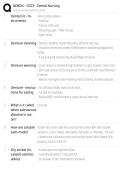
1. Dental Fit - In- -Mirror, probe, tweezers
struments - Acrylic bur
- Pressure relief paste
- Articulating paper + millers forceps
- Patient mirror
2. Denture cleaning - Dentures should be cleaned daily with a soft brush and soap.
- Should be cleaned over a bowl or folded towel to avoid being dropped and
broken.
- If using cleaning solutions they should follow instructions.
3. Denture wearing - Ensure denture is removed at night and kept in a glass of water or kept moist.
- Don't leave denture out for long period of time as teeth with move effecting fit
of denture.
- Maintain oral hygiene with remaining teeth ID cleaning, fluoride toothpaste.
4. Denture - instruc- - Eat soft foods initially, avoid crunchy foods.
tions for eating - Cut food into small bites.
- Reduce NMES (non milk extrinsic sugars) to meal times only.
5. What is it called Dissociate
when substances
dissolve in wa-
ter?
6. How are soluble Soluble salts can be made from acids by reacting them with solid insoluble
salts made? substances, such as metals, metal oxides, hydroxides or carbonates. The solid
is added to the acid until no more reacts and the excess solid is filtered off to
produce a solution of the salt.
7. Dry socket (lo- - You will experience high level of pain.
calised osteitis) - Could develop within 2-3 days post XLA.
advice - Do salt water rinses/ chlorhexidine mouthwash.
, NEBDN - OSCE - Dental Nursing
Study online at https://quizlet.com/_62nzc0
8. Dry socket ap- - Irrigation syringe with chlorhexidine.
pointment - on - Tweezers
the tray - Mirrors
- Alvogel
9. Dry socket after - Do not eat or drinks until anesthetic has worn off.
care instructions - You can then eat just not anything to hot or too cold as it will make you bleed
more.
- Slight bleeding is normal you can spit out but don't rinse your mouth out for 24
hours (after that rinse with salty water/ mouthwash.)
- If bleeding persists use gauze provided and bite hard on it.
- Avoid heavy work and exercise for 24 hours as it encourages the bleeding.
- Avoid smoking and drinking alcohol for as long as possible as it may result in
dry socket.
- You can take painkillers paracetamol and ibuprofen but AVOID aspirin as it thins
the blood.
- Before going to bed, brush your teeth just avoid XLA areas.
In case of emergency call - 111
10. Hand washing - Begin wetting hands with water.
advice - Apply soap.
- Rub hands palms to palms.
- Rub the back of each hands with fingers interlaced.
- Rub with back of fingers to the opposing palms.
- Rub each thumb clasped in opposite hands.
- Rub the tips of fingers.
- Rub each wrist with different hands.
- Rinse with water.
- Turn tap off with arm.
- Dry thoroughly your hands.
- Your hands are now clean.
, NEBDN - OSCE - Dental Nursing
Study online at https://quizlet.com/_62nzc0
11. Orthodontic in- - Clean around the brackets and arch wires after each meal.
structions - Use ID tepe brushes.
- Use fluoride toothpaste.
- Use disclosing tablets to highlight areas with plaque present.
12. Orthodontic di- - Avoid sticky sweets (toffee and chewing gum)
etary advice - Avoid biting hard foods (crusty bread, carrots)
- Reduce sugary drinks.
13. Care Act 2014 Refers to safeguarding vulnerable adults.
Sets out that local authorities have responsibility to work in partnership with health
and care organizations.
Places emphasis on overall well-being of adult rather than basic safety and
protection.
Key principles:
- Empowerment
- Prevention
- Partnership
14. Safeguarding To ensure unsuitable people don't end up working with vulnerable adults.
Vulnerable
groups act 2006 If person has criminal history, history of abuse, exploitation they are placed on a
list that is checked when applying for job.
15. Health and social Safeguarding vulnerable adults.
care act 2012
Protect adults within health and social care systems from being abused.
Provisions and preventions are in place.
Study online at https://quizlet.com/_62nzc0
1. Dental Fit - In- -Mirror, probe, tweezers
struments - Acrylic bur
- Pressure relief paste
- Articulating paper + millers forceps
- Patient mirror
2. Denture cleaning - Dentures should be cleaned daily with a soft brush and soap.
- Should be cleaned over a bowl or folded towel to avoid being dropped and
broken.
- If using cleaning solutions they should follow instructions.
3. Denture wearing - Ensure denture is removed at night and kept in a glass of water or kept moist.
- Don't leave denture out for long period of time as teeth with move effecting fit
of denture.
- Maintain oral hygiene with remaining teeth ID cleaning, fluoride toothpaste.
4. Denture - instruc- - Eat soft foods initially, avoid crunchy foods.
tions for eating - Cut food into small bites.
- Reduce NMES (non milk extrinsic sugars) to meal times only.
5. What is it called Dissociate
when substances
dissolve in wa-
ter?
6. How are soluble Soluble salts can be made from acids by reacting them with solid insoluble
salts made? substances, such as metals, metal oxides, hydroxides or carbonates. The solid
is added to the acid until no more reacts and the excess solid is filtered off to
produce a solution of the salt.
7. Dry socket (lo- - You will experience high level of pain.
calised osteitis) - Could develop within 2-3 days post XLA.
advice - Do salt water rinses/ chlorhexidine mouthwash.
, NEBDN - OSCE - Dental Nursing
Study online at https://quizlet.com/_62nzc0
8. Dry socket ap- - Irrigation syringe with chlorhexidine.
pointment - on - Tweezers
the tray - Mirrors
- Alvogel
9. Dry socket after - Do not eat or drinks until anesthetic has worn off.
care instructions - You can then eat just not anything to hot or too cold as it will make you bleed
more.
- Slight bleeding is normal you can spit out but don't rinse your mouth out for 24
hours (after that rinse with salty water/ mouthwash.)
- If bleeding persists use gauze provided and bite hard on it.
- Avoid heavy work and exercise for 24 hours as it encourages the bleeding.
- Avoid smoking and drinking alcohol for as long as possible as it may result in
dry socket.
- You can take painkillers paracetamol and ibuprofen but AVOID aspirin as it thins
the blood.
- Before going to bed, brush your teeth just avoid XLA areas.
In case of emergency call - 111
10. Hand washing - Begin wetting hands with water.
advice - Apply soap.
- Rub hands palms to palms.
- Rub the back of each hands with fingers interlaced.
- Rub with back of fingers to the opposing palms.
- Rub each thumb clasped in opposite hands.
- Rub the tips of fingers.
- Rub each wrist with different hands.
- Rinse with water.
- Turn tap off with arm.
- Dry thoroughly your hands.
- Your hands are now clean.
, NEBDN - OSCE - Dental Nursing
Study online at https://quizlet.com/_62nzc0
11. Orthodontic in- - Clean around the brackets and arch wires after each meal.
structions - Use ID tepe brushes.
- Use fluoride toothpaste.
- Use disclosing tablets to highlight areas with plaque present.
12. Orthodontic di- - Avoid sticky sweets (toffee and chewing gum)
etary advice - Avoid biting hard foods (crusty bread, carrots)
- Reduce sugary drinks.
13. Care Act 2014 Refers to safeguarding vulnerable adults.
Sets out that local authorities have responsibility to work in partnership with health
and care organizations.
Places emphasis on overall well-being of adult rather than basic safety and
protection.
Key principles:
- Empowerment
- Prevention
- Partnership
14. Safeguarding To ensure unsuitable people don't end up working with vulnerable adults.
Vulnerable
groups act 2006 If person has criminal history, history of abuse, exploitation they are placed on a
list that is checked when applying for job.
15. Health and social Safeguarding vulnerable adults.
care act 2012
Protect adults within health and social care systems from being abused.
Provisions and preventions are in place.


