

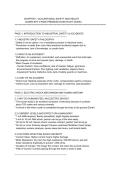
CHAPTER 1: OCCUPATIONAL SAFETY AND HEALTH
[COMPLETE 4-PAGE PREMIUM EXAM STUDY GUIDE]
======================================================================
----------------------------------------------------------------------
PAGE 1: INTRODUCTION TO INDUSTRIAL SAFETY & ACCIDENTS
----------------------------------------------------------------------
1.1 INDUSTRY SAFETY PHILOSOPHY
* Safety is not an option; it is a mandatory practice in electrical works.
* Prevention is better than cure: Most electrical accidents happen due to
carelessness, lack of knowledge, or unsafe tools.
1.2 WHAT IS AN ACCIDENT?
* Definition: An unplanned, uncontrolled, and unexpected event that interrupts
the progress of work and causes injury, damage, or death.
* Main Causes of Accidents:
- Human Factors: Over-confidence, lack of interest, fatigue, ignorance.
- Environmental Factors: Poor lighting, bad ventilation, slippery floors.
- Equipment Factors: Defective tools, lack of safety guards on machines.
1.3 COST OF AN ACCIDENT
* Direct Cost: Medical expenses of the victim, compensation paid by company.
* Indirect Cost: Loss of production time, damage to machines, bad reputation.
----------------------------------------------------------------------
PAGE 2: ELECTRIC SHOCK MECHANISM AND HUMAN ANATOMY
----------------------------------------------------------------------
2.1 WHY DO HUMANS FEEL AN ELECTRIC SHOCK?
* The human body is an excellent conductor of electricity because it contains
about 70% water and various minerals.
* A shock is felt when a path is completed through the body to the ground (Earth).
2.2 CURRENT LEVELS AND EFFECT ON HUMAN BODY
* 1 mA (Milli-ampere): Barely perceptible; slight tingling sensation.
* 5 mA to 10 mA: Mild shock; person can let go of the wire easily.
* 20 mA to 30 mA: Severe shock; muscles contract; painful; hard to let go.
* 50 mA or more: Extreme danger! Causes ventricular fibrillation (heart stops),
respiratory system paralysis, severe deep skin burns, and instant death.
2.3 FACTORS AFFECTING SHOCK SEVERITY
* Current Value: Higher current means higher damage.
* Body Resistance: Dry skin has high resistance (100,000 ohms), wet skin
drops resistance drastically to around 1,000 ohms.
* Duration of Contact: The longer the contact, the lower the survival chance.
* Path of Current: Current passing through the heart or brain is fatal.
----------------------------------------------------------------------
[COMPLETE 4-PAGE PREMIUM EXAM STUDY GUIDE]
======================================================================
----------------------------------------------------------------------
PAGE 1: INTRODUCTION TO INDUSTRIAL SAFETY & ACCIDENTS
----------------------------------------------------------------------
1.1 INDUSTRY SAFETY PHILOSOPHY
* Safety is not an option; it is a mandatory practice in electrical works.
* Prevention is better than cure: Most electrical accidents happen due to
carelessness, lack of knowledge, or unsafe tools.
1.2 WHAT IS AN ACCIDENT?
* Definition: An unplanned, uncontrolled, and unexpected event that interrupts
the progress of work and causes injury, damage, or death.
* Main Causes of Accidents:
- Human Factors: Over-confidence, lack of interest, fatigue, ignorance.
- Environmental Factors: Poor lighting, bad ventilation, slippery floors.
- Equipment Factors: Defective tools, lack of safety guards on machines.
1.3 COST OF AN ACCIDENT
* Direct Cost: Medical expenses of the victim, compensation paid by company.
* Indirect Cost: Loss of production time, damage to machines, bad reputation.
----------------------------------------------------------------------
PAGE 2: ELECTRIC SHOCK MECHANISM AND HUMAN ANATOMY
----------------------------------------------------------------------
2.1 WHY DO HUMANS FEEL AN ELECTRIC SHOCK?
* The human body is an excellent conductor of electricity because it contains
about 70% water and various minerals.
* A shock is felt when a path is completed through the body to the ground (Earth).
2.2 CURRENT LEVELS AND EFFECT ON HUMAN BODY
* 1 mA (Milli-ampere): Barely perceptible; slight tingling sensation.
* 5 mA to 10 mA: Mild shock; person can let go of the wire easily.
* 20 mA to 30 mA: Severe shock; muscles contract; painful; hard to let go.
* 50 mA or more: Extreme danger! Causes ventricular fibrillation (heart stops),
respiratory system paralysis, severe deep skin burns, and instant death.
2.3 FACTORS AFFECTING SHOCK SEVERITY
* Current Value: Higher current means higher damage.
* Body Resistance: Dry skin has high resistance (100,000 ohms), wet skin
drops resistance drastically to around 1,000 ohms.
* Duration of Contact: The longer the contact, the lower the survival chance.
* Path of Current: Current passing through the heart or brain is fatal.
----------------------------------------------------------------------


