
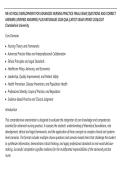
NR-501 ROLE DEVELOPMENT FOR ADVANCED NURSING PRACTICE FINAL EXAM] QUESTIONS AND CORRECT
ANSWERS (VERIFIED ANSWERS) PLUS RATIONALES 2026 Q&A |LATEST EXAM UPDATE 2026/2027
Chamberlain University.
Core Domains
Nursing Theory and Frameworks
Advanced Practice Roles and Interprofessional Collaboration
Ethical Principles and Legal Standards
Healthcare Policy, Advocacy, and Economics
Leadership, Quality Improvement, and Patient Safety
Health Promotion, Disease Prevention, and Population Health
Professional Identity, Scope of Practice, and Regulation
Evidence-Based Practice and Clinical Judgment
Introduction
This comprehensive examination is designed to evaluate the integration of core knowledge and competencies
essential for advanced nursing practice. It assesses the student's understanding of theoretical foundations, role
development, ethical and legal frameworks, and the application of these concepts to complex clinical and systems-
level scenarios. The format includes multiple-choice questions and scenario-based items that challenge the student
to synthesize information, demonstrate critical thinking, and apply professional standards to real-world decision-
making. Successful completion signifies readiness for the multifaceted responsibilities of the advanced practice
nurse.
,SECTION ONE: QUESTIONS 1–100
1. A nurse practitioner is caring for a patient with a complex chronic illness. Applying Rogers' Science of
Unitary Human Beings, which intervention best aligns with this theoretical framework?
A. Administering a prescribed medication to manage symptoms.
B. Providing education on the pathophysiology of the disease.
C. Using therapeutic touch to promote the patient's energy field balance.
D. Referring the patient to a specialist for advanced diagnostic testing.
🟢 C. Using therapeutic touch to promote the patient's energy field balance.
🔴 RATIONALE: Rogers' theory emphasizes the human being as an irreducible, unitary energy field that is
continuous with the environment. Interventions focus on patterning the environment and the human field to
promote health. Therapeutic touch is a direct application of this theory, aiming to re-pattern the patient's
energy field.
2. A nurse leader is implementing a new evidence-based protocol to reduce catheter-associated urinary tract
infections (CAUTIs). According to Kotter's 8-Step Change Model, which action represents the first step in this
process?
A. Empowering others to act on the vision.
B. Creating a sense of urgency about the problem.
C. Forming a powerful guiding coalition.
D. Anchoring the changes in the organizational culture.
🟢 B. Creating a sense of urgency about the problem.
,🔴 RATIONALE: Kotter's model begins with establishing a sense of urgency. This involves communicating the
importance of the change and the risks of not acting, such as the high rates of CAUTIs and their associated
morbidity and costs. This initial step is crucial for motivating stakeholders and gaining buy-in.
3. An advanced practice nurse (APN) is negotiating a new employment contract. Which principle of ethical
decision-making is primarily being exercised when the APN ensures the contract's terms are fair and just for
both parties?
A. Autonomy
B. Beneficence
C. Justice
D. Non-maleficence
🟢 C. Justice
🔴 RATIONALE: Justice in healthcare ethics refers to fairness and the equitable distribution of benefits and
burdens. When a nurse negotiates a contract, ensuring fair terms for both the APN and the employer is an
application of the principle of justice, which is about treating all parties fairly.
4. A patient tells the nurse practitioner, "I'm not sure I want to take this new medication. My friend had a bad
reaction." The NP responds by saying, "I understand you have concerns. Let's review the benefits and risks
together so you can make a decision that feels right for you." This interaction best demonstrates which
ethical principle?
A. Fidelity
B. Beneficence
C. Justice
D. Autonomy
, 🟢 D. Autonomy
🔴 RATIONALE: Autonomy supports a patient's right to self-determination and to make their own decisions
regarding their care. By offering to review the information to help the patient make an informed choice, the NP
is actively supporting and respecting the patient's autonomy.
5. Which of the following best describes the primary purpose of the Doctor of Nursing Practice (DNP)
degree?
A. To prepare nurses for advanced clinical practice with a focus on evidence-based practice and systems
leadership.
B. To prepare nurses for a career in academic research and nursing science.
C. To provide an entry-level degree for registered nursing practice.
D. To replace all Master's level nurse practitioner programs.
🟢 A. To prepare nurses for advanced clinical practice with a focus on evidence-based practice and systems
leadership.
🔴 RATIONALE: The DNP is a practice-focused doctorate designed to prepare nurses at the highest level of
clinical practice. Its core is advanced clinical practice, but it also heavily emphasizes leadership, quality
improvement, evidence-based practice, and the translation of research into practice to improve patient
outcomes at both individual and systems levels.
6. An APN is working in a rural, underserved community. The community has a high rate of obesity and
limited access to fresh food. Which action best reflects the APN's role in addressing population health?
A. Conducting individual nutritional counseling sessions in the clinic.
B. Partnering with local policymakers to establish a community garden and farmers' market.
ANSWERS (VERIFIED ANSWERS) PLUS RATIONALES 2026 Q&A |LATEST EXAM UPDATE 2026/2027
Chamberlain University.
Core Domains
Nursing Theory and Frameworks
Advanced Practice Roles and Interprofessional Collaboration
Ethical Principles and Legal Standards
Healthcare Policy, Advocacy, and Economics
Leadership, Quality Improvement, and Patient Safety
Health Promotion, Disease Prevention, and Population Health
Professional Identity, Scope of Practice, and Regulation
Evidence-Based Practice and Clinical Judgment
Introduction
This comprehensive examination is designed to evaluate the integration of core knowledge and competencies
essential for advanced nursing practice. It assesses the student's understanding of theoretical foundations, role
development, ethical and legal frameworks, and the application of these concepts to complex clinical and systems-
level scenarios. The format includes multiple-choice questions and scenario-based items that challenge the student
to synthesize information, demonstrate critical thinking, and apply professional standards to real-world decision-
making. Successful completion signifies readiness for the multifaceted responsibilities of the advanced practice
nurse.
,SECTION ONE: QUESTIONS 1–100
1. A nurse practitioner is caring for a patient with a complex chronic illness. Applying Rogers' Science of
Unitary Human Beings, which intervention best aligns with this theoretical framework?
A. Administering a prescribed medication to manage symptoms.
B. Providing education on the pathophysiology of the disease.
C. Using therapeutic touch to promote the patient's energy field balance.
D. Referring the patient to a specialist for advanced diagnostic testing.
🟢 C. Using therapeutic touch to promote the patient's energy field balance.
🔴 RATIONALE: Rogers' theory emphasizes the human being as an irreducible, unitary energy field that is
continuous with the environment. Interventions focus on patterning the environment and the human field to
promote health. Therapeutic touch is a direct application of this theory, aiming to re-pattern the patient's
energy field.
2. A nurse leader is implementing a new evidence-based protocol to reduce catheter-associated urinary tract
infections (CAUTIs). According to Kotter's 8-Step Change Model, which action represents the first step in this
process?
A. Empowering others to act on the vision.
B. Creating a sense of urgency about the problem.
C. Forming a powerful guiding coalition.
D. Anchoring the changes in the organizational culture.
🟢 B. Creating a sense of urgency about the problem.
,🔴 RATIONALE: Kotter's model begins with establishing a sense of urgency. This involves communicating the
importance of the change and the risks of not acting, such as the high rates of CAUTIs and their associated
morbidity and costs. This initial step is crucial for motivating stakeholders and gaining buy-in.
3. An advanced practice nurse (APN) is negotiating a new employment contract. Which principle of ethical
decision-making is primarily being exercised when the APN ensures the contract's terms are fair and just for
both parties?
A. Autonomy
B. Beneficence
C. Justice
D. Non-maleficence
🟢 C. Justice
🔴 RATIONALE: Justice in healthcare ethics refers to fairness and the equitable distribution of benefits and
burdens. When a nurse negotiates a contract, ensuring fair terms for both the APN and the employer is an
application of the principle of justice, which is about treating all parties fairly.
4. A patient tells the nurse practitioner, "I'm not sure I want to take this new medication. My friend had a bad
reaction." The NP responds by saying, "I understand you have concerns. Let's review the benefits and risks
together so you can make a decision that feels right for you." This interaction best demonstrates which
ethical principle?
A. Fidelity
B. Beneficence
C. Justice
D. Autonomy
, 🟢 D. Autonomy
🔴 RATIONALE: Autonomy supports a patient's right to self-determination and to make their own decisions
regarding their care. By offering to review the information to help the patient make an informed choice, the NP
is actively supporting and respecting the patient's autonomy.
5. Which of the following best describes the primary purpose of the Doctor of Nursing Practice (DNP)
degree?
A. To prepare nurses for advanced clinical practice with a focus on evidence-based practice and systems
leadership.
B. To prepare nurses for a career in academic research and nursing science.
C. To provide an entry-level degree for registered nursing practice.
D. To replace all Master's level nurse practitioner programs.
🟢 A. To prepare nurses for advanced clinical practice with a focus on evidence-based practice and systems
leadership.
🔴 RATIONALE: The DNP is a practice-focused doctorate designed to prepare nurses at the highest level of
clinical practice. Its core is advanced clinical practice, but it also heavily emphasizes leadership, quality
improvement, evidence-based practice, and the translation of research into practice to improve patient
outcomes at both individual and systems levels.
6. An APN is working in a rural, underserved community. The community has a high rate of obesity and
limited access to fresh food. Which action best reflects the APN's role in addressing population health?
A. Conducting individual nutritional counseling sessions in the clinic.
B. Partnering with local policymakers to establish a community garden and farmers' market.


