
nursing
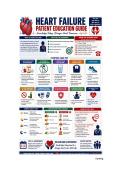
, HEART FAILURE PATIENT EDUCATION GUIDE
Understanding Your Condition, Managing Your Health, and Living Well
Compiled from ESC Heart Failure Association, Mayo Clinic, and Heart
Foundation Resources
TABLE OF CONTENTS
1. What Is Heart Failure?
2. Understanding Your Heart
3. Types of Heart Failure
4. Symptoms to Watch For
5. Daily Self-Care: The Three Pillars
6. Weighing Yourself Daily
7. Sodium (Salt) and Your Diet
8. Fluid Management
9. Physical Activity and Exercise
10. Your Medicines
11. When to Call for Help
12. Sick Day Rules
13. Lifestyle Tips
14. Emotional Wellbeing
15. Travel and Leisure
16. Your Action Plans
1. WHAT IS HEART FAILURE?
Heart Failure Does NOT Mean Your Heart Has Stopped
Heart failure means your heart is not pumping blood as well as it should. Your
heart may have become: - Weak — it cannot squeeze hard enough to push blood
out - Stiff — it cannot relax and fill with enough blood
Either way, your body does not get the oxygen-rich blood it needs. This can cause
fluid to build up in your lungs, legs, and other parts of your body.
nursing
, The Good News
With the right treatment, lifestyle changes, and self-care, many people with heart
failure live active, fulfilling lives. You are not alone — your healthcare team is
here to help you every step of the way.
2. UNDERSTANDING YOUR HEART
How a Healthy Heart Works
Your heart is a muscle about the size of your fist. It acts as a pump with four
chambers:
Chamber Function
Right Atrium Receives blood returning from the body
Right Ventricle Pumps blood to the lungs to pick up oxygen
Left Atrium Receives oxygen-rich blood from the lungs
Left Ventricle Pumps oxygen-rich blood to the entire body
A healthy heart beats 60–100 times per minute. With each beat, blood flows
through your heart in one direction, controlled by valves.
What Happens in Heart Failure
When your heart is weak or stiff: 1. It cannot pump enough blood with each beat
2. Blood backs up into your lungs (causing breathlessness) 3. Fluid builds up in
your legs, ankles, and abdomen (causing swelling) 4. Your kidneys may hold on
to extra fluid and salt 5. Your body gets less oxygen, making you feel tired
3. TYPES OF HEART FAILURE
Heart Failure with Reduced Ejection Fraction (HFrEF)
• Your heart muscle is weak and enlarged
• The left ventricle cannot pump enough blood out to your body
• Your ejection fraction is less than 40%
• Fluid backs up into your lungs
Heart Failure with Preserved Ejection Fraction (HFpEF)
• Your heart muscle is stiff and cannot relax properly
nursing
, HEART FAILURE PATIENT EDUCATION GUIDE
Understanding Your Condition, Managing Your Health, and Living Well
Compiled from ESC Heart Failure Association, Mayo Clinic, and Heart
Foundation Resources
TABLE OF CONTENTS
1. What Is Heart Failure?
2. Understanding Your Heart
3. Types of Heart Failure
4. Symptoms to Watch For
5. Daily Self-Care: The Three Pillars
6. Weighing Yourself Daily
7. Sodium (Salt) and Your Diet
8. Fluid Management
9. Physical Activity and Exercise
10. Your Medicines
11. When to Call for Help
12. Sick Day Rules
13. Lifestyle Tips
14. Emotional Wellbeing
15. Travel and Leisure
16. Your Action Plans
1. WHAT IS HEART FAILURE?
Heart Failure Does NOT Mean Your Heart Has Stopped
Heart failure means your heart is not pumping blood as well as it should. Your
heart may have become: - Weak — it cannot squeeze hard enough to push blood
out - Stiff — it cannot relax and fill with enough blood
Either way, your body does not get the oxygen-rich blood it needs. This can cause
fluid to build up in your lungs, legs, and other parts of your body.
nursing
, The Good News
With the right treatment, lifestyle changes, and self-care, many people with heart
failure live active, fulfilling lives. You are not alone — your healthcare team is
here to help you every step of the way.
2. UNDERSTANDING YOUR HEART
How a Healthy Heart Works
Your heart is a muscle about the size of your fist. It acts as a pump with four
chambers:
Chamber Function
Right Atrium Receives blood returning from the body
Right Ventricle Pumps blood to the lungs to pick up oxygen
Left Atrium Receives oxygen-rich blood from the lungs
Left Ventricle Pumps oxygen-rich blood to the entire body
A healthy heart beats 60–100 times per minute. With each beat, blood flows
through your heart in one direction, controlled by valves.
What Happens in Heart Failure
When your heart is weak or stiff: 1. It cannot pump enough blood with each beat
2. Blood backs up into your lungs (causing breathlessness) 3. Fluid builds up in
your legs, ankles, and abdomen (causing swelling) 4. Your kidneys may hold on
to extra fluid and salt 5. Your body gets less oxygen, making you feel tired
3. TYPES OF HEART FAILURE
Heart Failure with Reduced Ejection Fraction (HFrEF)
• Your heart muscle is weak and enlarged
• The left ventricle cannot pump enough blood out to your body
• Your ejection fraction is less than 40%
• Fluid backs up into your lungs
Heart Failure with Preserved Ejection Fraction (HFpEF)
• Your heart muscle is stiff and cannot relax properly
nursing


