

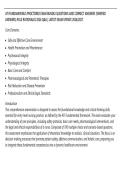
ATI FUNDAMENTALS PROCTORED EXAM BUNDLE QUESTIONS AND CORRECT ANSWERS (VERIFIED
ANSWERS) PLUS RATIONALES 2026 Q&A | LATEST EXAM UPDATE 2026/2027.
Core Domains:
Safe and Effective Care Environment
Health Promotion and Maintenance
Psychosocial Integrity
Physiological Integrity
Basic Care and Comfort
Pharmacological and Parenteral Therapies
Risk Reduction and Disease Prevention
Professionalism and Ethical/Legal Standards
Introduction
This comprehensive examination is designed to assess the foundational knowledge and critical thinking skills
essential for entry-level nursing practice, as defined by the ATI Fundamentals framework. The exam evaluates your
understanding of core principles, including safety protocols, basic care needs, pharmacological interventions, and
the legal and ethical responsibilities of a nurse. Composed of 100 multiple-choice and scenario-based questions,
this assessment emphasizes the application of theoretical knowledge to realistic, clinical situations. The focus is on
decision-making processes that promote patient safety, effective communication, and holistic care, preparing you
to integrate these fundamental competencies into a dynamic healthcare environment.
,Section One: Questions 1-100
1. A nurse is planning care for a client who is on contact precautions. Which of the following actions should the
nurse take to ensure proper transmission-based isolation?
A. Place the client in a negative-pressure room
B. Wear an N95 respirator when entering the room
C. Use a dedicated stethoscope for the client
D. Ensure the client wears a mask when leaving the room
🟢 C. Use a dedicated stethoscope for the client
🔴 RATIONALE: Contact precautions require the use of dedicated or disposable equipment to prevent the
transmission of infectious agents from the client to other patients or healthcare workers. A negative-pressure
room is indicated for airborne precautions, and an N95 respirator is used for airborne or droplet precautions in
specific situations. The client wearing a mask is indicated for droplet precautions or when the client is
transportable.
2. A nurse is preparing to perform a sterile dressing change for a client with a surgical wound. Which of the
following actions by the nurse indicates a break in sterile technique?
A. Holding sterile objects above the waist
B. Opening the sterile package away from the body
C. Positioning the sterile field at waist level
D. Reaching over the sterile field to obtain an item
🟢 D. Reaching over the sterile field to obtain an item
,🔴 RATIONALE: Reaching over a sterile field contaminates it, as non-sterile items or clothing can shed
microorganisms onto the sterile surface. The other actions are correct sterile technique practices: holding items
above the waist, opening packages away from the body, and keeping the field at waist level.
3. A nurse is assessing a client who has a pressure injury. Which of the following findings indicates a Stage 3
pressure injury?
A. Full-thickness skin loss with visible subcutaneous tissue
B. Intact skin with non-blanchable redness
C. Partial-thickness skin loss with exposed dermis
D. Full-thickness skin and tissue loss with exposed bone
🟢 A. Full-thickness skin loss with visible subcutaneous tissue
🔴 RATIONALE: A Stage 3 pressure injury involves full-thickness skin loss where subcutaneous fat may be
visible, but bone, tendon, and muscle are not exposed. Intact skin with non-blanchable redness is a Stage 1,
partial-thickness loss is Stage 2, and exposed bone/muscle is a Stage 4 injury.
4. A nurse is administering a subcutaneous injection of heparin. Which of the following techniques is
appropriate for this procedure?
A. Insert the needle at a 90-degree angle
B. Aspirate for blood return before injection
C. Massage the site after injection
D. Use a 1.5-inch needle for administration
🟢 A. Insert the needle at a 90-degree angle
, 🔴 RATIONALE: Subcutaneous injections are typically administered at a 90-degree angle using a 5/8-inch
needle. Aspiration is not recommended for heparin as it can cause tissue damage and hematoma formation.
Massaging the site after injection should be avoided to prevent hematoma development.
5. A nurse is providing oral care to an unconscious client. Which of the following actions is the most appropriate
for maintaining safety?
A. Use a soft-bristled toothbrush to brush the teeth
B. Position the client in a supine position
C. Use a small amount of water to moisten the mouth
D. Position the client in a side-lying position
🟢 D. Position the client in a side-lying position
🔴 RATIONALE: An unconscious client should be placed in a side-lying position with the head turned to the side
to prevent aspiration of fluids. A soft-bristled brush is appropriate, but the key safety measure is positioning to
ensure the airway is protected and fluids drain out of the mouth.
6. A client has a new prescription for a metered-dose inhaler (MDI). Which of the following instructions should
the nurse provide?
A. "Hold your breath for 10 seconds after inhaling the medication"
B. "Inhale rapidly to ensure the medication reaches your lungs"
C. "Store the inhaler in the refrigerator after each use"
D. "Use the inhaler only when you feel short of breath"
🟢 A. "Hold your breath for 10 seconds after inhaling the medication"
ANSWERS) PLUS RATIONALES 2026 Q&A | LATEST EXAM UPDATE 2026/2027.
Core Domains:
Safe and Effective Care Environment
Health Promotion and Maintenance
Psychosocial Integrity
Physiological Integrity
Basic Care and Comfort
Pharmacological and Parenteral Therapies
Risk Reduction and Disease Prevention
Professionalism and Ethical/Legal Standards
Introduction
This comprehensive examination is designed to assess the foundational knowledge and critical thinking skills
essential for entry-level nursing practice, as defined by the ATI Fundamentals framework. The exam evaluates your
understanding of core principles, including safety protocols, basic care needs, pharmacological interventions, and
the legal and ethical responsibilities of a nurse. Composed of 100 multiple-choice and scenario-based questions,
this assessment emphasizes the application of theoretical knowledge to realistic, clinical situations. The focus is on
decision-making processes that promote patient safety, effective communication, and holistic care, preparing you
to integrate these fundamental competencies into a dynamic healthcare environment.
,Section One: Questions 1-100
1. A nurse is planning care for a client who is on contact precautions. Which of the following actions should the
nurse take to ensure proper transmission-based isolation?
A. Place the client in a negative-pressure room
B. Wear an N95 respirator when entering the room
C. Use a dedicated stethoscope for the client
D. Ensure the client wears a mask when leaving the room
🟢 C. Use a dedicated stethoscope for the client
🔴 RATIONALE: Contact precautions require the use of dedicated or disposable equipment to prevent the
transmission of infectious agents from the client to other patients or healthcare workers. A negative-pressure
room is indicated for airborne precautions, and an N95 respirator is used for airborne or droplet precautions in
specific situations. The client wearing a mask is indicated for droplet precautions or when the client is
transportable.
2. A nurse is preparing to perform a sterile dressing change for a client with a surgical wound. Which of the
following actions by the nurse indicates a break in sterile technique?
A. Holding sterile objects above the waist
B. Opening the sterile package away from the body
C. Positioning the sterile field at waist level
D. Reaching over the sterile field to obtain an item
🟢 D. Reaching over the sterile field to obtain an item
,🔴 RATIONALE: Reaching over a sterile field contaminates it, as non-sterile items or clothing can shed
microorganisms onto the sterile surface. The other actions are correct sterile technique practices: holding items
above the waist, opening packages away from the body, and keeping the field at waist level.
3. A nurse is assessing a client who has a pressure injury. Which of the following findings indicates a Stage 3
pressure injury?
A. Full-thickness skin loss with visible subcutaneous tissue
B. Intact skin with non-blanchable redness
C. Partial-thickness skin loss with exposed dermis
D. Full-thickness skin and tissue loss with exposed bone
🟢 A. Full-thickness skin loss with visible subcutaneous tissue
🔴 RATIONALE: A Stage 3 pressure injury involves full-thickness skin loss where subcutaneous fat may be
visible, but bone, tendon, and muscle are not exposed. Intact skin with non-blanchable redness is a Stage 1,
partial-thickness loss is Stage 2, and exposed bone/muscle is a Stage 4 injury.
4. A nurse is administering a subcutaneous injection of heparin. Which of the following techniques is
appropriate for this procedure?
A. Insert the needle at a 90-degree angle
B. Aspirate for blood return before injection
C. Massage the site after injection
D. Use a 1.5-inch needle for administration
🟢 A. Insert the needle at a 90-degree angle
, 🔴 RATIONALE: Subcutaneous injections are typically administered at a 90-degree angle using a 5/8-inch
needle. Aspiration is not recommended for heparin as it can cause tissue damage and hematoma formation.
Massaging the site after injection should be avoided to prevent hematoma development.
5. A nurse is providing oral care to an unconscious client. Which of the following actions is the most appropriate
for maintaining safety?
A. Use a soft-bristled toothbrush to brush the teeth
B. Position the client in a supine position
C. Use a small amount of water to moisten the mouth
D. Position the client in a side-lying position
🟢 D. Position the client in a side-lying position
🔴 RATIONALE: An unconscious client should be placed in a side-lying position with the head turned to the side
to prevent aspiration of fluids. A soft-bristled brush is appropriate, but the key safety measure is positioning to
ensure the airway is protected and fluids drain out of the mouth.
6. A client has a new prescription for a metered-dose inhaler (MDI). Which of the following instructions should
the nurse provide?
A. "Hold your breath for 10 seconds after inhaling the medication"
B. "Inhale rapidly to ensure the medication reaches your lungs"
C. "Store the inhaler in the refrigerator after each use"
D. "Use the inhaler only when you feel short of breath"
🟢 A. "Hold your breath for 10 seconds after inhaling the medication"


