

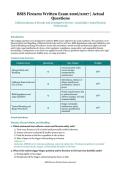
BSIS Firearm Written Exam 2026/2027 | Actual
Questions
California Bureau of Security and Investigative Services | Actual Q&A | Armed Security
Professionals
Introduction
This original question set is designed to reinforce BSIS course objectives for exam readiness. The questions cover
Firearm Safety and Handling, California Penal Code and Use of Force, BSIS Regulations and Legal Liabilities, and
Tactical Shooting and Range Procedures. Across the assessment, armed security professionals apply universal
safety rules, legal justification for force, strict regulatory compliance, range safety, and responsible firearm
stewardship. A uniqueness cross-check was applied so each of the 52 questions targets a distinct safety rule, legal
concept, permit requirement, liability issue, or range procedure.
Content Area Overview
Content Area Questions Key Topics Weight
Universal safety rules;
Firearm Safety and secure storage;
13 25%
Handling transportation;
maintenance
Self-defense; defense of
California Penal Code and others; deadly force
13 25%
Use of Force justification; citizen's
arrest
Permit requirements; lost
BSIS Regulations and or stolen firearms;
13 25%
Legal Liabilities address changes; civil and
criminal liability
Range commands;
Tactical Shooting and malfunction safety;
13 25%
Range Procedures stances; qualification
standards
Actual Questions
Domain: Firearm Safety and Handling
1. Which statement best reflects a universal firearm safety rule?
A. Treat every firearm as if it is loaded until personally verified otherwise.
B. Assume a firearm is unloaded if another person says so.
C. Point the firearm at the floor regardless of who is there.
D. Place a finger on the trigger when picking up a firearm.
Answer: A
Rationale: BSIS firearm training emphasizes universal safety rules. Treating every firearm as loaded
promotes careful muzzle, trigger, and handling discipline at all times.
2. What is the safest trigger-finger position until a decision to fire has been lawfully made?
A. Resting lightly on the trigger.
B. Straight and off the trigger, indexed along the frame or slide.
BSIS Firearm Written Exam 2026/2027
, C. Inside the trigger guard during conversation.
D. Curled around the trigger while moving.
Answer: B
Rationale: Keeping the finger off the trigger until lawful and intentional firing is a core safety rule that
helps prevent negligent discharges.
3. Which muzzle direction principle is correct?
A. Point the muzzle at coworkers if the firearm is unloaded.
B. Use the muzzle to gesture while speaking.
C. Keep the muzzle pointed in a safe direction and never at anything you are not willing and legally justified to
shoot.
D. Allow the muzzle to sweep people during holstering.
Answer: C
Rationale: Muzzle discipline is essential. A safe direction minimizes injury risk if an unintended discharge
occurs.
4. What should an armed security professional know before firing a firearm?
A. Only the color of the target.
B. Only how loud the firearm sounds.
C. Only whether the firearm was recently cleaned.
D. The target, what is around it, and what is beyond it.
Answer: D
Rationale: Responsible firearm use requires target identification and awareness of surroundings and
background to prevent injury to unintended persons.
5. Which storage practice best supports responsible firearm stewardship when off duty?
A. Store the firearm secured against unauthorized access and in compliance with California law and employer
policy.
B. Leave the firearm unattended in an unlocked vehicle.
C. Store the firearm loaded on a public counter.
D. Allow untrained friends to handle it.
Answer: A
Rationale: Secure storage helps prevent theft, misuse, and unauthorized access. BSIS permit holders must
follow legal and employer requirements.
6. Which action is appropriate before cleaning a firearm?
A. Clean it while loaded to save time.
B. Unload it, remove ammunition from the area, and verify the chamber and magazine well are clear.
C. Point it at a person during inspection.
D. Leave ammunition mixed with cleaning tools.
Answer: B
Rationale: Maintenance begins with unloading and verification. Removing ammunition from the cleaning
area reduces the chance of a negligent discharge.
7. Which condition requires a firearm to be removed from service until inspected or repaired?
A. Clean exterior finish.
B. Properly functioning sights.
C. Cracked frame, damaged barrel, malfunctioning safety, or other suspected mechanical defect.
D. A secure holster fit.
Answer: C
Rationale: A defective firearm can fail or discharge unpredictably. Safe practice requires repair or
inspection by a qualified person before use.
8. Which holster practice is safest for armed security work?
BSIS Firearm Written Exam 2026/2027
Questions
California Bureau of Security and Investigative Services | Actual Q&A | Armed Security
Professionals
Introduction
This original question set is designed to reinforce BSIS course objectives for exam readiness. The questions cover
Firearm Safety and Handling, California Penal Code and Use of Force, BSIS Regulations and Legal Liabilities, and
Tactical Shooting and Range Procedures. Across the assessment, armed security professionals apply universal
safety rules, legal justification for force, strict regulatory compliance, range safety, and responsible firearm
stewardship. A uniqueness cross-check was applied so each of the 52 questions targets a distinct safety rule, legal
concept, permit requirement, liability issue, or range procedure.
Content Area Overview
Content Area Questions Key Topics Weight
Universal safety rules;
Firearm Safety and secure storage;
13 25%
Handling transportation;
maintenance
Self-defense; defense of
California Penal Code and others; deadly force
13 25%
Use of Force justification; citizen's
arrest
Permit requirements; lost
BSIS Regulations and or stolen firearms;
13 25%
Legal Liabilities address changes; civil and
criminal liability
Range commands;
Tactical Shooting and malfunction safety;
13 25%
Range Procedures stances; qualification
standards
Actual Questions
Domain: Firearm Safety and Handling
1. Which statement best reflects a universal firearm safety rule?
A. Treat every firearm as if it is loaded until personally verified otherwise.
B. Assume a firearm is unloaded if another person says so.
C. Point the firearm at the floor regardless of who is there.
D. Place a finger on the trigger when picking up a firearm.
Answer: A
Rationale: BSIS firearm training emphasizes universal safety rules. Treating every firearm as loaded
promotes careful muzzle, trigger, and handling discipline at all times.
2. What is the safest trigger-finger position until a decision to fire has been lawfully made?
A. Resting lightly on the trigger.
B. Straight and off the trigger, indexed along the frame or slide.
BSIS Firearm Written Exam 2026/2027
, C. Inside the trigger guard during conversation.
D. Curled around the trigger while moving.
Answer: B
Rationale: Keeping the finger off the trigger until lawful and intentional firing is a core safety rule that
helps prevent negligent discharges.
3. Which muzzle direction principle is correct?
A. Point the muzzle at coworkers if the firearm is unloaded.
B. Use the muzzle to gesture while speaking.
C. Keep the muzzle pointed in a safe direction and never at anything you are not willing and legally justified to
shoot.
D. Allow the muzzle to sweep people during holstering.
Answer: C
Rationale: Muzzle discipline is essential. A safe direction minimizes injury risk if an unintended discharge
occurs.
4. What should an armed security professional know before firing a firearm?
A. Only the color of the target.
B. Only how loud the firearm sounds.
C. Only whether the firearm was recently cleaned.
D. The target, what is around it, and what is beyond it.
Answer: D
Rationale: Responsible firearm use requires target identification and awareness of surroundings and
background to prevent injury to unintended persons.
5. Which storage practice best supports responsible firearm stewardship when off duty?
A. Store the firearm secured against unauthorized access and in compliance with California law and employer
policy.
B. Leave the firearm unattended in an unlocked vehicle.
C. Store the firearm loaded on a public counter.
D. Allow untrained friends to handle it.
Answer: A
Rationale: Secure storage helps prevent theft, misuse, and unauthorized access. BSIS permit holders must
follow legal and employer requirements.
6. Which action is appropriate before cleaning a firearm?
A. Clean it while loaded to save time.
B. Unload it, remove ammunition from the area, and verify the chamber and magazine well are clear.
C. Point it at a person during inspection.
D. Leave ammunition mixed with cleaning tools.
Answer: B
Rationale: Maintenance begins with unloading and verification. Removing ammunition from the cleaning
area reduces the chance of a negligent discharge.
7. Which condition requires a firearm to be removed from service until inspected or repaired?
A. Clean exterior finish.
B. Properly functioning sights.
C. Cracked frame, damaged barrel, malfunctioning safety, or other suspected mechanical defect.
D. A secure holster fit.
Answer: C
Rationale: A defective firearm can fail or discharge unpredictably. Safe practice requires repair or
inspection by a qualified person before use.
8. Which holster practice is safest for armed security work?
BSIS Firearm Written Exam 2026/2027


