

Written by students who passed Immediately available after payment Read online or as PDF Wrong document? Swap it for free 4.6 TrustPilot
logo-home
Document preview thumbnail
Preview 2 out of 13 pages
Exam (elaborations)

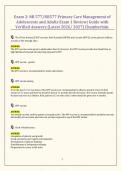
Exam 2: NR 577/NR577 Primary Care Management of Adolescents and Adults Exam 1 Review| Guide with Verified Answers {Latest 2026/ 2027} Chamberlain.

Document preview thumbnail
Preview 2 out of 13 pages

Exam 2: NR 577/NR577 Primary Care Management of Adolescents and Adults Exam 1 Review| Guide with Verified Answers {Latest 2026/ 2027} Chamberlain. Q. The US has licensed 2 HPV vaccines. Both Guardasil (HPV4) and Cervarix (HPV2) can be given to children as early as 9yo through 26yo. ANSWER The HPV vaccine can be given to adults older than 26. However, the HPV vaccine provides less benefit due to high likelihood of people already being exposed to HPV. Q. HPV vaccine - gender ANSWER The HPV vaccine is recommended for males and females. Q. HPV vaccine dosing ANSWER From the ages 11-12, two doses of the HPV vaccine are recommended for all boys and girls. Dose #1 done around 11-12 years and Dose #2 should be done 6-12 months after the first dose. The vaccine schedule should be done only once in a lifetime. If the patient is 15 or older, then 3 shots should be given over 6 months. Q. HPV vaccine ANSWER You should not wait until the patient is sexually active. The HPV vaccine is recommended for preadolescent and all sexually active women who have not yet been exposed to any of the HPV strains. Q. Goals of Adolescence: ANSWER Completion of puberty and growth Social, emotional, and cognitive development Development of abstract thinking Establishment of independent identity Preparation for career or life work Q. Did you notice a qualitative difference in the ways that different genders experienced adolescence? ANSWER Males and females experience growth through adolescence differently. Specific areas of development are affected by gender differences, including biological, psychological, and social experiences (Alarcon, et al., 2018). Q. Did your home life or that of your peers affect the rate or ability to complete these goals? ANSWER Family structure and function play an integral role in the development of adolescent emotional functioning and social development (Wikle & Hoagland, 2020). Q. Twelve health promotion themes underpin the provision of care for the adolescent, including: ANSWER Life-long health of families and communities Family support Health for children and youth with special health care needs Healthy development Mental health Healthy weight Healthy nutrition Physical activity Oral health Healthy sexual development and sexuality Healthy and safe use of social media Safety and injury prevention Q. Assessment questions for Adolescent ANSWER How do you stay healthy? What do you and your friends like to do together? What health problems, concerns, or questions do you have? What are you good at? What do you do to help others? Q. Assessment questions for Parent ANSWER What questions do you have about your child's physical well-being, growth, or pubertal development? What have you and your child discussed about feelings and behaviors that are contributing to his emotional well-being and a healthy lifestyle? Tell me something your child does really well. What questions or concerns do you have about your child's emotional well-being, feelings, behavior, or learning? What have you and your child discussed about avoiding risky behaviors? Does your child have any behaviors that you are concerned about? Q. Morbidity ANSWER Any physical or psychological state considered to be outside the realm of normal well-being Q. Mortality ANSWER The state of being subject to death. Q. Disability-adjusted life years ANSWER A measure of the years of healthy life lost due to ill health, disability or premature death. Estimates the gap between current health status and an ideal health status, with the entire population living to an advanced age free of disease and disability (WHO, n.d.). Q. Years lost to disability (YLD) ANSWER Estimates based on prevalence data, real or imputed, that quantify the burden of morbidity and facilitate comparisons of various diseases and conditions (WHO, n.d.). Q. The top five causes of YLDs due to morbidity in individuals aged 10-19 years are common across regions and between countries of various economic level and include ANSWER Unipolar depressive disorders Iron deficiency anemia Asthma Back and neck pain Anxiety disorders Q. Risky Behavior: Sexual Activity ANSWER Adolescents who enter puberty early are more likely to engage in risky sexual behaviors than adolescents who mature later. Adolescents whose bodies mature earlier often end up socializing with an older peer group, which can influence social and risk-taking behaviors putting them at risk for early sexual activity, adolescent dating abuse, depressive symptoms, and antisocial behavior (Maaks et all, 2020). Q. Risky Behavior: Tobacco Use ANSWER The adolescent brain is particularly susceptible to the influence of substances, such as nicotine, resulting in a higher rate of dependence in adolescents than in adults. Nine out of ten adults who use tobacco started during adolescence before the age of 18 years. Every day in the U.S., roughly 1,600 youth smoke a cigarette for the first time, and almost 200 youth start smoking. Flavored tobacco products are appealing to adolescents, used by 85% of high school students and 74% of middle school students (CDC, 2020). Q. Risky Behavior: Self-Injurious Behaviors ANSWER Many adolescents engage in self-injurious behavior. Symptoms must have occurred at least five times within the past year and be associated with at least two of the following: previous negative emotions preoccupation with and a repetitive desire to engage in the activity feelings of relief from negative emotions or a sensation of positive feelings with activity (i.e., cutting or burning oneself) impaired interpersonal relationships Q. Risky Behavior: Technology and Social Media Use ANSWER Signs of problematic technology use: obsessing about social media use, avoiding interactions with others in order to engage online, getting in trouble because of social media use. Risky social media use includes: cyberbullying and harassment sexting: sending nude or provocative photos, and/or sexual messages depression and social withdrawal meeting strangers through online profiles unsafe use of mobile devices while driving Q. Contributing Factors for risky behaviors ANSWER Poor academic performance or low intellectual function Role models for deviant behavior (e.g., parents with mental health disorders or who abuse drugs or engage in criminal behavior) Impulsivity or attention deficit-hyperactivity disorder Lack of constructive support or encouragement from others in social environment Low self-esteem Sense of hopelessness or helplessness Child abuse or other types of adverse childhood experiences Depression or other mental-emotional disorders Illiteracy or lack of job skills Poverty Insufficient sleep Q. Protective Factors ANSWER High self-esteem Family connectedness Sense of future Academic success Parental engagement Coping skills Relationships with caring adults Community involvement (e.g., school, religious institutions, volunteering) Access to recreation Q. The HEADSS Assessment ANSWER H - Home Environment E - Education/Employment A - Activities D - Drugs S - Sexuality/Suicide/Depression S - Safety Q. HEADDS assessment questions ANSWER "Are you involved in a relationship?" Rationale: Avoid asking only about heterosexual relationships. Allow for the adolescent to reveal other sexualities they may explore. Make sure to expand on "sex." Many associate "sex" with vaginal only; some do not include oral or anal. Q. "Who do you live with?" ANSWER Rationale: Parent(s) may have separated, divorced, died, or left the home. This question may be sensitive to some. Open-ended question enables one to collect "environmental" as well as personal history Q. What are you good at in school? ANSWER Rationale: Close ended questions can be answered "yes or no". Open-ended questions allow for the adolescent to talk more about their strengths and weaknesses. They can expand on activities they enjoy or dislike. Q. "What do you and your friends like to do for fun?" ANSWER Rationale: Allows for NP to get bigger picture about peer involvement and warrant any safety issues regarding texting while driving, etc. Assessment Area - Home Questions Who lives with the young person/where? Do they have their own room? What are relationships like at home? What do parents and relatives do for a living? Have you ever been institutionalized? Have you ever been incarcerated? Have you had any recent moves? Have you ever run away? Are there any new people in the home environment? Q. Assessment Area - drug questions Use by peers? (include tobacco and alcohol) Use by a young person? (include tobacco and alcohol) Use by family members? (include tobacco and alcohol) Amounts, frequency, patterns of use/abuse while intoxicated? Drive while under the influence? Source? How paid for? Assessment Area - Education and Employment How is your grade or performance in school? Any recent changes in your grades in school? Favorite and least favorite subjects (include grades)? Any years repeated classes failed? Suspension/dropping out? Future education/employment plans? Any current or past employment? Relations with teachers, employers-school, work attendance? Assessment Area - sexuality Orientation? Degree and types of experiences? Number of partners? Masturbation (normalize) History of pregnancy/abortion? Sexually transmitted infections? Knowledge and prevention? Contraception? Frequency of use? Comfort with sexual activity, enjoyment/pleasure obtained? History of sexual/physical abuse? Assessment Area -activities What do you do for fun? Where do you go? (individually or with peers) Sports/ exercise? Church attendance, clubs, projects? Hobbies or other activities? Reading for fun? What do you like to read? TV-how much weekly? Favorite shows? Favorite music? Have a car? Use seat belts? History of arrest, acting out, crimes? Assessment Area -Suicide/Depression Questions Sleep disorders? Appetite/eating behavior changes? Emotional outbursts and impulsive behavior? History or withdrawal/social isolation? Boredom, depression, psychological counseling? Hopeless/helpless feelings? History of suicide attempts by family members or peers? History of recurrent serious accidents? Psychosomatic illness? Suicidal thoughts or history of past suicide attempts? Preoccupation with death? Significant current or past losses? Decreased effect on interview, avoidance of eye contact? Vaccine contraindications include: Avoid any secondary dose of a vaccine after a severe allergic reaction. Rotavirus, measles mumps rubella (MMR), varicella, or live influenza virus vaccines should not be used for patients with severe combined immunodeficiency (SCID). Live influenza virus should not be used in people with cardiac or renal disease, asthma, or diabetes. Influenza inactivated injectable vaccine (IIV) can be used. Flumist vaccine, a live intranasal vaccination, should not be given to pregnant women or children with chronic disease that may affect immunity. Influenza inactivated injectable vaccine (IIV) can be used. USPSTF Screenings breast cancer screening cervical cancer screening thyroid dysfunction screening cholesterol screening for heart disease prevention colorectal cancer screening guidelines dental exams osteoporosis screening (Age 50-70) prostate cancer screening testicular cancer screening Question 1: Which of the following are Level A Recommendations for Latoya? (Select all that apply) Cervical Cancer Screening (correct) Latent Tuberculosis Infection Screening (incorrect) Interventions for Tobacco Smoking Cessation (correct) High blood pressure Screening (Correct) Folic Acid for the Prevention of Neural Tube Defects (Correct) Skin Cancer Prevention (incorrect) Electrocardiography Screening (incorrect) Rationale: Level A Recommendations: Cervical Cancer Screening High blood pressure Screening Folic Acid for the Prevention of Neural Tube Defects Interventions for Tobacco Smoking Cessation Level B Recommendations: Latent Tuberculosis Infection Screening Level C Recommendations: Skin Cancer Prevention Level D Recommendations: Electrocardiography Screening More likely to cause hypoglycemia Insulin, sulfonylureas, meglitinides, amylin analogues Less likley to cause hypoglycemia Incretin mimetics, metformin, thiazolidneidiones, dpp-4 inhibitors Biguanides metformin GLP-1 ozempic, trulicity, vitoza SGLT2-I Invokana, farxiga, jardiance DPP-4i Januvia, onglyza, tradjenta, nesina Thiazolinidenoiones Avandia, actos Sulfonylurea glyburide, glipizide, glimerpride Rapid acting insulin Humalog( Lispro) Novalog (Aspart) Apidra Rapid acting insulin onset 5-30 minutes duration 3-4hrs Short acting insulin Regular (Humulin R or Novalin R) Short acting insulin onset 30-60 minutes duration 3-7hrs Intermediate acting insulin NPH or Humulin N Long acting insulin Lantus, levimir Fixed combination insulin NPH/Reg 70/30, 50/50, 75/25, 70/30 Hypothyrodisim and skin Thick course dry skin Hyperthryodism and skin smooth silky What is the drug of choice for DM2 metformin MOA of metformin enhance tissue responsiveness to insulin. They are also less likely to cause hypoglycemia and help tx insulin resistance. Metformin facilitates insulin uptake by peripheral tissue especially muscle and liver and decrease hepatic gluconeogenesis and basal glucose output thus lowering fasting glucose levels. Dosing of metformin Starting 500mg QD then after one week 500mg BID then increase slowly over 1-2 wks before your at max dose between mg/QD Sulfonylureas (Glyburide, glipizide, glimepridie) MOA acutley increase the sensitivity of beta cells to gluocse and stimulate endogenous insulin release. This can lead to hypoglycemia Dosing of glyburide 2.5mg BID dosing of glipizide 5mg bID dosing of glimerpridie 1mg daily Prandial insulin control is controlling insulin before meals What is the somogyi phenomenon early morning hyperglycemia occurs due to a rebound effect from late-night hypoglycemia How to recognize somogyi phenomoneon night sweats, poor sleep, nightmares, morning headaches. How to tx somogyi phenomoenon trail dose of insulin reduction slowly or if someone is on NPH switch the timing from evening dose of NPH to bedtime may resolve the nocturnal hypoglycemia issue. Or you can switch NPH to insulin glargine. Thiazolidineodiones MOA decreasing insulin resistance in peripheral tissues including fat, muscle and liver thus increasing glucose utilization and decreasing glucose production. MOA of gliptins prolong GLP-1 action by inhibiting the DPP-4 enzymes that inactive GLP-1 and other incretin hormones. this stimulates the insulin synthesis and secretion and suppresses glucagon secretion. SLGT2 MOA block reabsorption of glucose in kidney increasing glucose excretion and lowering BG levels Graves disease is the most common cause of hyperthyroidism s/s of hyperthyroidism heat intolerance, nervousness, hyperactivity, tremor, increased appetite, wt loss, sweating, palpitations, lid lag stare, muscle weakness, diarrhea. Hyperthyrodism labs low or undetectable TSH levels Rapid acting insulins covers one meal at a time regular insulin lasts from meal to meal NPH insulin lasts from breakfast to dinner Lantus is once a day Dosing of metformin for A1C 7 500mg Daily A1c 7 increase to 500mg BID if A1c 7 increase to 1000mg BID once maxed out on metformin add glipizide 5mg daily when to start basal insulin when A1c 9 what is a basal insulin NPH or intermediate acting What can Actos cause water retention, it is contraindicated in those who have CHF. other s/s of hypothyroidism alopecia, of outer one third of eyebrow and myxedema what is actos Pioglitazone it is a thiazolidinediones drug class SE of actos hypoglycemia, dizziness, sweating, HA, anxious, liver failure, fx. dosing of Actos 15mg QD can increase to max dose of 45mg QD subclinical hyperthryodisim low or undetectable levels of TSH tx for hyperthyroidism radioiodine, thyroidectomy, beta blockers graves tx for elderly ATD and radioiodine graves tx for large goiter and symptomaitc compression surgery graves tx severe hyperhtyroidsim ATD and surgery Graves dx tx for non elderly with high likelihood of remission ATD or radioiodine subclinical hypothyrodism TSH between 4.5-9.9 but under 10. s/s of hypothryodism fatigue, constipation, dry skin, heavy menstrual periods, weight gain, cold intolerance, slightly impaired mental actively and or cognitive impairment starting dose of synthroid depends on age, weight. young people can be started on 50-100 but patients older than 50 should start at 25-50. in older patients increase doses at 12.5-25 increments where as healthy adults can increase by 25-50.

Content preview

Exam 2: NR 577/NR577 Primary Care Management of
Adolescents and Adults Exam 1 Review| Guide with
Verified Answers {Latest 2026/ 2027} Chamberlain.

Q. The US has licensed 2 HPV vaccines. Both Guardasil (HPV4) and Cervarix (HPV2) can be given to children
as early as 9yo through 26yo.

ANSWER
The HPV vaccine can be given to adults older than 26. However, the HPV vaccine provides less benefit due to
high likelihood of people already being exposed to HPV.


Q. HPV vaccine - gender
ANSWER
The HPV vaccine is recommended for males and females.


Q. HPV vaccine dosing
ANSWER
From the ages 11-12, two doses of the HPV vaccine are recommended for all boys and girls. Dose #1 done
around 11-12 years and Dose #2 should be done 6-12 months after the first dose. The vaccine schedule should
be done only once in a lifetime. If the patient is 15 or older, then 3 shots should be given over 6 months.


Q. HPV vaccine
ANSWER
You should not wait until the patient is sexually active. The HPV vaccine is recommended for preadolescent and
all sexually active women who have not yet been exposed to any of the HPV strains.


Q. Goals of Adolescence:
ANSWER
Completion of puberty and growth
Social, emotional, and cognitive development
Development of abstract thinking
Establishment of independent identity
Preparation for career or life work


1

, Q. Did you notice a qualitative difference in the ways that different genders experienced adolescence?
ANSWER
Males and females experience growth through adolescence differently. Specific areas of development are
affected by gender differences, including biological, psychological, and social experiences (Alarcon, et al., 2018).


Q. Did your home life or that of your peers affect the rate or ability to complete these goals?
ANSWER
Family structure and function play an integral role in the development of adolescent emotional functioning and
social development (Wikle & Hoagland, 2020).


Q. Twelve health promotion themes underpin the provision of care for the adolescent, including:
ANSWER
Life-long health of families and communities
Family support
Health for children and youth with special health care needs
Healthy development
Mental health
Healthy weight
Healthy nutrition
Physical activity
Oral health
Healthy sexual development and sexuality
Healthy and safe use of social media
Safety and injury prevention


Q. Assessment questions for Adolescent
ANSWER
How do you stay healthy?
What do you and your friends like to do together?
What health problems, concerns, or questions do you have?
What are you good at?
What do you do to help others?


2

Document information

Uploaded on
July 17, 2026
Number of pages
13
Written in
2025/2026
Type
Exam (elaborations)
Contains
Questions & answers
$12.49

Wrong document? Swap it for free Within 14 days of purchase and before downloading, you can choose a different document. You can simply spend the amount again.
Written by students who passed
Immediately available after payment
Read online or as PDF

Sold
4
Followers
0
Items
374
Last sold
2 months ago


Why students choose Stuvia

Created by fellow students, verified by reviews

Quality you can trust: written by students who passed their tests and reviewed by others who've used these notes.

Didn't get what you expected? Choose another document

No worries! You can instantly pick a different document that better fits what you're looking for.

Pay as you like, start learning right away

No subscription, no commitments. Pay the way you're used to via credit card and download your PDF document instantly.

Student with book image

“Bought, downloaded, and aced it. It really can be that simple.”

Alisha Student

Working on your references?

Create accurate citations in APA, MLA and Harvard with our free citation generator.

Working on your references?

Frequently asked questions

