

SOLUTION MANUAL
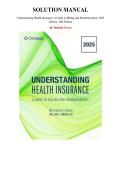
Understanding Health Insurance: A Guide to Billing and Reimbursement, 2025
Edition, 20th Edition
by Michelle Green
SC
O
R
EG
U
ID
ES
, Table of Content
Chapter 1. Health Insurance Specialist Career
Chapter 2. Introduction to Health Insurance and Managed Care
Chapter 3. Introduction to Revenue Management
Chapter 4. Revenue Management: Insurance Claims, Denied Claims and Appeals, and Credit
and Collections
SC
Chapter 5. Legal Aspects of Health Insurance and Reimbursement
Chapter 6. ICD-10-CM Coding
Chapter 7. CPT Coding
O
Chapter 8. HCPCS Level II Coding
Chapter 9. CMS Reimbursement Methodologies
R
Chapter 10. CMS-1500 and UB-04 Claims
EG
Chapter 11. Commercial Insurance
Chapter 12. BlueCross BlueShield
Chapter 13. Medicare
Chapter 14. Medicaid
U
Chapter 15. TRICARE
ID
Chapter 16. Workers’ Compensation
ES
, Solution and Answer Guide: Michelle A. Green, Understanding Health Insurance: A Guide to Billing and
Reimbursement: 2025, 20th Edition, 9780357932063; Chapter 1: Health Insurance Specialist Career
Solution and Answer Guide
MICHELLE A. GREEN, UNDERSTANDING HEALTH INSURANCE: A GUIDE TO BILLING AND
REIMBURSEMENT: 2025, 20th EDITION, 9780357932063; CHAPTER 1: HEALTH INSURANCE
SPECIALIST CAREER
SC
TABLE OF CONTENTS
Review ....................................................................................................... 1
1.1 : Multiple Choice ..................................................................................... 1
1.2 : Professionalism ...................................................................................... 9
O
REVIEW
R
1.1 : MULTIPLE CHOICE
EG
1. The document submitted to the payer requesting reimbursement is called a(n)
a. explanation of benefits.
b. health insurance claim.
c. remittance advice.
d. prior approval form.
ANS: b
U
Analysis:
a. Incorrect. The patient receives an explanation of benefits (EOB) from the third-party
payer, which is a report detailing the results of processing a claim. A health
insurance claim is the documentation submitted to a third-party payer or
ID
government program requesting reimbursement for the health care services
provided.
b. Correct. A health insurance claim is the documentation submitted to a third-party
payer or government program requesting reimbursement for the health care
services provided.
ES
c. Incorrect. The provider receives a remittance advice (or remit), a notice sent by the
insurance company that contains payment information about a claim.
A health insurance claim is the documentation submitted to a third-party payer or
government program requesting reimbursement for the health care services
provided.
d. Incorrect. Many health insurance plans and programs require prior approval for
treatment by specialists and documentation of post-treatment reports, and if the
prior approval form is not submitted prior to treatment, payment of the claim is
denied. A health insurance claim is the documentation submitted to a third-party
payer or government program requesting reimbursement for the health care
services provided.
, Solution and Answer Guide: Michelle A. Green, Understanding Health Insurance: A Guide to Billing and
Reimbursement: 2025, 20th Edition, 9780357932063; Chapter 1: Health Insurance Specialist Career
2. The Centers for Medicare and Medicaid Services (CMS) is an administrative agency
within the
a. Administration for Children and Families.
b. Department of Health and Human Services.
c. Food and Drug Administration.
d. Office of the Inspector General.
ANS: b
SC
Analysis:
a. Incorrect. The Administration for Children and Families is an administrative agency
of the Department of Health and Human Services. The Centers for Medicare and
Medicaid Services is an administrative agency of the Department of Health and
Human Services.
b. Correct. The Centers for Medicare and Medicaid Services is an administrative
agency of the Department of Health and Human Services.
O
c. Incorrect. The Food and Drug Administration is an administrative agency of the
Department of Health and Human Services. The Centers for Medicare and Medicaid
Services is an administrative agency of the Department of Health and Human
Services.
R
d. Incorrect. The Office of the Inspector General for the Department of Health and
Human Services reports to the Secretary of the Department of Health and Human
Services and the United States Congress. The Centers for Medicare and Medicaid
Services is an administrative agency of the Department of Health and Human
EG
Services.
3. A health care practitioner is also called a health care
a. dealer.
b. provider.
c. purveyor.
d. supplier.
U
ANS: b
Analysis:
a. Incorrect. A health care dealer is an entity that purchases goods for wholesale
ID
or retail re-selling, such as durable medical equipment. A health care provider is
a health care practitioner, such as a physician, physician’s assistance, or nurse
practitioner.
b. Correct. A health care provider is a health care practitioner, such as a physician,
physician’s assistance, or nurse practitioner.
ES
c. Incorrect. A health care purveyor refers to an entity that sells or deals in a
particular type of goods. A health care provider is a health care practitioner,
such as a physician, physician’s assistance, or nurse practitioner.
d. Incorrect. A health care supplier is a person or organization that sells or supplies
goods, such as durable medical equipment. A health care provider is a health care
practitioner, such as a physician, physician’s assistance, or nurse practitioner.
Understanding Health Insurance: A Guide to Billing and Reimbursement, 2025
Edition, 20th Edition
by Michelle Green
SC
O
R
EG
U
ID
ES
, Table of Content
Chapter 1. Health Insurance Specialist Career
Chapter 2. Introduction to Health Insurance and Managed Care
Chapter 3. Introduction to Revenue Management
Chapter 4. Revenue Management: Insurance Claims, Denied Claims and Appeals, and Credit
and Collections
SC
Chapter 5. Legal Aspects of Health Insurance and Reimbursement
Chapter 6. ICD-10-CM Coding
Chapter 7. CPT Coding
O
Chapter 8. HCPCS Level II Coding
Chapter 9. CMS Reimbursement Methodologies
R
Chapter 10. CMS-1500 and UB-04 Claims
EG
Chapter 11. Commercial Insurance
Chapter 12. BlueCross BlueShield
Chapter 13. Medicare
Chapter 14. Medicaid
U
Chapter 15. TRICARE
ID
Chapter 16. Workers’ Compensation
ES
, Solution and Answer Guide: Michelle A. Green, Understanding Health Insurance: A Guide to Billing and
Reimbursement: 2025, 20th Edition, 9780357932063; Chapter 1: Health Insurance Specialist Career
Solution and Answer Guide
MICHELLE A. GREEN, UNDERSTANDING HEALTH INSURANCE: A GUIDE TO BILLING AND
REIMBURSEMENT: 2025, 20th EDITION, 9780357932063; CHAPTER 1: HEALTH INSURANCE
SPECIALIST CAREER
SC
TABLE OF CONTENTS
Review ....................................................................................................... 1
1.1 : Multiple Choice ..................................................................................... 1
1.2 : Professionalism ...................................................................................... 9
O
REVIEW
R
1.1 : MULTIPLE CHOICE
EG
1. The document submitted to the payer requesting reimbursement is called a(n)
a. explanation of benefits.
b. health insurance claim.
c. remittance advice.
d. prior approval form.
ANS: b
U
Analysis:
a. Incorrect. The patient receives an explanation of benefits (EOB) from the third-party
payer, which is a report detailing the results of processing a claim. A health
insurance claim is the documentation submitted to a third-party payer or
ID
government program requesting reimbursement for the health care services
provided.
b. Correct. A health insurance claim is the documentation submitted to a third-party
payer or government program requesting reimbursement for the health care
services provided.
ES
c. Incorrect. The provider receives a remittance advice (or remit), a notice sent by the
insurance company that contains payment information about a claim.
A health insurance claim is the documentation submitted to a third-party payer or
government program requesting reimbursement for the health care services
provided.
d. Incorrect. Many health insurance plans and programs require prior approval for
treatment by specialists and documentation of post-treatment reports, and if the
prior approval form is not submitted prior to treatment, payment of the claim is
denied. A health insurance claim is the documentation submitted to a third-party
payer or government program requesting reimbursement for the health care
services provided.
, Solution and Answer Guide: Michelle A. Green, Understanding Health Insurance: A Guide to Billing and
Reimbursement: 2025, 20th Edition, 9780357932063; Chapter 1: Health Insurance Specialist Career
2. The Centers for Medicare and Medicaid Services (CMS) is an administrative agency
within the
a. Administration for Children and Families.
b. Department of Health and Human Services.
c. Food and Drug Administration.
d. Office of the Inspector General.
ANS: b
SC
Analysis:
a. Incorrect. The Administration for Children and Families is an administrative agency
of the Department of Health and Human Services. The Centers for Medicare and
Medicaid Services is an administrative agency of the Department of Health and
Human Services.
b. Correct. The Centers for Medicare and Medicaid Services is an administrative
agency of the Department of Health and Human Services.
O
c. Incorrect. The Food and Drug Administration is an administrative agency of the
Department of Health and Human Services. The Centers for Medicare and Medicaid
Services is an administrative agency of the Department of Health and Human
Services.
R
d. Incorrect. The Office of the Inspector General for the Department of Health and
Human Services reports to the Secretary of the Department of Health and Human
Services and the United States Congress. The Centers for Medicare and Medicaid
Services is an administrative agency of the Department of Health and Human
EG
Services.
3. A health care practitioner is also called a health care
a. dealer.
b. provider.
c. purveyor.
d. supplier.
U
ANS: b
Analysis:
a. Incorrect. A health care dealer is an entity that purchases goods for wholesale
ID
or retail re-selling, such as durable medical equipment. A health care provider is
a health care practitioner, such as a physician, physician’s assistance, or nurse
practitioner.
b. Correct. A health care provider is a health care practitioner, such as a physician,
physician’s assistance, or nurse practitioner.
ES
c. Incorrect. A health care purveyor refers to an entity that sells or deals in a
particular type of goods. A health care provider is a health care practitioner,
such as a physician, physician’s assistance, or nurse practitioner.
d. Incorrect. A health care supplier is a person or organization that sells or supplies
goods, such as durable medical equipment. A health care provider is a health care
practitioner, such as a physician, physician’s assistance, or nurse practitioner.


