

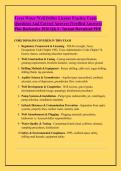
Texas Water Well Driller License Practice Exam
Questions And Correct Answers (Verified Answers)
Plus Rationales 2026 Q&A | Instant Download PDF
CORE DOMAINS COVERED IN THIS EXAM
1. Regulatory Framework & Licensing - TDLR oversight, Texas
Occupations Code Chapter 1902, Texas Administrative Code Chapter 76,
license classes, continuing education requirements
2. Well Construction & Casing - Casing materials and specifications,
grouting requirements, borehole diameter, casing extension above ground
3. Drilling Methods & Equipment - Rotary drilling, cable tool, auger drilling,
drilling fluids, rig operations
4. Aquifer Science & Groundwater - Aquifer types (unconfined, confined,
artesian), cone of depression, groundwater flow, water table
5. Well Development & Completion - Well screens, gravel packs,
development methods (surge, pumping), disinfection procedures
6. Pump Systems & Installation - Pump types (submersible, jet, centrifugal),
pump selection, installation standards
7. Setback Distances & Contamination Prevention - Separation from septic
systems, property lines, surface water, sanitary seals
8. Well Abandonment & Plugging - Plugging materials, procedures,
landowner vs. licensed driller responsibilities
9. Water Quality & Testing - Contaminant limits (lead, coliform, nitrates),
sampling procedures, disinfection
10.Safety & Environmental Compliance - PPE, confined space safety,
drilling mud hazards, equipment safety
,1. Which Texas agency is primarily responsible for licensing water well
drillers and pump installers?
A. Texas Commission on Environmental Quality (TCEQ)
B. Texas Department of Licensing and Regulation (TDLR)
C. Texas Water Development Board (TWDB)
D. Railroad Commission of Texas
ANSWER: B. Texas Department of Licensing and Regulation (TDLR)
RATIONALE: TDLR administers the Well Driller Licensing Program under
Texas Occupations Code Chapter 1902 and 16 Texas Administrative Code Chapter
76. TCEQ oversees water quality, and TWDB manages water resources data.
2. What is the minimum age requirement for a Texas Well Driller license?
A. 16 years
B. 18 years
C. 21 years
D. 25 years
ANSWER: B. 18 years
RATIONALE: Texas Occupations Code §1902.102 requires applicants to be
at least 18 years of age.
3. Which license class allows drilling of water wells, monitoring wells, and well
repair?
A. Water Well Driller
B. Pump Installer
C. Well Driller (Unrestricted)
D. Limited Well Driller
ANSWER: C. Well Driller (Unrestricted)
RATIONALE: The unrestricted Well Driller license permits drilling,
constructing, repairing, and abandoning water wells, monitoring wells, and other
wells regulated under Chapter 1902.
,4. What is the standard minimum diameter for a domestic water well casing
in Texas?
A. 2 inches
B. 4 inches
C. 6 inches
D. 8 inches
ANSWER: B. 4 inches
RATIONALE: Texas regulations require a minimum casing diameter of 4
inches for domestic water wells to ensure proper installation and function.
5. What is the primary purpose of casing in a water well?
A. To improve water taste
B. To prevent contamination and collapse of the wellbore
C. To increase pump efficiency
D. To reduce drilling noise
ANSWER: B. To prevent contamination and collapse of the wellbore
RATIONALE: The casing provides structural support, stabilizes the borehole,
prevents collapse, and isolates the groundwater from surface contaminants and
shallow, poor-quality water.
6. What is the minimum vertical distance required between a water well and a
septic tank in Texas (TDLR standard)?
A. 25 feet
B. 50 feet
C. 100 feet
D. 150 feet
ANSWER: B. 50 feet
, RATIONALE: Texas regulations require a minimum separation of 50 feet
between a water well and a septic tank to minimize the risk of bacterial
contamination from wastewater.
7. What is the minimum vertical distance required between a water well and a
septic tank under TCEQ standards?
A. 50 feet
B. 75 feet
C. 100 feet
D. 150 feet
ANSWER: C. 100 feet
RATIONALE: TCEQ standards require a minimum separation of 100 feet
between a water well and a septic tank or drain field. The exam may use either
standard depending on context.
8. What is the minimum grout thickness required around a well casing?
A. 1/2 inch
B. 1 inch
C. 2 inches
D. 3 inches
ANSWER: B. 1 inch
RATIONALE: Texas regulations require a minimum grout thickness of 1 inch
around the casing to ensure a proper annular seal that prevents surface
contamination from migrating down the borehole.
9. What is the minimum grout depth required for a water well?
A. 10 feet
B. 15 feet
C. 20 feet
D. 30 feet
Questions And Correct Answers (Verified Answers)
Plus Rationales 2026 Q&A | Instant Download PDF
CORE DOMAINS COVERED IN THIS EXAM
1. Regulatory Framework & Licensing - TDLR oversight, Texas
Occupations Code Chapter 1902, Texas Administrative Code Chapter 76,
license classes, continuing education requirements
2. Well Construction & Casing - Casing materials and specifications,
grouting requirements, borehole diameter, casing extension above ground
3. Drilling Methods & Equipment - Rotary drilling, cable tool, auger drilling,
drilling fluids, rig operations
4. Aquifer Science & Groundwater - Aquifer types (unconfined, confined,
artesian), cone of depression, groundwater flow, water table
5. Well Development & Completion - Well screens, gravel packs,
development methods (surge, pumping), disinfection procedures
6. Pump Systems & Installation - Pump types (submersible, jet, centrifugal),
pump selection, installation standards
7. Setback Distances & Contamination Prevention - Separation from septic
systems, property lines, surface water, sanitary seals
8. Well Abandonment & Plugging - Plugging materials, procedures,
landowner vs. licensed driller responsibilities
9. Water Quality & Testing - Contaminant limits (lead, coliform, nitrates),
sampling procedures, disinfection
10.Safety & Environmental Compliance - PPE, confined space safety,
drilling mud hazards, equipment safety
,1. Which Texas agency is primarily responsible for licensing water well
drillers and pump installers?
A. Texas Commission on Environmental Quality (TCEQ)
B. Texas Department of Licensing and Regulation (TDLR)
C. Texas Water Development Board (TWDB)
D. Railroad Commission of Texas
ANSWER: B. Texas Department of Licensing and Regulation (TDLR)
RATIONALE: TDLR administers the Well Driller Licensing Program under
Texas Occupations Code Chapter 1902 and 16 Texas Administrative Code Chapter
76. TCEQ oversees water quality, and TWDB manages water resources data.
2. What is the minimum age requirement for a Texas Well Driller license?
A. 16 years
B. 18 years
C. 21 years
D. 25 years
ANSWER: B. 18 years
RATIONALE: Texas Occupations Code §1902.102 requires applicants to be
at least 18 years of age.
3. Which license class allows drilling of water wells, monitoring wells, and well
repair?
A. Water Well Driller
B. Pump Installer
C. Well Driller (Unrestricted)
D. Limited Well Driller
ANSWER: C. Well Driller (Unrestricted)
RATIONALE: The unrestricted Well Driller license permits drilling,
constructing, repairing, and abandoning water wells, monitoring wells, and other
wells regulated under Chapter 1902.
,4. What is the standard minimum diameter for a domestic water well casing
in Texas?
A. 2 inches
B. 4 inches
C. 6 inches
D. 8 inches
ANSWER: B. 4 inches
RATIONALE: Texas regulations require a minimum casing diameter of 4
inches for domestic water wells to ensure proper installation and function.
5. What is the primary purpose of casing in a water well?
A. To improve water taste
B. To prevent contamination and collapse of the wellbore
C. To increase pump efficiency
D. To reduce drilling noise
ANSWER: B. To prevent contamination and collapse of the wellbore
RATIONALE: The casing provides structural support, stabilizes the borehole,
prevents collapse, and isolates the groundwater from surface contaminants and
shallow, poor-quality water.
6. What is the minimum vertical distance required between a water well and a
septic tank in Texas (TDLR standard)?
A. 25 feet
B. 50 feet
C. 100 feet
D. 150 feet
ANSWER: B. 50 feet
, RATIONALE: Texas regulations require a minimum separation of 50 feet
between a water well and a septic tank to minimize the risk of bacterial
contamination from wastewater.
7. What is the minimum vertical distance required between a water well and a
septic tank under TCEQ standards?
A. 50 feet
B. 75 feet
C. 100 feet
D. 150 feet
ANSWER: C. 100 feet
RATIONALE: TCEQ standards require a minimum separation of 100 feet
between a water well and a septic tank or drain field. The exam may use either
standard depending on context.
8. What is the minimum grout thickness required around a well casing?
A. 1/2 inch
B. 1 inch
C. 2 inches
D. 3 inches
ANSWER: B. 1 inch
RATIONALE: Texas regulations require a minimum grout thickness of 1 inch
around the casing to ensure a proper annular seal that prevents surface
contamination from migrating down the borehole.
9. What is the minimum grout depth required for a water well?
A. 10 feet
B. 15 feet
C. 20 feet
D. 30 feet


