Physics 7A DL 1 Overview DL 1
Brief Overview
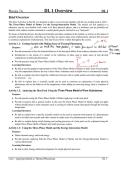
The three Activities in this DL are designed to allow you to become familiar with the two models used in Unit 1:
The Three-Phase Model of Matter and the Energy-Interaction Model. The models are first applied to a
substance you are very familiar with: water in its three physical phases, and to a substance you are probably not
familiar with: sodium acetate contained in a sealed plastic pouch, referred to as a “heat pack.”
We focus on both the physics, the physical principles and ideas contained in the models, as well as on the notion of
scientific models themselves: what they are, how they are used to make sense of phenomena, and how they are used
to construct explanations of phenomena. This dual focus will be evident throughout the course. 39
°
C
Activity 1.1: Getting Started with Making Sense of Thermal Phenomena T
Purpose: When we touch the heat packed it turns fram liquid to solid but different
> ,
- them water,
• Provide awareness of how the thermal behavior of the heat pack differs from ordinary substances like water.
it's war
• Introduction to the notion of a model as the collection of ideas used to make sense of and develop
explanations of particular phenomena. T(OC)
• Provide practice using the Three-Phase Model of Matter with water.
Learning Outcomes: #
... /
Meml
• Be able to use the graphical representation of the Three-Phase Model of Matter to make sense of and explain
why the temperature behaves the way it does when a substance such as liquid water is continuously heated.
• Be able to explain why there might be a difference between what a model predicts and what might actually
be observed. 100
• Be able to explain how a scientific model can be used to construct an explanation of some physical
phenomena such as the behavior of the temperature when adding or removing energy from a container of
water.
Activity 1.2: Analyzing the Heat Pack Using the Three Phase Model of Pure Substances
Purpose:
• Provide practice using the Three-Phase Model of Matter applying it to the heat pack.
• Provide awareness that a general model, in this case the Three-Phase Model of Matter, might not apply
without modification in some situations such as cooling of sodium acetate (heat pack) through the freezing
temperature.
Learning Outcomes:
• Be able to explain how a specific scientific model can be used to constrain what aspects of a phenomenon
need to be taken into account and what it means to make sense of a phenomenon in terms of a model
• Be able to explain during which heating and cooling processes of a heat pack can be explained using the
simple Three-Phase Model of Matter and which processes cannot.
Activity 1.3: Using the Three-Phase Model and the Energy-Interaction Model
Purpose:
• Define thermal energy and bond energy.
• Provide practice applying both the Three-Phase Model of Matter and the Energy-Interaction Model to
various phenomena.
Learning Outcomes:
• Be able to draw Energy-Interaction diagrams for simple physical processes.
Unit 1: Applying Models to Thermal Phenomena DL 1
, Physics 7A Activity 1.1 DL 1
Getting Started with Making Sense of Thermal Phenomena
A) Freezing things:
1) Freezing a Heat Pack
As a group, trigger one of the heat packs at your table that is still in its liquid state. Observe what
it does during the first few minutes after triggering. Describe what you observe. In a few sentences,
put your description of what you observed on your black board.
2) Freezing liquid water
Based on your prior experience, describe what must happen to freeze water (what does someone
have to do?). After you have discussed this in your group for a few minutes, put your group
response on the board.
3) Does the behavior of a heat pack make sense?
Discuss in your group:
a) Based on your experience with everyday things freezing, would you say that the heat pack
froze when it was triggered?
b) Why or why not?
c) Does the behavior of the heat pack make sense?
Put a few of your thoughts in response to a), b), and c) on the board.
Whole Class Discussion
B) How do we make sense of phenomena?
Models and intuition:
Scientists organize knowledge related to a class of phenomena into a model, bringing together
ideas and patterns used for making sense of phenomena in a concrete way. Models help us to
develop explanations and make predictions which frequently contradict our intuitions. The goal of
this course is to study a variety of models and learn to approach phenomena scientifically when
our intuition fails.
The Three-Phase Model of Pure Substances summarizes the ideas needed to make sense of phase
changes in pure substances. There are instances, however, when this “standard model” is not sufficient
to understand certain phenomena that undergo a phase change. This is the case with the heat pack. The
model has to be extended and this is what we will do.
1) Examine the model summary
Turn to the first blue foldout in your DL manual. Take some time to look at what is on the foldout.
Then focus on the graph. Discuss with your group what the axes mean.
Continue to Next Page
Unit 1: Applying Models to Thermal Phenomena DL 1
Brief Overview
The three Activities in this DL are designed to allow you to become familiar with the two models used in Unit 1:
The Three-Phase Model of Matter and the Energy-Interaction Model. The models are first applied to a
substance you are very familiar with: water in its three physical phases, and to a substance you are probably not
familiar with: sodium acetate contained in a sealed plastic pouch, referred to as a “heat pack.”
We focus on both the physics, the physical principles and ideas contained in the models, as well as on the notion of
scientific models themselves: what they are, how they are used to make sense of phenomena, and how they are used
to construct explanations of phenomena. This dual focus will be evident throughout the course. 39
°
C
Activity 1.1: Getting Started with Making Sense of Thermal Phenomena T
Purpose: When we touch the heat packed it turns fram liquid to solid but different
> ,
- them water,
• Provide awareness of how the thermal behavior of the heat pack differs from ordinary substances like water.
it's war
• Introduction to the notion of a model as the collection of ideas used to make sense of and develop
explanations of particular phenomena. T(OC)
• Provide practice using the Three-Phase Model of Matter with water.
Learning Outcomes: #
... /
Meml
• Be able to use the graphical representation of the Three-Phase Model of Matter to make sense of and explain
why the temperature behaves the way it does when a substance such as liquid water is continuously heated.
• Be able to explain why there might be a difference between what a model predicts and what might actually
be observed. 100
• Be able to explain how a scientific model can be used to construct an explanation of some physical
phenomena such as the behavior of the temperature when adding or removing energy from a container of
water.
Activity 1.2: Analyzing the Heat Pack Using the Three Phase Model of Pure Substances
Purpose:
• Provide practice using the Three-Phase Model of Matter applying it to the heat pack.
• Provide awareness that a general model, in this case the Three-Phase Model of Matter, might not apply
without modification in some situations such as cooling of sodium acetate (heat pack) through the freezing
temperature.
Learning Outcomes:
• Be able to explain how a specific scientific model can be used to constrain what aspects of a phenomenon
need to be taken into account and what it means to make sense of a phenomenon in terms of a model
• Be able to explain during which heating and cooling processes of a heat pack can be explained using the
simple Three-Phase Model of Matter and which processes cannot.
Activity 1.3: Using the Three-Phase Model and the Energy-Interaction Model
Purpose:
• Define thermal energy and bond energy.
• Provide practice applying both the Three-Phase Model of Matter and the Energy-Interaction Model to
various phenomena.
Learning Outcomes:
• Be able to draw Energy-Interaction diagrams for simple physical processes.
Unit 1: Applying Models to Thermal Phenomena DL 1
, Physics 7A Activity 1.1 DL 1
Getting Started with Making Sense of Thermal Phenomena
A) Freezing things:
1) Freezing a Heat Pack
As a group, trigger one of the heat packs at your table that is still in its liquid state. Observe what
it does during the first few minutes after triggering. Describe what you observe. In a few sentences,
put your description of what you observed on your black board.
2) Freezing liquid water
Based on your prior experience, describe what must happen to freeze water (what does someone
have to do?). After you have discussed this in your group for a few minutes, put your group
response on the board.
3) Does the behavior of a heat pack make sense?
Discuss in your group:
a) Based on your experience with everyday things freezing, would you say that the heat pack
froze when it was triggered?
b) Why or why not?
c) Does the behavior of the heat pack make sense?
Put a few of your thoughts in response to a), b), and c) on the board.
Whole Class Discussion
B) How do we make sense of phenomena?
Models and intuition:
Scientists organize knowledge related to a class of phenomena into a model, bringing together
ideas and patterns used for making sense of phenomena in a concrete way. Models help us to
develop explanations and make predictions which frequently contradict our intuitions. The goal of
this course is to study a variety of models and learn to approach phenomena scientifically when
our intuition fails.
The Three-Phase Model of Pure Substances summarizes the ideas needed to make sense of phase
changes in pure substances. There are instances, however, when this “standard model” is not sufficient
to understand certain phenomena that undergo a phase change. This is the case with the heat pack. The
model has to be extended and this is what we will do.
1) Examine the model summary
Turn to the first blue foldout in your DL manual. Take some time to look at what is on the foldout.
Then focus on the graph. Discuss with your group what the axes mean.
Continue to Next Page
Unit 1: Applying Models to Thermal Phenomena DL 1