NSG 3100 Exam 2:NSG 3100 Unit 3,4& 5: Questions & Answers/Latest Updated A+ Score Solution
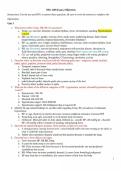
What factors affect Temp, HR, BP, O2 saturation? a. Temp: age, exercise, hormone, circadian rhythms, stress, environment, smoking Hypothalamus controls b. HR: age (decrease), gender, exercise, fever, meds, stress, underlying disease, fluid volume (hypovolemia), position, hypoxia/hypoxemia, electrolyte imbalance c. BP: age, gender, race, weight, emotions, fluid balance, exercise, meds circadian rhythms, head injury, food intake, pain, increase blood volume d. RR: age (decrease), exercise (increase), respiratory/cardiovascular disease, alterations in fluid/electrolyte balance, acid/base, meds, pain, emotions Brain injury can cause RR to drop e. O2: age nail polish, peripheral vascular disease, temp (finger needs to be warm), peripheral edema, jaundice, shivering, hemoglobin, CO poisoning, circulation, activity 2. Describe where on the body would you find the following pulse sites – temporal, carotid, brachial, radial, apical, popliteal, posterior tibial, pedal (dorsalis pedis). a. Temporal: temporal artery b. Carotid: side of the neck where carotid artery crosses c. Brachial: inner part of arm d. Radial: thumb side of inner wrist e. Popliteal: back of knee f. pedal (dorsalis pedis): dorsalis pedis artery passes on top of the foot g. Posterior tibial: medial surface of ankle 3. What are the values of the different categories of BP – hypotension, normal, elevated hypertension stage 1 and 2? a. Hypotension 90/60 b. Normal 120/80 c. Elevated 120-129/80 d. Hypertension stage I 130-139/80-89 e. Hypertension stage II 140-149/greater than or equal to 90 4. Identify the age-related findings for an older adult regarding Temp, BP, prevalence of orthostatic hypotension. a. BP: w/ age, elasticity in arteries decreases, increase peripheral resistance: Increased BP b. Temp:drop as pt ages, suscetiple to environment temp extreames c. Orthostaic: More prevalent in older adults, Defined as:↓ systolic BP ≥20 mmHg or ↓ diastolic BP ≥10 mmHg within 3 minutes of standing, sitting laying down 5. Describe the tripod/orthopneic position, which patients would use it and why. a. A sitting position, leaning forward over a raised bedside table with arms resting on the table, in what is called the tripod position. b. Patient who experience dyspnea would use this position because it expands the lungs 6. Describe how a fever affects vital signs. a. Fever increases BP, HR,RR,Temp, b. It cause the body temp to rise above normal. c. HR: Pulse increases with fever because of the increased metabolic rate and peripheral vasodilation that occurs. d. RR: When fever increases metabolic demand, it causes faster breathing (tachypnea) e. BP may drop due to vasodilation, this causes release of heat from the body
Document information
- Uploaded on
- July 12, 2026
- Number of pages
- 5
- Written in
- 2025/2026
- Type
- Exam (elaborations)
- Contains
- Questions & answers