

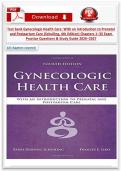
Gynecologic Health Care
o o
Test bank Gynecologic Health Care: With an Introduction to Prenatal
and Postpartum Care (Schuiling, 4th Edition) Chapters 1–35 Exam
Practice Questions & Study Guide 2026–2027
All chapters covered
,Gynecologic Health Care o o
Chapter 1 A Feminist Perspective ofWomen's Health& Chapter
o o o o o o o o o o
2 Racism and Health Disparities
o o o o o
MULTIPLE-CHOICE QUESTIONS o
Selectthe one correct answer to each of the following questions.
o o o o o o o o o o
1. Whichof the following best defines the term “gender” as used inthis text?
o o o o o o o o o o o o o
a) A person’s sex
o o
b) A person’s sex as defined by society
o o o o o o
c) A societal response to a person’s self-representation as a man or woman
o o o o o o o o o o o
d) Aperson’s biological presentation as defined by himself or herself
o o o o o o o o o
2. Which factor bears most onwomen’s healthcare today?
o o o o o o o o
a) The complexity ofwomen’s health
o o o o
b) Women’s status and position in society o o o o o
c) Population growth o
d) The economy o
3. Why is acknowledging the oppression of women more difficult within
o o o o o o o o o
o Western societies? o
a) The multiplicityof minoritygroups complicates the issue.
o o o o o o o
b) The availability ofhealth care makes acknowledgment more difficult.
o o o o o o o o
c) The diversityofthe news media clouds the issue.
o o o o o o o o
d) Affluence and increased opportunities mask oppression. o o o o o
4. Whichof the following most accuratelydefines “oppression” as used inthe text?
o o o o o o o o o o o o
a) Not having a choice o o o
b) Not having a voice o o o
c) An act of tyranny
o o o
d) A feeling of being burdened
o o o o
5. In what way does a model of care based on a feminist perspective contrast
o o o o o o o o o o o o o
o sharply with a biomedical model?
o o o o
a) It provides a forum for the exploration of gender issues.
o o o o o o o o o
b) Itseeks equal distribution of power within the healthcare interaction.
o o o o o o o o o
c) It emphasizes women’s rights. o o o
d) It opens new avenues forwomen’s health care.
o o o o o o o
6. Gender is rooted in o o o and shaped by . o o o
a) society, biology o
,Gynecologic Health Care
o o
b) self-representation, societal expectations o o
c) biology, environment and experience o o o
d) biology, hormones o
7. Women’s health risks, treatments, and approaches are not always based in o o o o o o o o o o
o science and biology because
o o o
a) theyare often basedon outdated treatments and approaches.
o o o o o o o o
b) theyare determined by social expectations and gender assumptions.
o o o o o o o o
c) they often rely onalternative treatments and approaches.
o o o o o o o
d) scientificresearch often fails to take women into consideration. o o o o o o o o
8. Reproductive rights were added to the World Health Organization’s human o o o o o o o o o
o rights framework in the last ?
o o o o o
a) 5 years o
b) 10 years o
c) 20 years o
d) 40 years o
9. “Safe Motherhood” was added to the human rights framework in order to
o o o o o o o o o o o
a) addressmaternal morbidity and mortalityon a global level
o o o o o o o o
b) meet a legal obligation o o o
c) correct an injustice o o
d) correct an oversight o o
10. What is a chief failing of the biomedical model in regards to women’s health care?
o o o o o o o o o o o o o o
a) Its reliance onstudies comprised exclusively ofmales
o o o o o o o
b) Its consideration ofwomen as central the model
o o o o o o o
c) Its emphasis on science and medicine
o o o o o
d) Its limited definition of “health” as “the absence ofdisease”
o o o o o o o o o
11. The social model of health places the focus of health on
o o o o o o o o o o
a) the community. o
b) the individual. o
c) environmental conditions. o
d) scientific research. o
12. Which question below supports the strategy: “Identify women’s agency inthe
o o o o o o o o o o
o midst of social constraint and the biomedical paradigm.”?
o o o o o o o
a) “Are ‘all women’ the same?” o o o o
b) “Why do you care about the issue?” o o o o o o
c) “Are women reallyvictims or are they acting withagency?”
o o o o o o o o o
d) “Who has a choice within the context of health?” o o o o o o o o
13. What had been a significant problem inmedical research well into the 1990s?
o o o o o o o o o o o o
, Gynecologic Health Care
o o
a) The focus on randomized clinical trials over epidemiological investigations
o o o o o o o o
b) The lack ofrepresentation of women in research trials
o o o o o o o o
o o
Test bank Gynecologic Health Care: With an Introduction to Prenatal
and Postpartum Care (Schuiling, 4th Edition) Chapters 1–35 Exam
Practice Questions & Study Guide 2026–2027
All chapters covered
,Gynecologic Health Care o o
Chapter 1 A Feminist Perspective ofWomen's Health& Chapter
o o o o o o o o o o
2 Racism and Health Disparities
o o o o o
MULTIPLE-CHOICE QUESTIONS o
Selectthe one correct answer to each of the following questions.
o o o o o o o o o o
1. Whichof the following best defines the term “gender” as used inthis text?
o o o o o o o o o o o o o
a) A person’s sex
o o
b) A person’s sex as defined by society
o o o o o o
c) A societal response to a person’s self-representation as a man or woman
o o o o o o o o o o o
d) Aperson’s biological presentation as defined by himself or herself
o o o o o o o o o
2. Which factor bears most onwomen’s healthcare today?
o o o o o o o o
a) The complexity ofwomen’s health
o o o o
b) Women’s status and position in society o o o o o
c) Population growth o
d) The economy o
3. Why is acknowledging the oppression of women more difficult within
o o o o o o o o o
o Western societies? o
a) The multiplicityof minoritygroups complicates the issue.
o o o o o o o
b) The availability ofhealth care makes acknowledgment more difficult.
o o o o o o o o
c) The diversityofthe news media clouds the issue.
o o o o o o o o
d) Affluence and increased opportunities mask oppression. o o o o o
4. Whichof the following most accuratelydefines “oppression” as used inthe text?
o o o o o o o o o o o o
a) Not having a choice o o o
b) Not having a voice o o o
c) An act of tyranny
o o o
d) A feeling of being burdened
o o o o
5. In what way does a model of care based on a feminist perspective contrast
o o o o o o o o o o o o o
o sharply with a biomedical model?
o o o o
a) It provides a forum for the exploration of gender issues.
o o o o o o o o o
b) Itseeks equal distribution of power within the healthcare interaction.
o o o o o o o o o
c) It emphasizes women’s rights. o o o
d) It opens new avenues forwomen’s health care.
o o o o o o o
6. Gender is rooted in o o o and shaped by . o o o
a) society, biology o
,Gynecologic Health Care
o o
b) self-representation, societal expectations o o
c) biology, environment and experience o o o
d) biology, hormones o
7. Women’s health risks, treatments, and approaches are not always based in o o o o o o o o o o
o science and biology because
o o o
a) theyare often basedon outdated treatments and approaches.
o o o o o o o o
b) theyare determined by social expectations and gender assumptions.
o o o o o o o o
c) they often rely onalternative treatments and approaches.
o o o o o o o
d) scientificresearch often fails to take women into consideration. o o o o o o o o
8. Reproductive rights were added to the World Health Organization’s human o o o o o o o o o
o rights framework in the last ?
o o o o o
a) 5 years o
b) 10 years o
c) 20 years o
d) 40 years o
9. “Safe Motherhood” was added to the human rights framework in order to
o o o o o o o o o o o
a) addressmaternal morbidity and mortalityon a global level
o o o o o o o o
b) meet a legal obligation o o o
c) correct an injustice o o
d) correct an oversight o o
10. What is a chief failing of the biomedical model in regards to women’s health care?
o o o o o o o o o o o o o o
a) Its reliance onstudies comprised exclusively ofmales
o o o o o o o
b) Its consideration ofwomen as central the model
o o o o o o o
c) Its emphasis on science and medicine
o o o o o
d) Its limited definition of “health” as “the absence ofdisease”
o o o o o o o o o
11. The social model of health places the focus of health on
o o o o o o o o o o
a) the community. o
b) the individual. o
c) environmental conditions. o
d) scientific research. o
12. Which question below supports the strategy: “Identify women’s agency inthe
o o o o o o o o o o
o midst of social constraint and the biomedical paradigm.”?
o o o o o o o
a) “Are ‘all women’ the same?” o o o o
b) “Why do you care about the issue?” o o o o o o
c) “Are women reallyvictims or are they acting withagency?”
o o o o o o o o o
d) “Who has a choice within the context of health?” o o o o o o o o
13. What had been a significant problem inmedical research well into the 1990s?
o o o o o o o o o o o o
, Gynecologic Health Care
o o
a) The focus on randomized clinical trials over epidemiological investigations
o o o o o o o o
b) The lack ofrepresentation of women in research trials
o o o o o o o o


