

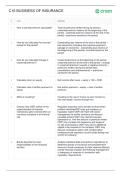
C16 BUSINESS OF INSURANCE
# Term Definition
1 How is earned premium calculated? Total of premiums written during he period +
unearned premium reserve at the beginning of the
period - unearned premium reserve at the end of the
period = premiums earned for the period.
2 How do you calculate the incurred Outstanding loss reserve at the end of the period +
losses for the period? loss payments (including loss expense payment) -
salvage or recoveries - outstanding loss reserve at
the beginning of the period= incurred losses for the
period
3 How do you calculate change in Unearned premium at the beginning of the period -
unearned premium? unearned premium at the end of the period = change
in unearned premium (usually a negative amount) +
premiums written during the period (less
cancellations and endorsements) = premiums
earned for the period
4 Calculate return on equity Net income after taxes ÷ equity x 100 = ROE
5 Calculate ratio of written premium to Net written premium ÷ equity = ratio of written
equity premium
6 What is investing? Investing is the use of money to earn income ex.
Into real estate; income through rent
7 Discuss how OSFI (officer of the Regulator becomes more actively involved when
superintendant of financial problem identifiedOSFI may put company on
institutions) gets involved when an regulatory watch OSFI will meet with senior
insurance company is at financial management to outline concerns and discuss
risk remedial actions OSFI may restrict business
operations ex. limit the amount of premium written
OSFI may increase the frequency and scope of
on-site examinations OSFI may call for additional
capital to be invested in the company OSFI may
discuss contingency plans with compensation
funds/provincial regulators could include taking over
control of company
8 Briefly describe the main Analyse statistical data and perform calculations to
responsibilities of the Actuarial determine prices of insurance servicesDetermine
function amount of funds necessary for bulk reserves Monitor
overall financial situation and Advising management
of adequacy of reserves in connection with
regulatory requirements
,C16 BUSINESS OF INSURANCE
# Term Definition
9 Briefly explain the three key steps Research – process of identifying the customer’s
included in the process of needs that fall within the scope of the organizations
“Marketing” mission.Development – process of developing or
designing coverages that respond to or meet the
needs identified through research.Selling – process
of convincing customers that the product or service
will satisfy their needs.
10 Define “Rating” Process undertaken by the underwriter in applying
the information developed by the actuaries to the
risk factors of an exposure to establish an
appropriate premium for a specific risk.
11 Discuss the contribution made by Provides a safety need from financial ruinProvides
insurance to the economy. for peace of mind Allows economy to function for
such things as non profits, business enterprises,
commercial operations, professional liability
exposures and many more. Provides for the lending
of money and financing of projects through surety
bonds Provides for employment of people in
insurance operations Purchases goods and
services, repair materials, medical and rehabilitative
treatments for injured parties. Pays taxes and
license fees to governments Fuels economic
expansion and thrives by the need created for
insurance through that expansion
12 Discuss the insurance cycle. Ensure The cycle involves six distinct steps. Negative
to include in your answer the key results lead to reductions in capacity this leads to
occurrences in the cycle and how upward pressure on rates which leads to improved
they influence price and insurer results which leads to increases in capacity leading
response and behavior to a lowering of prices and we start all over again.
Negative Results – Poor underwriting or claims
results result in losses. some of the cost of those
losses must be met by using investment income and
equity. As the company may make no profit, the
equity component to pay the losses must come from
retained earnings. Reduced Capacity – by using its
equity, the insurer reduces that amount of capacity it
has and thus is limited in its future business writings
as the premiums it can write are a ratio of its equity
(premium to equity ratio). This reduction in capacity
leads to a tightening of market terms and conditions
along with underwriting. As capacity is limited and
underwriting is more particular and supply is limited.
Underwriters become more particular of the risks
accepted tending for the better quality risks.
Increased Prices – As supply is limited and
underwriters more selective, the natural tendency
under supply demand characteristics of an economy
, C16 BUSINESS OF INSURANCE
# Term Definition
is that prices increase. As well, those questionable
risks that might have been written at inadequate
rates under more liberal terms are now placed in
their appropriate markets at appropriate prices.
Positive Results – As a result of the better
underwriting performance and more adequate
pricing of the insurance service, results will tend to
become profitable as the losses will resemble those
on which the rates were originally based. Insurers
will return to profitability and earn a reasonable
return on their equity and profits will either be paid
out to shareholders or retained in the company.
Increased Capacity – as results improve and the
insurer returns to profitability it is able to return to its
capacity he equity that may have been used when
results were poor. Additionally if the insurer is
profitable and retains its earnings it will be able to
increase its capacity suing that money. Lowering
Prices – Insurers wish to put their capacity to work in
order to earn a return. As capacity availability
increases there is more equity available to write
business but there is limited business growth
generated by the economy overall. The issue is to
attract new business from existing insurers and the
best way to do this is by reducing prices and
lowering underwriting standards. The price reduction
and lowering of underwriting standards results in
price inadequacy along with taking onto the books
more questionable risk. As the results of these
practices become known we start the cyclical pattern
all over again with negative results.
13 Identify (name) the five parties ConsumersDistributors Insurers/Shareholders
identified as stakeholders in the Reinsurer Regulator/Government
insurance industry
# Term Definition
1 How is earned premium calculated? Total of premiums written during he period +
unearned premium reserve at the beginning of the
period - unearned premium reserve at the end of the
period = premiums earned for the period.
2 How do you calculate the incurred Outstanding loss reserve at the end of the period +
losses for the period? loss payments (including loss expense payment) -
salvage or recoveries - outstanding loss reserve at
the beginning of the period= incurred losses for the
period
3 How do you calculate change in Unearned premium at the beginning of the period -
unearned premium? unearned premium at the end of the period = change
in unearned premium (usually a negative amount) +
premiums written during the period (less
cancellations and endorsements) = premiums
earned for the period
4 Calculate return on equity Net income after taxes ÷ equity x 100 = ROE
5 Calculate ratio of written premium to Net written premium ÷ equity = ratio of written
equity premium
6 What is investing? Investing is the use of money to earn income ex.
Into real estate; income through rent
7 Discuss how OSFI (officer of the Regulator becomes more actively involved when
superintendant of financial problem identifiedOSFI may put company on
institutions) gets involved when an regulatory watch OSFI will meet with senior
insurance company is at financial management to outline concerns and discuss
risk remedial actions OSFI may restrict business
operations ex. limit the amount of premium written
OSFI may increase the frequency and scope of
on-site examinations OSFI may call for additional
capital to be invested in the company OSFI may
discuss contingency plans with compensation
funds/provincial regulators could include taking over
control of company
8 Briefly describe the main Analyse statistical data and perform calculations to
responsibilities of the Actuarial determine prices of insurance servicesDetermine
function amount of funds necessary for bulk reserves Monitor
overall financial situation and Advising management
of adequacy of reserves in connection with
regulatory requirements
,C16 BUSINESS OF INSURANCE
# Term Definition
9 Briefly explain the three key steps Research – process of identifying the customer’s
included in the process of needs that fall within the scope of the organizations
“Marketing” mission.Development – process of developing or
designing coverages that respond to or meet the
needs identified through research.Selling – process
of convincing customers that the product or service
will satisfy their needs.
10 Define “Rating” Process undertaken by the underwriter in applying
the information developed by the actuaries to the
risk factors of an exposure to establish an
appropriate premium for a specific risk.
11 Discuss the contribution made by Provides a safety need from financial ruinProvides
insurance to the economy. for peace of mind Allows economy to function for
such things as non profits, business enterprises,
commercial operations, professional liability
exposures and many more. Provides for the lending
of money and financing of projects through surety
bonds Provides for employment of people in
insurance operations Purchases goods and
services, repair materials, medical and rehabilitative
treatments for injured parties. Pays taxes and
license fees to governments Fuels economic
expansion and thrives by the need created for
insurance through that expansion
12 Discuss the insurance cycle. Ensure The cycle involves six distinct steps. Negative
to include in your answer the key results lead to reductions in capacity this leads to
occurrences in the cycle and how upward pressure on rates which leads to improved
they influence price and insurer results which leads to increases in capacity leading
response and behavior to a lowering of prices and we start all over again.
Negative Results – Poor underwriting or claims
results result in losses. some of the cost of those
losses must be met by using investment income and
equity. As the company may make no profit, the
equity component to pay the losses must come from
retained earnings. Reduced Capacity – by using its
equity, the insurer reduces that amount of capacity it
has and thus is limited in its future business writings
as the premiums it can write are a ratio of its equity
(premium to equity ratio). This reduction in capacity
leads to a tightening of market terms and conditions
along with underwriting. As capacity is limited and
underwriting is more particular and supply is limited.
Underwriters become more particular of the risks
accepted tending for the better quality risks.
Increased Prices – As supply is limited and
underwriters more selective, the natural tendency
under supply demand characteristics of an economy
, C16 BUSINESS OF INSURANCE
# Term Definition
is that prices increase. As well, those questionable
risks that might have been written at inadequate
rates under more liberal terms are now placed in
their appropriate markets at appropriate prices.
Positive Results – As a result of the better
underwriting performance and more adequate
pricing of the insurance service, results will tend to
become profitable as the losses will resemble those
on which the rates were originally based. Insurers
will return to profitability and earn a reasonable
return on their equity and profits will either be paid
out to shareholders or retained in the company.
Increased Capacity – as results improve and the
insurer returns to profitability it is able to return to its
capacity he equity that may have been used when
results were poor. Additionally if the insurer is
profitable and retains its earnings it will be able to
increase its capacity suing that money. Lowering
Prices – Insurers wish to put their capacity to work in
order to earn a return. As capacity availability
increases there is more equity available to write
business but there is limited business growth
generated by the economy overall. The issue is to
attract new business from existing insurers and the
best way to do this is by reducing prices and
lowering underwriting standards. The price reduction
and lowering of underwriting standards results in
price inadequacy along with taking onto the books
more questionable risk. As the results of these
practices become known we start the cyclical pattern
all over again with negative results.
13 Identify (name) the five parties ConsumersDistributors Insurers/Shareholders
identified as stakeholders in the Reinsurer Regulator/Government
insurance industry


