

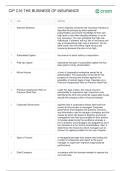
CIP C16 THE BUSINESS OF INSURANCE
# Term Definition
1 Adverse Selection a term originally coined by the insurance industry to
describe the process by which potential
policyholders use private knowledge of their own
high level of risk when deciding whether or not to
buy insurance. You can anticipate that high-risk
individuals, if allowed, will buy lots of insurance and
pay a comparatively high rate of premium. On the
other hand, low risk clients might not buy any
insurance because the price is too high.
2 Subscribed Capital the amount of stock sold by a corporation.
3 Paid-Up Capital represents that part of subscribed capital that has
been paid in full by shareholders.
4 Mutual Insurer a form of cooperative enterprise owned by its
policyholders. The association is formed for the
purpose of insuring one another against the
possibility of certain types of loss. Operates on a
Premium Assessment Plan or Premium Note Plan.
5 Premium Assessment Plan or under this type of plan, the mutual insurer’s
Premium Note Plan policyholder is required to sign a premium note
identifying the limit s/he would be responsible to pay
should the company suffer a financial setback.
6 Corporate Governance signifies how a corporation directs itself and how
control of this process is managed. Corporate
governance encompasses the process, structure,
and information used to manage a company and the
means by which the board of directors and senior
management are held accountable for their actions.
It includes determining the conditions whereby a
firm’s directors and managers are obligated to act in
the interests of a firm and its shareholders. Also, it
determines the means by which managers are to
account to capital providers for the use of assets.
7 Span of Control a managerial principle that asserts that limiting the
number of employees who report to the same
manager or supervisor improves organizational
performance.
8 Shell Company a company with the licensed needed to operate but
not much else.
, CIP C16 THE BUSINESS OF INSURANCE
# Term Definition
9 Board of Directors a group of individuals chosen by the stockholders of
a company to direct that company.
10 Internal Control a process put into effect by a company’s board of
directors, management, and other personnel that is
designed to reasonably assure stakeholders that
corporate objectives are being met.
11 Conflict of Interest arises when a person’s own interests could
potentially benefit from their corporate role and could
therefore influence their approach to that role.
12 Self-Dealing refers to the conduct of board members or other
persons of power who take advantage of their
position to use their influence to knowledge illegally
to gain personal advantage.
13 Fiduciary a person who is entrusted with managing something
for the good of another.
14 Pricing Actuaries are responsible for analyzing data and performing
calculations to determine pricing for insurance
policies.
15 Reserving Actuaries determine the amount of money to be held in bulk for
claims reserves. They are responsible for monitoring
an insurer’s overall financial situation and alerting
management if financial regulatory requirements are
not met.
16 Capacity the amount of capital that individual insurers or
entire markets make available for insuring risk.
17 Theory of Supply and Demand analyzes the way pricing is regulated by balancing
the amount of a product made available for purchase
with the quantity required by consumers.
18 Bull Market a market on the rise. During this cycle, there is
strong demand for securities but a weak supply,
which generally results in the rapid rise of share
prices. When a bull market exists, investors are
optimistic and have faith that the upturn in the
market will continue. Characteristically, the economy
is strong and the employment rate is high.
# Term Definition
1 Adverse Selection a term originally coined by the insurance industry to
describe the process by which potential
policyholders use private knowledge of their own
high level of risk when deciding whether or not to
buy insurance. You can anticipate that high-risk
individuals, if allowed, will buy lots of insurance and
pay a comparatively high rate of premium. On the
other hand, low risk clients might not buy any
insurance because the price is too high.
2 Subscribed Capital the amount of stock sold by a corporation.
3 Paid-Up Capital represents that part of subscribed capital that has
been paid in full by shareholders.
4 Mutual Insurer a form of cooperative enterprise owned by its
policyholders. The association is formed for the
purpose of insuring one another against the
possibility of certain types of loss. Operates on a
Premium Assessment Plan or Premium Note Plan.
5 Premium Assessment Plan or under this type of plan, the mutual insurer’s
Premium Note Plan policyholder is required to sign a premium note
identifying the limit s/he would be responsible to pay
should the company suffer a financial setback.
6 Corporate Governance signifies how a corporation directs itself and how
control of this process is managed. Corporate
governance encompasses the process, structure,
and information used to manage a company and the
means by which the board of directors and senior
management are held accountable for their actions.
It includes determining the conditions whereby a
firm’s directors and managers are obligated to act in
the interests of a firm and its shareholders. Also, it
determines the means by which managers are to
account to capital providers for the use of assets.
7 Span of Control a managerial principle that asserts that limiting the
number of employees who report to the same
manager or supervisor improves organizational
performance.
8 Shell Company a company with the licensed needed to operate but
not much else.
, CIP C16 THE BUSINESS OF INSURANCE
# Term Definition
9 Board of Directors a group of individuals chosen by the stockholders of
a company to direct that company.
10 Internal Control a process put into effect by a company’s board of
directors, management, and other personnel that is
designed to reasonably assure stakeholders that
corporate objectives are being met.
11 Conflict of Interest arises when a person’s own interests could
potentially benefit from their corporate role and could
therefore influence their approach to that role.
12 Self-Dealing refers to the conduct of board members or other
persons of power who take advantage of their
position to use their influence to knowledge illegally
to gain personal advantage.
13 Fiduciary a person who is entrusted with managing something
for the good of another.
14 Pricing Actuaries are responsible for analyzing data and performing
calculations to determine pricing for insurance
policies.
15 Reserving Actuaries determine the amount of money to be held in bulk for
claims reserves. They are responsible for monitoring
an insurer’s overall financial situation and alerting
management if financial regulatory requirements are
not met.
16 Capacity the amount of capital that individual insurers or
entire markets make available for insuring risk.
17 Theory of Supply and Demand analyzes the way pricing is regulated by balancing
the amount of a product made available for purchase
with the quantity required by consumers.
18 Bull Market a market on the rise. During this cycle, there is
strong demand for securities but a weak supply,
which generally results in the rapid rise of share
prices. When a bull market exists, investors are
optimistic and have faith that the upturn in the
market will continue. Characteristically, the economy
is strong and the employment rate is high.


