
NSG-322 Exam 2 Questions and Answers
with Verified Solutions | Latest Updated 2026
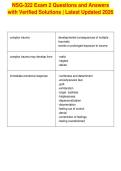
complex trauma developmental consequences of multiple
traumatic
events or prolonged exposure to trauma
complex trauma may develop from -maltx
-neglect
-abuse
immediate emotional response -numbness and detachment
-anxiety/severe fear
-guilt
-exhilaration
-anger. sadness
-helplessness
-depersonalization
-disorientation
-feeling out of control
-denial
-constriction of feelings
-feeling overwhelmed
,delayed emotional response -irritability/hostility
-depression
-mood swings
-anxiety
-fear of trauma recurrence
-grief reactions
-shame feelings of fragility
-emotional detachment
immediate cognitive response -Difficulty concentrating
-Racing thoughts
-Distortion of time and space
-Memory problems
-Strong identification with victims
delayed cognitive response -Intrusive memories or flashbacks
-Reactivation of previous traumatic events
-Self-blame
-Preoccupation with event
-Difficulty making decisions
-Magical thinking
-Belief that feelings or memories are
dangerous
-Generalization of triggers
-Suicidal thinking
, immediate behavioral response -Startled reaction
-Restlessness
-Sleep and appetite disturbances
-Difficulty expressing oneself
-Argumentative behavior
-increased use of alcohol, drugs, and
tobacco
-Withdrawal and apathy
-Avoidant behaviors
delayed behavioral response -Avoidance of event reminders
-social relationship disturbances
-Decreased activity level
-Engagement in high-risk behaviors
-Increased use of alcohol and drugs
-Withdrawal
trauma informed care focuses on how trauma may affect an
individual's
life and his or her response to behavioral
health
services from prevention through treatment
trauma informed approach -realizing the prevalence of trauma
incorporates -recognizing how trauma affects all
individuals
involved in the program, org, or syst
-responding by putting this knowledge into
practice
with Verified Solutions | Latest Updated 2026
complex trauma developmental consequences of multiple
traumatic
events or prolonged exposure to trauma
complex trauma may develop from -maltx
-neglect
-abuse
immediate emotional response -numbness and detachment
-anxiety/severe fear
-guilt
-exhilaration
-anger. sadness
-helplessness
-depersonalization
-disorientation
-feeling out of control
-denial
-constriction of feelings
-feeling overwhelmed
,delayed emotional response -irritability/hostility
-depression
-mood swings
-anxiety
-fear of trauma recurrence
-grief reactions
-shame feelings of fragility
-emotional detachment
immediate cognitive response -Difficulty concentrating
-Racing thoughts
-Distortion of time and space
-Memory problems
-Strong identification with victims
delayed cognitive response -Intrusive memories or flashbacks
-Reactivation of previous traumatic events
-Self-blame
-Preoccupation with event
-Difficulty making decisions
-Magical thinking
-Belief that feelings or memories are
dangerous
-Generalization of triggers
-Suicidal thinking
, immediate behavioral response -Startled reaction
-Restlessness
-Sleep and appetite disturbances
-Difficulty expressing oneself
-Argumentative behavior
-increased use of alcohol, drugs, and
tobacco
-Withdrawal and apathy
-Avoidant behaviors
delayed behavioral response -Avoidance of event reminders
-social relationship disturbances
-Decreased activity level
-Engagement in high-risk behaviors
-Increased use of alcohol and drugs
-Withdrawal
trauma informed care focuses on how trauma may affect an
individual's
life and his or her response to behavioral
health
services from prevention through treatment
trauma informed approach -realizing the prevalence of trauma
incorporates -recognizing how trauma affects all
individuals
involved in the program, org, or syst
-responding by putting this knowledge into
practice


