

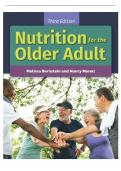
, TESTBANK FOR Nutrition for the Older Adult Third Edition Bernstein
Important Notes
The file includes the complete test bank, organized chapter by chapter.
A sample of selected pages has been provided for preview.
All available appendices and Excel files (if included in the original resources) are
provided.
Quizzes, Midterm and final exams are included (if available in the original resources).
We continuously update our files to ensure you receive the latest and most accurate
editions.
New editions are added regularly – stay connected for updates!
⚠️Note on Answer Keys: If the answer key is not included within the chapter
questions, you will find the complete answers and solutions at the end of each
chapter.
✅ Why Buy From Us?
📚 Complete & organized chapter-by-chapter – no missing content, no guessing.
⚡ Instant digital delivery – get your file the moment you pay, no waiting.
📅 Always up to date – we track new editions so you always get the latest version.
💬 Friendly support – real humans ready to help, anytime you need us.
🔒 Safe & secure – thousands of satisfied students trust us every semester.
🛡️Our Guarantees
💰 Money-Back Guarantee: Not satisfied? We offer a full refund – no questions asked.
🔄 Wrong File? No Problem: Contact us and we will replace it immediately with the
correct version, free of charge.
⏰ 24/7 Support: We are always here – reach out anytime and expect a fast response.
, Nutrition for the Older Adult 3E – Test Bank
Bernstein_Ch01-Nutrition for the Older Adult, 3e
1. Older adults are expected to live longer because of:
✓ a. advances in technology and medical care.
b. consuming calorie restricted diets.
c. reduced levels of physical activity leading to less frequent falls.
d. All of these are correct.
2. All of the following are considered age-related physical changes, except :
a. reduced vision and hearing.
b. development of arthritis.
c. development of heart disease.
✓ d. the speed at which information is processed.
3. Even if eating a healthy, well-planned diet, older adults still may need to supplement with
which nutrients?
a. Calcium, protein, and zinc
✓ b. Vitamin B 12 , vitamin D, and calcium
c. Magnesium, vitamin K, and iron
d. Fat, vitamin C, and vitamin B 6
4. The ability to access comprehensive and quality health care includes:
a. obtaining access to the healthcare system.
b. the ability to access a location that provides the desired and necessary health services.
c. finding a healthcare provider that is trustworthy and communicative.
✓ d. All of these are correct.
5. Older Hispanic Americans seem to be healthier than their counterparts in other ethnic
groups given the group's lower prevalence of:
✓ a. cardiovascular disease, lung disease, and stroke.
b. diabetes, cardiovascular disease, and stroke.
c. lung disease, diabetes, and stroke.
d. lung disease, cardiovascular disease, and diabetes.
6. Which of the following has both the highest incomes of any racial/ethnic group and the
lowest, especially among new immigrants?
a. African Americans
✓ b. Asian Americans and Pacific Islanders
c. Caucasian Americans
d. Native Americans
,7. What percentage of noninstitutionalized older adults have a chronic health condition that
could be improved with proper nutrition?
a. 10%
b. 35%
c. 60%
✓ d. 85%
8. True or False? The older adult population is expected to more than double between 2010
and 2060.
9. True or False? A child born in 2015 can anticipate living 50 more years than a child born in
1900.
10. True or False? Increased preventive care for older adults can positively impact healthcare
costs.
11. True or False? Age-related biologic functions peak at age 50 and then progressively
decline.
12. True or False? The biologic changes that constitute natural aging have little impact on our
activities of daily living.
13. True or False? Malnutrition leads to increased risk of illness and impaired immune
function.
14. True or False? The Dietary Guidelines for Americans and MyPlate are designed for
Americans over the age of 2.
15. True or False? Many older adults die from influenza and pneumonia because they do not
get necessary immunizations.
16. True or False? Oral health is included in Healthy People 2020's twelve leading health
indicators because research links oral health to risk of diseases including diabetes, heart
disease, and stroke.
17. True or False? The most common chronic illness affecting older African Americans is
cancer.
Bernstein_Ch02-Nutrition for the Older Adult, 3e
1. Which of these physiologic changes contribute to older adults' increased risk of developing
cancer?
✓ a. Increased DNA damage
b. Increased DNA repair capacity
c. Increased oxidative capacity
d. All of these are correct.
,2. Which of the following can contribute to gustatory dysfunction?
a. Respiratory infections
b. Head injury
c. Medication use
✓ d. All of these are correct.
3. Dyspepsia in older adults is commonly caused by:
a. GERD.
b. cancer and peptic ulcer disease.
c. frequent medication use.
✓ d. All of these are correct.
4. As we age, the sense of smell is affected by:
a. an increased number of sensory cells that detect aroma.
b. increased nasal mucous production.
c. thickening of the nose lining.
✓ d. impaired replacement of the sensory cells that detect aroma.
5. Consequences of poor oral health for the older adult include:
a. problems with chewing and swallowing.
b. limited social interactions.
c. reduced variety in the diet.
✓ d. All of these are correct.
6. __________ weight loss in older adults has been shown to result in loss of __________
mass instead of excess __________ mass.
✓ a. Intentional; muscle; fat
b. Intentional; fat; muscle
c. Unintentional; muscle; fat
d. Unintentional; fat; muscle
7. Alterations in endocrine function can contribute to the development of which of the
following conditions?
a. Osteoporosis
b. Sarcopenia
c. Diabetes mellitus
d. Osteoporosis and Sarcopenia
✓ e. All of these are correct.
8. True or False? Nutrition's effect on development and aging begins when a child is born.
9. True or False? Older adults with dysphagia may avoid meats and fresh fruits and
vegetables because they are hard to chew and swallow.
10. True or False? The small intestine serves as a barrier to toxic substances and infection.
,11. True or False? Although an increased prevalence of gastrointestinal disorders is seen in
older people, aging alone appears to have a small effect on most gastrointestinal functions.
12. True or False? An older adult who is prescribed narcotics, antidepressants,
anticholinergics, benzodiazepines, or antiepileptic drugs should be monitored for difficulty
swallowing.
13. True or False? The reduced ability to detect and discriminate smells has been reported to
occur in up to 75% of people over 80 years of age.
14. True or False? Gastrointestinal secretions increase with aging, leading to decreased
ability to digest and absorb nutrients.
15. True or False? Up to 50% of older adults are affected by dysphagia.
16. True or False? Sarcopenia is a loss of strength and muscle mass that occurs with aging.
17. True or False? Greater than 30% of adults age 65 and older are considered obese.
18. True or False? The modifiable risk factors for CHD are the same for older and younger
adults, but prevalence of these risk factors increases with age.
19. True or False? By the age of 60, the average person has lost approximately 25% of their
kidney function.
20. True or False? With aging, the blood vessels that transport blood to the kidney become
lax, increasing the rate at which the kidneys filter blood.
21. True or False? Poor nutrition plays a role in immune system dysregulation often seen in
older adults.
22. True or False? Increases in estrogen levels that occur with aging impact bone metabolism
and, in the presence of other risk factors, can lead to osteoporosis.
Bernstein_Ch03-Nutrition for the Older Adult, 3e
1. Which physiological change that occurs with aging does not influence nutrient
metabolism?
a. Decreased lean body mass
b. Increased proportion of body fat
c. Decreased body water
✓ d. Decreased height
2. Energy output can be divided into three main components, including:
✓ a. resting energy expenditure, physical activity, and the thermic effect of food.
b. resting energy expenditure, activity level, and calories burned.
c. basal metabolic rate, resting energy expenditure, and thermic effect of food.
, d. physical activity, calories burned, and food output.
3. The decline in energy requirements that occurs with aging can be attributed to:
a. increased basal metabolic rate (BMR).
✓ b. decreased basal metabolic rate (BMR).
c. increased thermic effect of food (TEF).
d. increased physical activity.
4. Which of the following should be considered when determining the energy needs of older
adults?
a. For weight-stable older adults, energy intake from food should be greater than energy expenditure.
✓ b. The most variable component of energy output for the older adult is physical activity.
c. Energy intake does not usually decline with age.
d. The RDA for energy is 2,200 calories for older men.
5. Dietary fiber is classified based on physical properties including:
a. color and texture.
✓ b. solubility and viscosity.
c. structure and texture.
d. viscosity and color.
6. Foods that are high in insoluble fiber include:
a. whole wheat bread.
b. sugar snap peas.
c. wheat bran cereal.
d. asparagus.
✓ e. All of these are correct.
7. Cholesterol is used to:
a. make vitamin C.
b. make pancreatic enzymes.
✓ c. make vitamin D.
d. All of these are correct.
8. The Acceptable Macronutrient Distribution Range (AMDR) for fat for men and women aged
50 and older is:
✓ a. 20% to 35% of total calories.
b. 15% to 20% of total calories.
c. 25% to 35% of total calories.
d. 10% to 30% of total calories.
9. The Acceptable Macronutrient Distribution Range (AMDR) for essential fatty acids for older
adults is based on the:
a. average body weight of adults over the age of 65.
b. DRI for protein.
, ✓ c. long-term studies showing the beneficial health effects of essential fatty acid consumption.
d. UL for essential fatty acids.
e. All of these are correct.
10. The process of hydrogenation involves:
✓ a. adding hydrogen to unsaturated fats to make them solid at room temperature.
b. decreasing water content of fat by removing hydrogen and releasing oxygen.
c. adding hydrogen to saturated fats to make them softer at cooler temperatures.
d. changing the structure of unsaturated fats to reduce their risk of causing heart disease.
11. Some experts now advocate that older adults:
a. consume 75% of their daily protein before noon so that the amino acids are available to be incorporated
into proteins later that day.
b. consume twice to three times the DRI for protein if their calorie intake declines below 1000 kcal/d.
c. choose half of their protein sources form meat products and the other half from plant sources.
✓ d. consume 25–30 g of high-quality protein with each meal to stimulate muscle protein synthesis.
e. do not eat too many high protein foods as they are hard for the aging kidneys to metabolize.
12. Protein recommendations for older adults:
a. are more challenging to meet for sedentary individuals because of their low energy requirements.
b. are based on nitrogen balance studies.
c. may be too low to meet metabolic and physiologic needs.
✓ d. All of these are correct.
13. Water is an essential nutrient that requires special attention for older adults due to the fact
that:
a. total body water decreases with age due to loss of lean mass.
b. the desire to drink often declines in older adults.
c. renal function declines with age.
d. forgetfulness and changes in mental status can cause low water intake.
✓ e. All of these are correct.
14. Methods for estimating daily fluid requirements in older adults include all of the following,
except :
a. using caloric intake.
✓ b. using self-reported activity level.
c. using body weight.
d. using age.
15. True or False? Nonviscous fibers form gels.
16. True or False? Nonviscous fiber reduces postprandial blood glucose concentrations by
slowing glucose absorption.
17. True or False? One way that fiber reduces the risk of heart disease is by decreasing the
rate of cholesterol and triglyceride absorption in the small intestine.
,18. True or False? Most Americans consume less than the Recommended Dietary Allowance
(RDA) for carbohydrates.
19. True or False? Aging leads to a loss of subcutaneous peripheral fat stores.
20. True or False? Dietary fat provides three times the calories per gram than either protein or
carbohydrates.
21. True or False? For some older adults, restricting fat can lead to nutrient deficiencies and
inability to maintain weight.
22. True or False? Intake of protein-rich foods has many advantages over supplementation
with amino acid products, including cost, accessibility, socialization, and dietary variety.
23. True or False? Alcohol is a nutrient that provides 7 kcal/gram of energy.
Bernstein_Ch04-Nutrition for the Older Adult, 3e
1. Provitamin A carotenoids have been found to aid in the prevention of:
a. cancer.
b. age-related macular degeneration.
c. dementia.
d. cardiovascular disease.
✓ e. All of these are correct.
2. Symptoms of vitamin A toxicity include:
a. rash.
b. seizures.
✓ c. nausea and vomiting.
d. fever.
3. Food sources of the carotenoid lycopene include:
a. spinach and kale.
✓ b. tomatoes and watermelon.
c. pumpkin and carrots.
d. liver and fatty fish.
4. Based on the Institute of Medicine's recommendations, the vitamin D requirement for men
and women age 51 to 70 years old is:
a. 400 IU.
✓ b. 600 IU.
c. 800 IU.
d. 1000 IU.
5. Vitamin D:
, a. helps to prevent osteoporosis.
b. helps to promote protein synthesis in skeletal muscle.
c. increases apoptosis of malignant cells.
d. plays a role in blood glucose levels and insulin secretion.
✓ e. All of these are correct.
6. Which of the following is true regarding vitamin E in older adults?
a. It functions as a pro-oxidant to prevent lipid peroxidation.
✓ b. Dietary recommendations are based on alpha-tocopherol, the most biologically active form of the
vitamin.
c. In this population, dietary intake often exceeds recommended levels.
d. No adverse effects have been found for older adults who take supplemental vitamin E.
e. All of these are correct.
7. The synthetic form of vitamin K is:
a. phylloquinone.
b. menaquinone.
✓ c. menadione.
d. phyllodione.
8. An important function of vitamin K in older adults includes:
a. coenzyme in fat metabolism.
✓ b. bone formation.
c. antioxidant.
d. visual acuity.
e. All of these are correct.
9. The Institute of Medicine's Food and Nutrition Board has set a UL for which of the
following?
a. Thiamin
✓ b. Niacin
c. Riboflavin
d. Biotin
10. The absorption of vitamin B 12 :
a. requires hydrochloric acid and pepsin.
b. requires intrinsic factor.
c. is reduced in older adults with atrophic gastritis.
✓ d. All of these are correct.
11. The B vitamins thiamin, niacin, riboflavin, biotin, and pantothenic acid are all involved in
the __________ from carbohydrates, proteins, and fats.
a. absorption of nutrients
✓ b. release of energy
c. creation of muscle
Important Notes
The file includes the complete test bank, organized chapter by chapter.
A sample of selected pages has been provided for preview.
All available appendices and Excel files (if included in the original resources) are
provided.
Quizzes, Midterm and final exams are included (if available in the original resources).
We continuously update our files to ensure you receive the latest and most accurate
editions.
New editions are added regularly – stay connected for updates!
⚠️Note on Answer Keys: If the answer key is not included within the chapter
questions, you will find the complete answers and solutions at the end of each
chapter.
✅ Why Buy From Us?
📚 Complete & organized chapter-by-chapter – no missing content, no guessing.
⚡ Instant digital delivery – get your file the moment you pay, no waiting.
📅 Always up to date – we track new editions so you always get the latest version.
💬 Friendly support – real humans ready to help, anytime you need us.
🔒 Safe & secure – thousands of satisfied students trust us every semester.
🛡️Our Guarantees
💰 Money-Back Guarantee: Not satisfied? We offer a full refund – no questions asked.
🔄 Wrong File? No Problem: Contact us and we will replace it immediately with the
correct version, free of charge.
⏰ 24/7 Support: We are always here – reach out anytime and expect a fast response.
, Nutrition for the Older Adult 3E – Test Bank
Bernstein_Ch01-Nutrition for the Older Adult, 3e
1. Older adults are expected to live longer because of:
✓ a. advances in technology and medical care.
b. consuming calorie restricted diets.
c. reduced levels of physical activity leading to less frequent falls.
d. All of these are correct.
2. All of the following are considered age-related physical changes, except :
a. reduced vision and hearing.
b. development of arthritis.
c. development of heart disease.
✓ d. the speed at which information is processed.
3. Even if eating a healthy, well-planned diet, older adults still may need to supplement with
which nutrients?
a. Calcium, protein, and zinc
✓ b. Vitamin B 12 , vitamin D, and calcium
c. Magnesium, vitamin K, and iron
d. Fat, vitamin C, and vitamin B 6
4. The ability to access comprehensive and quality health care includes:
a. obtaining access to the healthcare system.
b. the ability to access a location that provides the desired and necessary health services.
c. finding a healthcare provider that is trustworthy and communicative.
✓ d. All of these are correct.
5. Older Hispanic Americans seem to be healthier than their counterparts in other ethnic
groups given the group's lower prevalence of:
✓ a. cardiovascular disease, lung disease, and stroke.
b. diabetes, cardiovascular disease, and stroke.
c. lung disease, diabetes, and stroke.
d. lung disease, cardiovascular disease, and diabetes.
6. Which of the following has both the highest incomes of any racial/ethnic group and the
lowest, especially among new immigrants?
a. African Americans
✓ b. Asian Americans and Pacific Islanders
c. Caucasian Americans
d. Native Americans
,7. What percentage of noninstitutionalized older adults have a chronic health condition that
could be improved with proper nutrition?
a. 10%
b. 35%
c. 60%
✓ d. 85%
8. True or False? The older adult population is expected to more than double between 2010
and 2060.
9. True or False? A child born in 2015 can anticipate living 50 more years than a child born in
1900.
10. True or False? Increased preventive care for older adults can positively impact healthcare
costs.
11. True or False? Age-related biologic functions peak at age 50 and then progressively
decline.
12. True or False? The biologic changes that constitute natural aging have little impact on our
activities of daily living.
13. True or False? Malnutrition leads to increased risk of illness and impaired immune
function.
14. True or False? The Dietary Guidelines for Americans and MyPlate are designed for
Americans over the age of 2.
15. True or False? Many older adults die from influenza and pneumonia because they do not
get necessary immunizations.
16. True or False? Oral health is included in Healthy People 2020's twelve leading health
indicators because research links oral health to risk of diseases including diabetes, heart
disease, and stroke.
17. True or False? The most common chronic illness affecting older African Americans is
cancer.
Bernstein_Ch02-Nutrition for the Older Adult, 3e
1. Which of these physiologic changes contribute to older adults' increased risk of developing
cancer?
✓ a. Increased DNA damage
b. Increased DNA repair capacity
c. Increased oxidative capacity
d. All of these are correct.
,2. Which of the following can contribute to gustatory dysfunction?
a. Respiratory infections
b. Head injury
c. Medication use
✓ d. All of these are correct.
3. Dyspepsia in older adults is commonly caused by:
a. GERD.
b. cancer and peptic ulcer disease.
c. frequent medication use.
✓ d. All of these are correct.
4. As we age, the sense of smell is affected by:
a. an increased number of sensory cells that detect aroma.
b. increased nasal mucous production.
c. thickening of the nose lining.
✓ d. impaired replacement of the sensory cells that detect aroma.
5. Consequences of poor oral health for the older adult include:
a. problems with chewing and swallowing.
b. limited social interactions.
c. reduced variety in the diet.
✓ d. All of these are correct.
6. __________ weight loss in older adults has been shown to result in loss of __________
mass instead of excess __________ mass.
✓ a. Intentional; muscle; fat
b. Intentional; fat; muscle
c. Unintentional; muscle; fat
d. Unintentional; fat; muscle
7. Alterations in endocrine function can contribute to the development of which of the
following conditions?
a. Osteoporosis
b. Sarcopenia
c. Diabetes mellitus
d. Osteoporosis and Sarcopenia
✓ e. All of these are correct.
8. True or False? Nutrition's effect on development and aging begins when a child is born.
9. True or False? Older adults with dysphagia may avoid meats and fresh fruits and
vegetables because they are hard to chew and swallow.
10. True or False? The small intestine serves as a barrier to toxic substances and infection.
,11. True or False? Although an increased prevalence of gastrointestinal disorders is seen in
older people, aging alone appears to have a small effect on most gastrointestinal functions.
12. True or False? An older adult who is prescribed narcotics, antidepressants,
anticholinergics, benzodiazepines, or antiepileptic drugs should be monitored for difficulty
swallowing.
13. True or False? The reduced ability to detect and discriminate smells has been reported to
occur in up to 75% of people over 80 years of age.
14. True or False? Gastrointestinal secretions increase with aging, leading to decreased
ability to digest and absorb nutrients.
15. True or False? Up to 50% of older adults are affected by dysphagia.
16. True or False? Sarcopenia is a loss of strength and muscle mass that occurs with aging.
17. True or False? Greater than 30% of adults age 65 and older are considered obese.
18. True or False? The modifiable risk factors for CHD are the same for older and younger
adults, but prevalence of these risk factors increases with age.
19. True or False? By the age of 60, the average person has lost approximately 25% of their
kidney function.
20. True or False? With aging, the blood vessels that transport blood to the kidney become
lax, increasing the rate at which the kidneys filter blood.
21. True or False? Poor nutrition plays a role in immune system dysregulation often seen in
older adults.
22. True or False? Increases in estrogen levels that occur with aging impact bone metabolism
and, in the presence of other risk factors, can lead to osteoporosis.
Bernstein_Ch03-Nutrition for the Older Adult, 3e
1. Which physiological change that occurs with aging does not influence nutrient
metabolism?
a. Decreased lean body mass
b. Increased proportion of body fat
c. Decreased body water
✓ d. Decreased height
2. Energy output can be divided into three main components, including:
✓ a. resting energy expenditure, physical activity, and the thermic effect of food.
b. resting energy expenditure, activity level, and calories burned.
c. basal metabolic rate, resting energy expenditure, and thermic effect of food.
, d. physical activity, calories burned, and food output.
3. The decline in energy requirements that occurs with aging can be attributed to:
a. increased basal metabolic rate (BMR).
✓ b. decreased basal metabolic rate (BMR).
c. increased thermic effect of food (TEF).
d. increased physical activity.
4. Which of the following should be considered when determining the energy needs of older
adults?
a. For weight-stable older adults, energy intake from food should be greater than energy expenditure.
✓ b. The most variable component of energy output for the older adult is physical activity.
c. Energy intake does not usually decline with age.
d. The RDA for energy is 2,200 calories for older men.
5. Dietary fiber is classified based on physical properties including:
a. color and texture.
✓ b. solubility and viscosity.
c. structure and texture.
d. viscosity and color.
6. Foods that are high in insoluble fiber include:
a. whole wheat bread.
b. sugar snap peas.
c. wheat bran cereal.
d. asparagus.
✓ e. All of these are correct.
7. Cholesterol is used to:
a. make vitamin C.
b. make pancreatic enzymes.
✓ c. make vitamin D.
d. All of these are correct.
8. The Acceptable Macronutrient Distribution Range (AMDR) for fat for men and women aged
50 and older is:
✓ a. 20% to 35% of total calories.
b. 15% to 20% of total calories.
c. 25% to 35% of total calories.
d. 10% to 30% of total calories.
9. The Acceptable Macronutrient Distribution Range (AMDR) for essential fatty acids for older
adults is based on the:
a. average body weight of adults over the age of 65.
b. DRI for protein.
, ✓ c. long-term studies showing the beneficial health effects of essential fatty acid consumption.
d. UL for essential fatty acids.
e. All of these are correct.
10. The process of hydrogenation involves:
✓ a. adding hydrogen to unsaturated fats to make them solid at room temperature.
b. decreasing water content of fat by removing hydrogen and releasing oxygen.
c. adding hydrogen to saturated fats to make them softer at cooler temperatures.
d. changing the structure of unsaturated fats to reduce their risk of causing heart disease.
11. Some experts now advocate that older adults:
a. consume 75% of their daily protein before noon so that the amino acids are available to be incorporated
into proteins later that day.
b. consume twice to three times the DRI for protein if their calorie intake declines below 1000 kcal/d.
c. choose half of their protein sources form meat products and the other half from plant sources.
✓ d. consume 25–30 g of high-quality protein with each meal to stimulate muscle protein synthesis.
e. do not eat too many high protein foods as they are hard for the aging kidneys to metabolize.
12. Protein recommendations for older adults:
a. are more challenging to meet for sedentary individuals because of their low energy requirements.
b. are based on nitrogen balance studies.
c. may be too low to meet metabolic and physiologic needs.
✓ d. All of these are correct.
13. Water is an essential nutrient that requires special attention for older adults due to the fact
that:
a. total body water decreases with age due to loss of lean mass.
b. the desire to drink often declines in older adults.
c. renal function declines with age.
d. forgetfulness and changes in mental status can cause low water intake.
✓ e. All of these are correct.
14. Methods for estimating daily fluid requirements in older adults include all of the following,
except :
a. using caloric intake.
✓ b. using self-reported activity level.
c. using body weight.
d. using age.
15. True or False? Nonviscous fibers form gels.
16. True or False? Nonviscous fiber reduces postprandial blood glucose concentrations by
slowing glucose absorption.
17. True or False? One way that fiber reduces the risk of heart disease is by decreasing the
rate of cholesterol and triglyceride absorption in the small intestine.
,18. True or False? Most Americans consume less than the Recommended Dietary Allowance
(RDA) for carbohydrates.
19. True or False? Aging leads to a loss of subcutaneous peripheral fat stores.
20. True or False? Dietary fat provides three times the calories per gram than either protein or
carbohydrates.
21. True or False? For some older adults, restricting fat can lead to nutrient deficiencies and
inability to maintain weight.
22. True or False? Intake of protein-rich foods has many advantages over supplementation
with amino acid products, including cost, accessibility, socialization, and dietary variety.
23. True or False? Alcohol is a nutrient that provides 7 kcal/gram of energy.
Bernstein_Ch04-Nutrition for the Older Adult, 3e
1. Provitamin A carotenoids have been found to aid in the prevention of:
a. cancer.
b. age-related macular degeneration.
c. dementia.
d. cardiovascular disease.
✓ e. All of these are correct.
2. Symptoms of vitamin A toxicity include:
a. rash.
b. seizures.
✓ c. nausea and vomiting.
d. fever.
3. Food sources of the carotenoid lycopene include:
a. spinach and kale.
✓ b. tomatoes and watermelon.
c. pumpkin and carrots.
d. liver and fatty fish.
4. Based on the Institute of Medicine's recommendations, the vitamin D requirement for men
and women age 51 to 70 years old is:
a. 400 IU.
✓ b. 600 IU.
c. 800 IU.
d. 1000 IU.
5. Vitamin D:
, a. helps to prevent osteoporosis.
b. helps to promote protein synthesis in skeletal muscle.
c. increases apoptosis of malignant cells.
d. plays a role in blood glucose levels and insulin secretion.
✓ e. All of these are correct.
6. Which of the following is true regarding vitamin E in older adults?
a. It functions as a pro-oxidant to prevent lipid peroxidation.
✓ b. Dietary recommendations are based on alpha-tocopherol, the most biologically active form of the
vitamin.
c. In this population, dietary intake often exceeds recommended levels.
d. No adverse effects have been found for older adults who take supplemental vitamin E.
e. All of these are correct.
7. The synthetic form of vitamin K is:
a. phylloquinone.
b. menaquinone.
✓ c. menadione.
d. phyllodione.
8. An important function of vitamin K in older adults includes:
a. coenzyme in fat metabolism.
✓ b. bone formation.
c. antioxidant.
d. visual acuity.
e. All of these are correct.
9. The Institute of Medicine's Food and Nutrition Board has set a UL for which of the
following?
a. Thiamin
✓ b. Niacin
c. Riboflavin
d. Biotin
10. The absorption of vitamin B 12 :
a. requires hydrochloric acid and pepsin.
b. requires intrinsic factor.
c. is reduced in older adults with atrophic gastritis.
✓ d. All of these are correct.
11. The B vitamins thiamin, niacin, riboflavin, biotin, and pantothenic acid are all involved in
the __________ from carbohydrates, proteins, and fats.
a. absorption of nutrients
✓ b. release of energy
c. creation of muscle


