

NURS 572 Exam 3 Summary Table | Complete
Study Guide & Practice Questions 2026–2027
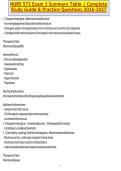
1. Dopaminergics: MechanismofAction: i i i
- Increasing dopamine (DA)synthesis inthe striatum i i i i i i
- Undergoes uptake into dopaminergic nerve terminals and converted into dopamine
i i i i i i i i i
- Carbidopa inhibits decarboxylation of levodopa in the intestine and peripheral tissues
i i i i i i i i i i
Therapeutic Uses: i
Parkinsondisease(PD) i i
Adverse Ettects: i
- Ettectsaredosedependent i i i
- Nauseaandvomiting i i
- Dyskinesias
- Postural
- Hypertension
- Psychosis
Nursing Implications: i
Informpatientsthatbenefitsofdrugmaybedelayedforweekstomonths
i i i i i i i i i i i i
Additional information: i
- Symptomaticrelief,nocure i i i
- Full therapeutic responses take months to develop
i i i i i i
- Acute loss of ettect occurs
i i i i
2. Dopaminergics - (medications): -Donepezil(Aricept) i i i i i
- Carbidopa/Levodopa (Sinemet) i
3. Centrally-acting Anticholinergics: MechanismofAction: i i i i
- Blocks muscarinic, cholinergic receptors in the striatum
i i i i i i
- Also blocks cholinergic receptors inthe periphery
i i i i i i
- Improves balancebetween dopamineand acetylcholine
i i i i i
Therapeutic Uses: i
Parkinson disease i
i i
,Adverse Ettects:
i
- Peripheral ettects: i
a. Drymouth
i
b. Blurredvision i
c. Urinary retention i
d. Tachycardia
- Constipation
Nursing Implications:
i
Educate patient to not discontinue drug abruptly
i i i i i i
Additional information: i
Low doses initially, dose gradually increased
i i i i i
4. Centrally-acting Anticholinergics - (medications): -Atropine(AtroPen) i i i i i i
- Benztropine Mesylate (Cogentin) i i
5. ReversibleCholinesteraseInhibitors(Anticholinesterases):MechanismofAction: i i i i i i
- Reversibly binds to cholinesterase preventing the degradation of acetylcholine by (acetyl)cholinesterase centrally
i i i i i i i i i i i
- Resultsinincreasedamountofacetylcholineavailabletoactivatereceptors
i i i i i i i i i
- Enhanced transmission in central cholinergic neurons that have not yet been destroyed
i i i i i i i i i i i
Therapeutic Uses: i
Alzheimer's disease (AD) i i
Adverse Ettects:
i
- Cholinergic ettects: i
a. Nausea, vomiting i
b. Dyspepsia
c. Diarrhea
d. Dizziness
- Headache
Nursing Implications: Medication
i i
adherence is crucial
i i i
i i
, Additional information: i
- Slowslossofmemoryandcognition
i i i i i
- Prolongsindependentfunction i i
- Nocure i
6. Reversible Cholinesterase Inhibitors (Anticholinesterases) - (Medications): - i i i i i i
Donepezil(Aricept)
i i
7. N-methyl-D-aspartate(NMDA)ReceptorAntagonists:MechanismofAction: i i i i i i
Modulates the ettects of glutamate at NMDA receptor
i i i i i i i i
Therapeutic Uses: i
Alzheimer's disease i
Adverse Ettects: i
- Dizziness
- Headache
- Confusion
- Constipation
Nursing Implications: i
Medicationadherence is crucial i i i
Additional information: i
Slows decline in function
i i i
8. N-methyl-D-aspartate (NMDA) Receptor Antagonists - (Medications): -Meman-tine i i i i i i i
(Namenda)
i
9. Immunomodulators: MechanismofAction: i i i
- Manufactured by DNA recombinant therapy i i i i
- Enhances naturally occurring interferon i i i
- Interferon beta is a glycoprotein that inhibits the migration of proinflammatory leukocytes across the BBB and suppresses
i i i i i i i i i i i i i i i i
T-helper cell activity
i i i
Therapeutic Uses: i
i i
Study Guide & Practice Questions 2026–2027
1. Dopaminergics: MechanismofAction: i i i
- Increasing dopamine (DA)synthesis inthe striatum i i i i i i
- Undergoes uptake into dopaminergic nerve terminals and converted into dopamine
i i i i i i i i i
- Carbidopa inhibits decarboxylation of levodopa in the intestine and peripheral tissues
i i i i i i i i i i
Therapeutic Uses: i
Parkinsondisease(PD) i i
Adverse Ettects: i
- Ettectsaredosedependent i i i
- Nauseaandvomiting i i
- Dyskinesias
- Postural
- Hypertension
- Psychosis
Nursing Implications: i
Informpatientsthatbenefitsofdrugmaybedelayedforweekstomonths
i i i i i i i i i i i i
Additional information: i
- Symptomaticrelief,nocure i i i
- Full therapeutic responses take months to develop
i i i i i i
- Acute loss of ettect occurs
i i i i
2. Dopaminergics - (medications): -Donepezil(Aricept) i i i i i
- Carbidopa/Levodopa (Sinemet) i
3. Centrally-acting Anticholinergics: MechanismofAction: i i i i
- Blocks muscarinic, cholinergic receptors in the striatum
i i i i i i
- Also blocks cholinergic receptors inthe periphery
i i i i i i
- Improves balancebetween dopamineand acetylcholine
i i i i i
Therapeutic Uses: i
Parkinson disease i
i i
,Adverse Ettects:
i
- Peripheral ettects: i
a. Drymouth
i
b. Blurredvision i
c. Urinary retention i
d. Tachycardia
- Constipation
Nursing Implications:
i
Educate patient to not discontinue drug abruptly
i i i i i i
Additional information: i
Low doses initially, dose gradually increased
i i i i i
4. Centrally-acting Anticholinergics - (medications): -Atropine(AtroPen) i i i i i i
- Benztropine Mesylate (Cogentin) i i
5. ReversibleCholinesteraseInhibitors(Anticholinesterases):MechanismofAction: i i i i i i
- Reversibly binds to cholinesterase preventing the degradation of acetylcholine by (acetyl)cholinesterase centrally
i i i i i i i i i i i
- Resultsinincreasedamountofacetylcholineavailabletoactivatereceptors
i i i i i i i i i
- Enhanced transmission in central cholinergic neurons that have not yet been destroyed
i i i i i i i i i i i
Therapeutic Uses: i
Alzheimer's disease (AD) i i
Adverse Ettects:
i
- Cholinergic ettects: i
a. Nausea, vomiting i
b. Dyspepsia
c. Diarrhea
d. Dizziness
- Headache
Nursing Implications: Medication
i i
adherence is crucial
i i i
i i
, Additional information: i
- Slowslossofmemoryandcognition
i i i i i
- Prolongsindependentfunction i i
- Nocure i
6. Reversible Cholinesterase Inhibitors (Anticholinesterases) - (Medications): - i i i i i i
Donepezil(Aricept)
i i
7. N-methyl-D-aspartate(NMDA)ReceptorAntagonists:MechanismofAction: i i i i i i
Modulates the ettects of glutamate at NMDA receptor
i i i i i i i i
Therapeutic Uses: i
Alzheimer's disease i
Adverse Ettects: i
- Dizziness
- Headache
- Confusion
- Constipation
Nursing Implications: i
Medicationadherence is crucial i i i
Additional information: i
Slows decline in function
i i i
8. N-methyl-D-aspartate (NMDA) Receptor Antagonists - (Medications): -Meman-tine i i i i i i i
(Namenda)
i
9. Immunomodulators: MechanismofAction: i i i
- Manufactured by DNA recombinant therapy i i i i
- Enhances naturally occurring interferon i i i
- Interferon beta is a glycoprotein that inhibits the migration of proinflammatory leukocytes across the BBB and suppresses
i i i i i i i i i i i i i i i i
T-helper cell activity
i i i
Therapeutic Uses: i
i i


