

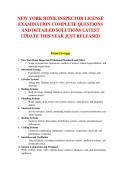
NEW YORK HOME INSPECTOR LICENSE
EXAMINATION COMPLETE QUESTIONS
AND DETAILED SOLUTIONS LATEST
UPDATE THIS YEAR JUST RELEASED
Exam Coverage
1. New York Home Inspection Professional Standards and Ethics
o Scope of inspections, limitations, conflicts of interest, ethical responsibilities, and
reporting requirements.
2. Structural Systems
o Foundations, footings, framing, columns, beams, floors, walls, ceilings, and
structural defects.
3. Exterior Systems
o Siding, trim, flashing, windows, doors, driveways, walkways, grading, and
drainage.
4. Roofing Systems
o Roof coverings, flashing, chimneys, gutters, downspouts, roof penetrations, and
common defects.
5. Plumbing Systems
o Water supply, drain-waste-vent systems, fixtures, water heaters, and plumbing
defects.
6. Electrical Systems
o Service entrances, panels, grounding, branch circuits, overcurrent protection, and
safety hazards.
7. Heating Systems
o Furnaces, boilers, heat pumps, distribution systems, controls, and operational
deficiencies.
8. Cooling Systems
o Central air conditioning components, condensers, evaporators, ductwork, and
performance evaluation.
9. Insulation and Ventilation
o Attic insulation, crawlspace insulation, moisture control, ventilation systems, and
energy efficiency.
10. Interior Components and Fireplaces
Walls, ceilings, floors, stairs, railings, doors, windows, fireplaces, and solid-fuel-burning
appliances.
,1.
During a residential inspection, which condition most strongly suggests ongoing
differential settlement requiring further evaluation by a structural specialist?
A. Hairline drywall cracks above windows only
B. Uniform shrinkage cracks in concrete slab
C. Stair-step masonry cracks with uneven floor elevations
D. Minor nail pops in ceiling drywall
Answer: C
Rationale: Stair-step cracks combined with uneven floors often indicate
differential settlement affecting structural integrity and warrant further evaluation.
2.
When inspecting an asphalt-shingle roof nearing the end of its service life, which
observation is considered the strongest indicator of advanced deterioration?
A. Slight color variation between shingles
B. Excessive granule loss exposing asphalt substrate
C. Presence of roof vents
D. Minor dust accumulation
Answer: B
Rationale: Significant granule loss accelerates weathering and indicates the roof
covering is approaching failure.
3.
,A home inspector observes water staining on an attic sheathing surface directly
below a plumbing vent penetration. What is the most likely cause?
A. Excessive insulation depth
B. Missing roof flashing around penetration
C. Proper attic ventilation
D. Normal seasonal condensation
Answer: B
Rationale: Failed or missing flashing commonly allows water intrusion around
roof penetrations.
4.
Which condition represents the most significant electrical safety concern requiring
documentation in an inspection report?
A. Faded panel directory labels
B. Double-tapped breaker not rated for two conductors
C. Dust inside electrical cabinet
D. Unpainted electrical conduit
Answer: B
Rationale: Improper double-tapping can create overheating and fire hazards.
5.
When evaluating site drainage, which condition is most likely to contribute to
foundation moisture intrusion?
A. Soil sloping away from foundation
B. Functional downspout extensions
, C. Negative grading toward foundation walls
D. Decorative landscaping stones
Answer: C
Rationale: Negative grading directs water toward the structure and increases
moisture intrusion risks.
6.
A gas-fired water heater has corrosion around the draft hood and top jacket. What
should the inspector suspect first?
A. Excessive insulation levels
B. Backdrafting or improper venting conditions
C. Normal equipment aging only
D. Oversized water supply piping
Answer: B
Rationale: Corrosion near the draft hood often indicates moisture from
combustion gases failing to vent properly.
7.
Which observation during a crawlspace inspection most strongly indicates elevated
moisture conditions?
A. Dry wood framing members
B. Rusted fasteners and fungal growth on framing
C. Clean vapor barrier installation
D. Adequate ventilation openings
Answer: B
EXAMINATION COMPLETE QUESTIONS
AND DETAILED SOLUTIONS LATEST
UPDATE THIS YEAR JUST RELEASED
Exam Coverage
1. New York Home Inspection Professional Standards and Ethics
o Scope of inspections, limitations, conflicts of interest, ethical responsibilities, and
reporting requirements.
2. Structural Systems
o Foundations, footings, framing, columns, beams, floors, walls, ceilings, and
structural defects.
3. Exterior Systems
o Siding, trim, flashing, windows, doors, driveways, walkways, grading, and
drainage.
4. Roofing Systems
o Roof coverings, flashing, chimneys, gutters, downspouts, roof penetrations, and
common defects.
5. Plumbing Systems
o Water supply, drain-waste-vent systems, fixtures, water heaters, and plumbing
defects.
6. Electrical Systems
o Service entrances, panels, grounding, branch circuits, overcurrent protection, and
safety hazards.
7. Heating Systems
o Furnaces, boilers, heat pumps, distribution systems, controls, and operational
deficiencies.
8. Cooling Systems
o Central air conditioning components, condensers, evaporators, ductwork, and
performance evaluation.
9. Insulation and Ventilation
o Attic insulation, crawlspace insulation, moisture control, ventilation systems, and
energy efficiency.
10. Interior Components and Fireplaces
Walls, ceilings, floors, stairs, railings, doors, windows, fireplaces, and solid-fuel-burning
appliances.
,1.
During a residential inspection, which condition most strongly suggests ongoing
differential settlement requiring further evaluation by a structural specialist?
A. Hairline drywall cracks above windows only
B. Uniform shrinkage cracks in concrete slab
C. Stair-step masonry cracks with uneven floor elevations
D. Minor nail pops in ceiling drywall
Answer: C
Rationale: Stair-step cracks combined with uneven floors often indicate
differential settlement affecting structural integrity and warrant further evaluation.
2.
When inspecting an asphalt-shingle roof nearing the end of its service life, which
observation is considered the strongest indicator of advanced deterioration?
A. Slight color variation between shingles
B. Excessive granule loss exposing asphalt substrate
C. Presence of roof vents
D. Minor dust accumulation
Answer: B
Rationale: Significant granule loss accelerates weathering and indicates the roof
covering is approaching failure.
3.
,A home inspector observes water staining on an attic sheathing surface directly
below a plumbing vent penetration. What is the most likely cause?
A. Excessive insulation depth
B. Missing roof flashing around penetration
C. Proper attic ventilation
D. Normal seasonal condensation
Answer: B
Rationale: Failed or missing flashing commonly allows water intrusion around
roof penetrations.
4.
Which condition represents the most significant electrical safety concern requiring
documentation in an inspection report?
A. Faded panel directory labels
B. Double-tapped breaker not rated for two conductors
C. Dust inside electrical cabinet
D. Unpainted electrical conduit
Answer: B
Rationale: Improper double-tapping can create overheating and fire hazards.
5.
When evaluating site drainage, which condition is most likely to contribute to
foundation moisture intrusion?
A. Soil sloping away from foundation
B. Functional downspout extensions
, C. Negative grading toward foundation walls
D. Decorative landscaping stones
Answer: C
Rationale: Negative grading directs water toward the structure and increases
moisture intrusion risks.
6.
A gas-fired water heater has corrosion around the draft hood and top jacket. What
should the inspector suspect first?
A. Excessive insulation levels
B. Backdrafting or improper venting conditions
C. Normal equipment aging only
D. Oversized water supply piping
Answer: B
Rationale: Corrosion near the draft hood often indicates moisture from
combustion gases failing to vent properly.
7.
Which observation during a crawlspace inspection most strongly indicates elevated
moisture conditions?
A. Dry wood framing members
B. Rusted fasteners and fungal growth on framing
C. Clean vapor barrier installation
D. Adequate ventilation openings
Answer: B


