

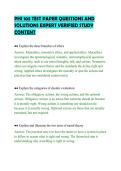
PHI 105 TEST PAPER QUESTIONS AND
SOLUTIONS EXPERT VERIFIED STUDY
CONTENT
●● Explain the three branches of ethics
Answer: Metaethics, normative ethics, and applied ethics. Metaethics
investigates the epistemological, semantic, and metaphysical questions
about morality, such as our moral thoughts, talk, and actions. Normative
ethics investigates moral theory and the standards the define right and
wrong. Applied ethics investigates the morality or specific actions and
practices that are considered controversial.
●● Explain the categories of deontic evaluation
Answer: The obligatory actions, the wrong actions, and the optional
actions. Obligatory actions is an action that someone should do because
it is morally right. Wrong actions is something one should not do
because it is morally wrong. Optional actions are those that are morally
permitted, but not required.
●● Explain and illustrate the two aims of moral theory
Answer: The practical aim is to have the desire to have a system in place
to follow to reason what is right and wrong. The theoretical aim is
understanding why something is right or wrong.
SOLUTIONS EXPERT VERIFIED STUDY
CONTENT
●● Explain the three branches of ethics
Answer: Metaethics, normative ethics, and applied ethics. Metaethics
investigates the epistemological, semantic, and metaphysical questions
about morality, such as our moral thoughts, talk, and actions. Normative
ethics investigates moral theory and the standards the define right and
wrong. Applied ethics investigates the morality or specific actions and
practices that are considered controversial.
●● Explain the categories of deontic evaluation
Answer: The obligatory actions, the wrong actions, and the optional
actions. Obligatory actions is an action that someone should do because
it is morally right. Wrong actions is something one should not do
because it is morally wrong. Optional actions are those that are morally
permitted, but not required.
●● Explain and illustrate the two aims of moral theory
Answer: The practical aim is to have the desire to have a system in place
to follow to reason what is right and wrong. The theoretical aim is
understanding why something is right or wrong.


