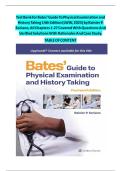
Test Bank for Bates’ Guide To Physical Examination and
au au au au au au au au
History Taking 14th Edition (LWW, 2025) by Rainier P.
au au au au au au au au au
Soriano, All Chapters 1-27 Covered With Questions And
au au au au au au au au
Verified Solutions With Rationales And Case Study.
au au au au au au au
TABLE OF CONTENT au au
,Unit I — Foundations of Health Assessment
au au au au au au
1. Approach to the Clinical Encounter au au au au
2. Interviewing, Communication, and Interpersonal au au au
Skills
au
3. Health History au
4. Physical Examination au
5. Clinical Reasoning, Assessment, and Plan
au au au au
6. Health Maintenance and Screening
au au au
7. Evaluating Clinical Evidence au au
Unit II — Regional Examinations
au au au au
8. General Survey, Vital Signs, and Pain
au au au au au
9. Cognition, Behavior, and Mental Status au au au au
10. Skin, Hair, and Nails au au au
11. Head and Neck au au
12. Eyes
13. Ears and Nose au au
14. Throat and Oral Cavity au au au
, 15. Thorax and Lungs au au
16. Cardiovascular System au
17. Peripheral Vascular System au au
18. Breasts and Axillae au au
19. Abdomen
20. Male Genitalia au
21. Female Genitalia au
22. Anus, Rectum, and Prostate au au au
23. Musculoskeletal System au
24. Nervous System au
Unit III — Special Populations
au au au au
25. Children: Infancy through Adolescence au au au
26. Pregnant Woman au
27. Older Adult au
Chapter 1: Approach to the Clinical Encounter
au au au au au au
Multiple Choice Questions
au au
1. Which of the following best describes the primary
au au au au au au au
purpose of the clinical encounter?
au au au au au
A) Diagnosing the patient immediately
au au au au
, B) Establishing rapport, gathering information, and
au au au au au
initiating a therapeutic relationship
au au au au au
C) Conducting laboratory tests first
au au au au
D) Completing documentation before seeing the
au au au au au
patient
au
Rationale: The clinical encounter is the first step in
au au au au au au au au
patient care, focusing on building trust, collecting a
au au au au au au au au
thorough history, and beginning assessment.
au au au au au
2. The “patient-centered” approach emphasizes:
au au au
A) Following the clinician’s agenda
au au au au
B) Understanding the patient’s experience, beliefs,
au au au au au
and concerns
au au au
C) Performing the exam as quickly as possible
au au au au au au au
D) Prioritizing administrative tasks
au au au
Rationale: Patient-centered care is about integrating the
au au au au au au
patient’s perspective into decision-making, fostering
au au au au au
communication and trust.
au au au
3. Which of the following is an essential component of
au au au au au au au au
a professional appearance during a clinical
au au au au au au
encounter?
au
A) Casual clothing
au au
B) Neat attire, clean scrubs or professional clothing,
au au au au au au au
au au au au au au au au
History Taking 14th Edition (LWW, 2025) by Rainier P.
au au au au au au au au au
Soriano, All Chapters 1-27 Covered With Questions And
au au au au au au au au
Verified Solutions With Rationales And Case Study.
au au au au au au au
TABLE OF CONTENT au au
,Unit I — Foundations of Health Assessment
au au au au au au
1. Approach to the Clinical Encounter au au au au
2. Interviewing, Communication, and Interpersonal au au au
Skills
au
3. Health History au
4. Physical Examination au
5. Clinical Reasoning, Assessment, and Plan
au au au au
6. Health Maintenance and Screening
au au au
7. Evaluating Clinical Evidence au au
Unit II — Regional Examinations
au au au au
8. General Survey, Vital Signs, and Pain
au au au au au
9. Cognition, Behavior, and Mental Status au au au au
10. Skin, Hair, and Nails au au au
11. Head and Neck au au
12. Eyes
13. Ears and Nose au au
14. Throat and Oral Cavity au au au
, 15. Thorax and Lungs au au
16. Cardiovascular System au
17. Peripheral Vascular System au au
18. Breasts and Axillae au au
19. Abdomen
20. Male Genitalia au
21. Female Genitalia au
22. Anus, Rectum, and Prostate au au au
23. Musculoskeletal System au
24. Nervous System au
Unit III — Special Populations
au au au au
25. Children: Infancy through Adolescence au au au
26. Pregnant Woman au
27. Older Adult au
Chapter 1: Approach to the Clinical Encounter
au au au au au au
Multiple Choice Questions
au au
1. Which of the following best describes the primary
au au au au au au au
purpose of the clinical encounter?
au au au au au
A) Diagnosing the patient immediately
au au au au
, B) Establishing rapport, gathering information, and
au au au au au
initiating a therapeutic relationship
au au au au au
C) Conducting laboratory tests first
au au au au
D) Completing documentation before seeing the
au au au au au
patient
au
Rationale: The clinical encounter is the first step in
au au au au au au au au
patient care, focusing on building trust, collecting a
au au au au au au au au
thorough history, and beginning assessment.
au au au au au
2. The “patient-centered” approach emphasizes:
au au au
A) Following the clinician’s agenda
au au au au
B) Understanding the patient’s experience, beliefs,
au au au au au
and concerns
au au au
C) Performing the exam as quickly as possible
au au au au au au au
D) Prioritizing administrative tasks
au au au
Rationale: Patient-centered care is about integrating the
au au au au au au
patient’s perspective into decision-making, fostering
au au au au au
communication and trust.
au au au
3. Which of the following is an essential component of
au au au au au au au au
a professional appearance during a clinical
au au au au au au
encounter?
au
A) Casual clothing
au au
B) Neat attire, clean scrubs or professional clothing,
au au au au au au au