

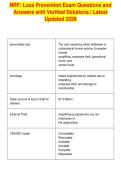
NRF: Loss Prevention Exam Questions and
Answers with Verified Solutions | Latest
Updated 2026
preventable loss The cost caused by either deliberate or
unintentional human actions. Examples
include
shoplifting, employee theft, operational
errors, and
vendor fraud.
shrinkage losses experienced by retailers due to
shoplifting,
employee theft, and damage to
merchandise
Dollar amount of loss in theft for $112 Billion
retailers
External Theft shoplifting by people who are not
employees of
the organization
CRAVED model Concealable
Removable
Available
Valuable
Enjoyable
Disposable
, Shoplifters Criminal activity in which individuals steal
goods
from a retailer while pretending to be a
customer
Loitering hanging around with nothing particular to
do
Is there a shoplifter profile NO
Repeat noncustomers People who frequently come into the store
but
never buy anything
Traveling merchandise When a shopper takes an item and moves
it from
one location to another
Empty strollers No apparent child-- used to steal
unseasonable clothing used to conceal products/ theft
Quick change artists Individuals who often pay for a low-cost
item with
a $50 or $100 bill and ask for change.
During the
exchange, they attempt to confuse the
cashier
while providing change, attempting to
obtain more
change than expected.
Answers with Verified Solutions | Latest
Updated 2026
preventable loss The cost caused by either deliberate or
unintentional human actions. Examples
include
shoplifting, employee theft, operational
errors, and
vendor fraud.
shrinkage losses experienced by retailers due to
shoplifting,
employee theft, and damage to
merchandise
Dollar amount of loss in theft for $112 Billion
retailers
External Theft shoplifting by people who are not
employees of
the organization
CRAVED model Concealable
Removable
Available
Valuable
Enjoyable
Disposable
, Shoplifters Criminal activity in which individuals steal
goods
from a retailer while pretending to be a
customer
Loitering hanging around with nothing particular to
do
Is there a shoplifter profile NO
Repeat noncustomers People who frequently come into the store
but
never buy anything
Traveling merchandise When a shopper takes an item and moves
it from
one location to another
Empty strollers No apparent child-- used to steal
unseasonable clothing used to conceal products/ theft
Quick change artists Individuals who often pay for a low-cost
item with
a $50 or $100 bill and ask for change.
During the
exchange, they attempt to confuse the
cashier
while providing change, attempting to
obtain more
change than expected.


