

NRNP 6552 FINAL EXAM REPRODUCTIVE HEALTH
CARE COMPLETE QUESTIONS AND ANSWERS
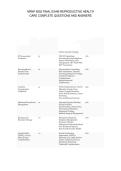
Fertility Awareness
Contraception 18 Method Selection (LARC, Pills, 18%
Counseling & Patch, Ring, Barrier,
Management Sterilization),
Contraindications (MEC),
Counseling Techniques,
Emergency Contraception,
Shared Decision-Making
STI Screening & 15 CDC STI Guidelines, 15%
Treatment Screening Recommendations,
Partner Notification, PID
Management, HIV PrEP/PEP,
HPV Vaccination
Preconception & 12 Preconception Counseling, 12%
Prenatal Care Risk Assessment, Prenatal
Fundamentals Screening/Diagnostic Testing,
Common Pregnancy
Complications,
Interprofessional
Collaboration
Common 15 PCOS, Endometriosis, Uterine 15%
Gynecological Fibroids, Ovarian Cysts,
Conditions Vulvar/Vaginal Disorders,
Pelvic Pain Evaluation, Cancer
Screening
(Cervical/Breast/Ovarian)
Menstrual Disorders & 12 Abnormal Uterine Bleeding 12%
Management (PALM-COEIN),
Dysmenorrhea, Amenorrhea,
Premenstrual Disorders,
Diagnostic Workup,
Medical/Surgical Management
Menopause & 10 Menopause Diagnosis, 10%
Hormone Therapy Symptom Management,
Hormone Therapy
Indications/Contraindications,
Non-Hormonal Options,
Bone/Cardiovascular Health
Sexual Health, 10 Sexual Dysfunction 10%
LGBTQ+ Care & Assessment, LGBTQ+
Ethical/Legal Affirming Care, Reproductive
Considerations Justice, Informed Consent,
Mandatory Reporting,
Telehealth Considerations
, EXAMINATION QUESTIONS
Domain: Reproductive Anatomy & Physiology Review
Q1: During the follicular phase of the menstrual cycle, which hormonal change
triggers the selection of the dominant follicle?
A. Rising progesterone levels
B. Rising FSH levels that stimulate granulosa cell aromatase activity
C. Declining LH levels
D. Increasing inhibin B suppression of GnRH
Correct Answer: B
Rationale: During the follicular phase, rising FSH stimulates granulosa cells in the developing
follicles to produce estrogen via aromatase activity. The follicle with the most FSH receptors
becomes the dominant follicle, while others undergo atresia. Progesterone (A) is primarily a
luteal phase hormone. LH (C) surges at ovulation, not during early follicular phase. Inhibin B
(D) actually suppresses FSH, contributing to atresia of non-dominant follicles, not their
selection.
Q2: The positive feedback loop that triggers the LH surge at ovulation is mediated
by which mechanism?
A. High progesterone levels stimulating GnRH release
B. Rising estrogen levels exceeding a threshold that switches from negative to positive
feedback on the hypothalamus and pituitary
C. Declining FSH levels that release inhibition on LH
D. Inhibin A stimulation of GnRH neurons
Correct Answer: B
Rationale: When estrogen levels exceed approximately 200 pg/mL for more than 36-48 hours
(achieved by the dominant follicle), the feedback switches from negative to positive, triggering
the LH surge that induces ovulation. This is a critical concept in reproductive physiology.
Progesterone (A) rises after ovulation. FSH (C) does not inhibit LH release directly. Inhibin A
(D) suppresses FSH, not GnRH. Understanding this switch is essential for WHNPs managing
ovulation disorders and fertility.
Q3: Which cervical mucus characteristic indicates the fertile window during the
menstrual cycle?
A. Thick, viscous, and acidic mucus
B. Thin, clear, stretchy (spinnbarkeit) mucus with ferning pattern
C. Scant, sticky, and yellow-tinged mucus
D. Dry mucus with no visible discharge
Correct Answer: B
Rationale: Estrogen-dominant cervical mucus during the fertile window is thin, clear, stretchy
(spinnbarkeit), and alkaline, facilitating sperm transport and survival. Ferning pattern on
microscopy confirms estrogen effect. Thick, viscous mucus (A) characterizes the luteal phase
under progesterone dominance and blocks sperm passage. Scant, sticky mucus (C) and dry
mucus (D) are typical of the infertile period. Fertility awareness methods rely on recognizing
these mucus changes.
Q4: Select All That Apply: Select All That Apply: Which hormonal changes
characterize the luteal phase of the menstrual cycle? (Select All That Apply)
A. The corpus luteum secretes progesterone and estrogen
B. FSH levels remain high to maintain the corpus luteum
, C. Progesterone causes the endometrium to become secretory
D. Basal body temperature rises 0.3-0.5°C due to progesterone's thermogenic effect
Correct Answer: A,C,D
Rationale: The luteal phase is characterized by the corpus luteum secreting progesterone and
estrogen (A), progesterone converting the endometrium from proliferative to secretory (C), and
the thermogenic effect of progesterone raising basal body temperature (D). FSH levels (B) are
actually suppressed during the luteal phase by the negative feedback of progesterone and
inhibin A on the hypothalamus and pituitary. These luteal phase physiology concepts are
fundamental to fertility awareness and menstrual cycle assessment.
Q5: A patient using basal body temperature (BBT) tracking for fertility awareness
notes a sustained temperature rise for 16 days. What does this MOST likely
indicate?
A. Anovulatory cycle
B. Imminent ovulation
C. Possible early pregnancy
D. Progesterone deficiency
Correct Answer: C
Rationale: A sustained BBT rise for ≥16 days is highly suggestive of early pregnancy, as the
corpus luteum is rescued by hCG from the implanting embryo. In a non-pregnant cycle, the
corpus luteum regresses after 12-14 days, and temperature returns to baseline. Anovulatory
cycles (A) show no sustained temperature shift. Imminent ovulation (B) is indicated by the
initial temperature rise, not sustained elevation. Progesterone deficiency (D) would cause a
short luteal phase with early temperature drop.
Q6: During ovarian follicle development, which stage is characterized by the follicle
becoming dependent on FSH for continued growth?
A. Primordial follicle stage
B. Primary follicle stage
C. Early antral (secondary) follicle stage
D. Graafian (preovulatory) follicle stage
Correct Answer: C
Rationale: The early antral follicle stage is when follicles become FSH-dependent for continued
growth. Primordial follicles (A) are dormant and independent of gonadotropins. Primary
follicles (B) are growing but still gonadotropin-independent. The Graafian follicle (D) is the
mature, preovulatory follicle already selected as dominant. Understanding this transition is
essential because the intercycle rise in FSH rescues a cohort of antral follicles from atresia,
beginning the process that leads to dominant follicle selection.
Q7: The hypothalamic-pituitary-gonadal (HPG) axis involves which sequence of
hormonal signaling?
A. GnRH → LH/FSH → Estrogen/Progesterone → Feedback to ovaries
B. Estrogen → GnRH → LH/FSH → Ovarian stimulation
C. GnRH → Estrogen/Progesterone → LH/FSH → Uterine response
D. FSH → GnRH → LH → Progesterone only
Correct Answer: A
Rationale: The HPG axis follows the sequence: hypothalamic GnRH stimulates pituitary
LH/FSH release, which acts on the ovaries to produce estrogen/progesterone, which then
provide feedback to both the hypothalamus and pituitary. Estrogen does not directly stimulate
GnRH (B). GnRH does not directly stimulate ovarian hormones (C); LH/FSH are the
intermediaries. FSH does not stimulate GnRH (D); this is reversed. The HPG axis is the
, foundational framework for understanding reproductive endocrinology and pharmacologic
interventions.
Q8: Select All That Apply: Select All That Apply: Which statements accurately
describe the roles of estrogen in the female reproductive system? (Select All That
Apply)
A. Stimulates endometrial proliferation
B. Promotes cervical mucus thinning and alkalinity
C. Inhibits bone resorption
D. Promotes breast glandular development during puberty
Correct Answer: A,B,C,D
Rationale: Estrogen has diverse reproductive and systemic effects: it stimulates endometrial
proliferation (A), promotes thin, alkaline cervical mucus favorable for sperm (B), inhibits
osteoclast-mediated bone resorption maintaining bone density (C), and promotes breast
glandular development during puberty (D). All statements are correct. Understanding
estrogen's multifaceted roles is essential for WHNPs managing conditions from menstrual
disorders to menopause, where estrogen deficiency affects multiple organ systems.
Domain: Contraception Counseling & Management
Q9: A 28-year-old patient with migraine with aura requests contraception.
According to the CDC Medical Eligibility Criteria (MEC), which method is
CONTRAINDICATED?
A. Levonorgestrel IUD
B. Copper IUD
C. Combined hormonal contraceptives (pill, patch, ring)
D. Progestin-only pill
Correct Answer: C
Rationale: Combined hormonal contraceptives (CHCs) containing estrogen are Category 4
(unacceptable health risk) for patients with migraine with aura due to significantly increased
risk of ischemic stroke. Levonorgestrel IUD (A), copper IUD (B), and progestin-only pill (D) are
Category 1 or 2 (no restriction or advantages outweigh risks) and are safe options. The CDC
MEC is essential for safe contraceptive prescribing in advanced practice.
Q10: Select All That Apply: Which statements demonstrate effective patient-
centered contraceptive counseling per ACOG guidelines? (Select All That Apply)
A. "Based on your health history, the IUD is the safest option for you."
B. "Let's discuss all methods that might work for your lifestyle and preferences."
C. "Most patients your age prefer the implant, so that might be best."
D. "What are your goals for contraception, and what concerns do you have about different
methods?"
Correct Answer: B,D
Rationale: Patient-centered counseling (B,D) involves exploring patient goals, preferences, and
concerns without provider bias. Statement A imposes provider judgment without shared
decision-making. Statement C uses peer pressure rather than individualized assessment. ACOG
emphasizes that contraceptive counseling should be non-directive, evidence-based, and respect
patient autonomy to improve adherence and satisfaction.
Q11: A 35-year-old patient with a BMI of 38 requests combined oral contraceptives
(COCs). According to CDC MEC, what is the category classification for COC use in
women with BMI ≥35?
CARE COMPLETE QUESTIONS AND ANSWERS
Fertility Awareness
Contraception 18 Method Selection (LARC, Pills, 18%
Counseling & Patch, Ring, Barrier,
Management Sterilization),
Contraindications (MEC),
Counseling Techniques,
Emergency Contraception,
Shared Decision-Making
STI Screening & 15 CDC STI Guidelines, 15%
Treatment Screening Recommendations,
Partner Notification, PID
Management, HIV PrEP/PEP,
HPV Vaccination
Preconception & 12 Preconception Counseling, 12%
Prenatal Care Risk Assessment, Prenatal
Fundamentals Screening/Diagnostic Testing,
Common Pregnancy
Complications,
Interprofessional
Collaboration
Common 15 PCOS, Endometriosis, Uterine 15%
Gynecological Fibroids, Ovarian Cysts,
Conditions Vulvar/Vaginal Disorders,
Pelvic Pain Evaluation, Cancer
Screening
(Cervical/Breast/Ovarian)
Menstrual Disorders & 12 Abnormal Uterine Bleeding 12%
Management (PALM-COEIN),
Dysmenorrhea, Amenorrhea,
Premenstrual Disorders,
Diagnostic Workup,
Medical/Surgical Management
Menopause & 10 Menopause Diagnosis, 10%
Hormone Therapy Symptom Management,
Hormone Therapy
Indications/Contraindications,
Non-Hormonal Options,
Bone/Cardiovascular Health
Sexual Health, 10 Sexual Dysfunction 10%
LGBTQ+ Care & Assessment, LGBTQ+
Ethical/Legal Affirming Care, Reproductive
Considerations Justice, Informed Consent,
Mandatory Reporting,
Telehealth Considerations
, EXAMINATION QUESTIONS
Domain: Reproductive Anatomy & Physiology Review
Q1: During the follicular phase of the menstrual cycle, which hormonal change
triggers the selection of the dominant follicle?
A. Rising progesterone levels
B. Rising FSH levels that stimulate granulosa cell aromatase activity
C. Declining LH levels
D. Increasing inhibin B suppression of GnRH
Correct Answer: B
Rationale: During the follicular phase, rising FSH stimulates granulosa cells in the developing
follicles to produce estrogen via aromatase activity. The follicle with the most FSH receptors
becomes the dominant follicle, while others undergo atresia. Progesterone (A) is primarily a
luteal phase hormone. LH (C) surges at ovulation, not during early follicular phase. Inhibin B
(D) actually suppresses FSH, contributing to atresia of non-dominant follicles, not their
selection.
Q2: The positive feedback loop that triggers the LH surge at ovulation is mediated
by which mechanism?
A. High progesterone levels stimulating GnRH release
B. Rising estrogen levels exceeding a threshold that switches from negative to positive
feedback on the hypothalamus and pituitary
C. Declining FSH levels that release inhibition on LH
D. Inhibin A stimulation of GnRH neurons
Correct Answer: B
Rationale: When estrogen levels exceed approximately 200 pg/mL for more than 36-48 hours
(achieved by the dominant follicle), the feedback switches from negative to positive, triggering
the LH surge that induces ovulation. This is a critical concept in reproductive physiology.
Progesterone (A) rises after ovulation. FSH (C) does not inhibit LH release directly. Inhibin A
(D) suppresses FSH, not GnRH. Understanding this switch is essential for WHNPs managing
ovulation disorders and fertility.
Q3: Which cervical mucus characteristic indicates the fertile window during the
menstrual cycle?
A. Thick, viscous, and acidic mucus
B. Thin, clear, stretchy (spinnbarkeit) mucus with ferning pattern
C. Scant, sticky, and yellow-tinged mucus
D. Dry mucus with no visible discharge
Correct Answer: B
Rationale: Estrogen-dominant cervical mucus during the fertile window is thin, clear, stretchy
(spinnbarkeit), and alkaline, facilitating sperm transport and survival. Ferning pattern on
microscopy confirms estrogen effect. Thick, viscous mucus (A) characterizes the luteal phase
under progesterone dominance and blocks sperm passage. Scant, sticky mucus (C) and dry
mucus (D) are typical of the infertile period. Fertility awareness methods rely on recognizing
these mucus changes.
Q4: Select All That Apply: Select All That Apply: Which hormonal changes
characterize the luteal phase of the menstrual cycle? (Select All That Apply)
A. The corpus luteum secretes progesterone and estrogen
B. FSH levels remain high to maintain the corpus luteum
, C. Progesterone causes the endometrium to become secretory
D. Basal body temperature rises 0.3-0.5°C due to progesterone's thermogenic effect
Correct Answer: A,C,D
Rationale: The luteal phase is characterized by the corpus luteum secreting progesterone and
estrogen (A), progesterone converting the endometrium from proliferative to secretory (C), and
the thermogenic effect of progesterone raising basal body temperature (D). FSH levels (B) are
actually suppressed during the luteal phase by the negative feedback of progesterone and
inhibin A on the hypothalamus and pituitary. These luteal phase physiology concepts are
fundamental to fertility awareness and menstrual cycle assessment.
Q5: A patient using basal body temperature (BBT) tracking for fertility awareness
notes a sustained temperature rise for 16 days. What does this MOST likely
indicate?
A. Anovulatory cycle
B. Imminent ovulation
C. Possible early pregnancy
D. Progesterone deficiency
Correct Answer: C
Rationale: A sustained BBT rise for ≥16 days is highly suggestive of early pregnancy, as the
corpus luteum is rescued by hCG from the implanting embryo. In a non-pregnant cycle, the
corpus luteum regresses after 12-14 days, and temperature returns to baseline. Anovulatory
cycles (A) show no sustained temperature shift. Imminent ovulation (B) is indicated by the
initial temperature rise, not sustained elevation. Progesterone deficiency (D) would cause a
short luteal phase with early temperature drop.
Q6: During ovarian follicle development, which stage is characterized by the follicle
becoming dependent on FSH for continued growth?
A. Primordial follicle stage
B. Primary follicle stage
C. Early antral (secondary) follicle stage
D. Graafian (preovulatory) follicle stage
Correct Answer: C
Rationale: The early antral follicle stage is when follicles become FSH-dependent for continued
growth. Primordial follicles (A) are dormant and independent of gonadotropins. Primary
follicles (B) are growing but still gonadotropin-independent. The Graafian follicle (D) is the
mature, preovulatory follicle already selected as dominant. Understanding this transition is
essential because the intercycle rise in FSH rescues a cohort of antral follicles from atresia,
beginning the process that leads to dominant follicle selection.
Q7: The hypothalamic-pituitary-gonadal (HPG) axis involves which sequence of
hormonal signaling?
A. GnRH → LH/FSH → Estrogen/Progesterone → Feedback to ovaries
B. Estrogen → GnRH → LH/FSH → Ovarian stimulation
C. GnRH → Estrogen/Progesterone → LH/FSH → Uterine response
D. FSH → GnRH → LH → Progesterone only
Correct Answer: A
Rationale: The HPG axis follows the sequence: hypothalamic GnRH stimulates pituitary
LH/FSH release, which acts on the ovaries to produce estrogen/progesterone, which then
provide feedback to both the hypothalamus and pituitary. Estrogen does not directly stimulate
GnRH (B). GnRH does not directly stimulate ovarian hormones (C); LH/FSH are the
intermediaries. FSH does not stimulate GnRH (D); this is reversed. The HPG axis is the
, foundational framework for understanding reproductive endocrinology and pharmacologic
interventions.
Q8: Select All That Apply: Select All That Apply: Which statements accurately
describe the roles of estrogen in the female reproductive system? (Select All That
Apply)
A. Stimulates endometrial proliferation
B. Promotes cervical mucus thinning and alkalinity
C. Inhibits bone resorption
D. Promotes breast glandular development during puberty
Correct Answer: A,B,C,D
Rationale: Estrogen has diverse reproductive and systemic effects: it stimulates endometrial
proliferation (A), promotes thin, alkaline cervical mucus favorable for sperm (B), inhibits
osteoclast-mediated bone resorption maintaining bone density (C), and promotes breast
glandular development during puberty (D). All statements are correct. Understanding
estrogen's multifaceted roles is essential for WHNPs managing conditions from menstrual
disorders to menopause, where estrogen deficiency affects multiple organ systems.
Domain: Contraception Counseling & Management
Q9: A 28-year-old patient with migraine with aura requests contraception.
According to the CDC Medical Eligibility Criteria (MEC), which method is
CONTRAINDICATED?
A. Levonorgestrel IUD
B. Copper IUD
C. Combined hormonal contraceptives (pill, patch, ring)
D. Progestin-only pill
Correct Answer: C
Rationale: Combined hormonal contraceptives (CHCs) containing estrogen are Category 4
(unacceptable health risk) for patients with migraine with aura due to significantly increased
risk of ischemic stroke. Levonorgestrel IUD (A), copper IUD (B), and progestin-only pill (D) are
Category 1 or 2 (no restriction or advantages outweigh risks) and are safe options. The CDC
MEC is essential for safe contraceptive prescribing in advanced practice.
Q10: Select All That Apply: Which statements demonstrate effective patient-
centered contraceptive counseling per ACOG guidelines? (Select All That Apply)
A. "Based on your health history, the IUD is the safest option for you."
B. "Let's discuss all methods that might work for your lifestyle and preferences."
C. "Most patients your age prefer the implant, so that might be best."
D. "What are your goals for contraception, and what concerns do you have about different
methods?"
Correct Answer: B,D
Rationale: Patient-centered counseling (B,D) involves exploring patient goals, preferences, and
concerns without provider bias. Statement A imposes provider judgment without shared
decision-making. Statement C uses peer pressure rather than individualized assessment. ACOG
emphasizes that contraceptive counseling should be non-directive, evidence-based, and respect
patient autonomy to improve adherence and satisfaction.
Q11: A 35-year-old patient with a BMI of 38 requests combined oral contraceptives
(COCs). According to CDC MEC, what is the category classification for COC use in
women with BMI ≥35?


