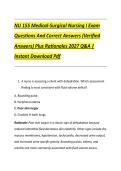
NU 155 Medical-Surgical Nursing I Exam
Questions And Correct Answers (Verified
Answers) Plus Rationales 2027 Q&A |
Instant Download Pdf
1. A nurse is assessing a client with dehydration. Which assessment
finding is most consistent with fluid volume deficit?
A. Bounding pulse
B. Peripheral edema
C. Poor skin turgor
D. Crackles in both lungs
Rationale: Poor skin turgor is a classic sign of dehydration because
reduced interstitial fluid decreases skin elasticity. Other signs include dry
mucous membranes, hypotension, tachycardia, decreased urine output,
and increased urine specific gravity. Bounding pulses, edema, and
crackles are more commonly associated with fluid volume excess.
, 2. Which electrolyte is the primary intracellular cation?
A. Sodium
B. Potassium
C. Calcium
D. Chloride
Rationale: Potassium is the primary intracellular cation and plays a vital
role in nerve conduction, muscle contraction, and cardiac function.
Sodium is the primary extracellular cation, while chloride is the major
extracellular anion.
3. A client has a serum potassium level of 2.9 mEq/L. Which
intervention should the nurse prioritize?
A. Restrict potassium intake.
B. Encourage increased sodium intake.
C. Administer prescribed potassium replacement.
D. Prepare the client for dialysis.
Rationale: A potassium level of 2.9 mEq/L indicates hypokalemia, which
increases the risk of cardiac dysrhythmias and muscle weakness.
,Administering potassium replacement as prescribed is the priority
intervention while monitoring cardiac rhythm.
4. Which laboratory value indicates normal kidney function?
A. Creatinine 3.5 mg/dL
B. BUN 45 mg/dL
C. Creatinine 0.9 mg/dL
D. Potassium 6.2 mEq/L
Rationale: A serum creatinine of approximately 0.6–1.3 mg/dL is
considered normal in healthy adults. Elevated creatinine and BUN levels
suggest impaired renal function.
5. Which assessment finding requires immediate nursing
intervention?
A. Temperature of 99°F (37.2°C)
B. Heart rate of 88 beats/minute
C. Oxygen saturation of 84% on room air
D. Blood pressure of 128/76 mmHg
, Rationale: An oxygen saturation of 84% indicates significant hypoxemia
requiring immediate intervention to restore oxygenation. Airway and
breathing always take priority according to ABC principles.
6. Which action best prevents healthcare-associated infections?
A. Wearing gloves for all procedures
B. Performing proper hand hygiene before and after patient contact
C. Administering antibiotics prophylactically
D. Changing IV tubing daily
Rationale: Hand hygiene remains the single most effective measure to
reduce healthcare-associated infections by interrupting transmission of
microorganisms.
7. A client with heart failure is prescribed furosemide. Which
electrolyte imbalance should the nurse monitor?
A. Hypercalcemia
B. Hypokalemia
C. Hypermagnesemia
D. Hypernatremia
Questions And Correct Answers (Verified
Answers) Plus Rationales 2027 Q&A |
Instant Download Pdf
1. A nurse is assessing a client with dehydration. Which assessment
finding is most consistent with fluid volume deficit?
A. Bounding pulse
B. Peripheral edema
C. Poor skin turgor
D. Crackles in both lungs
Rationale: Poor skin turgor is a classic sign of dehydration because
reduced interstitial fluid decreases skin elasticity. Other signs include dry
mucous membranes, hypotension, tachycardia, decreased urine output,
and increased urine specific gravity. Bounding pulses, edema, and
crackles are more commonly associated with fluid volume excess.
, 2. Which electrolyte is the primary intracellular cation?
A. Sodium
B. Potassium
C. Calcium
D. Chloride
Rationale: Potassium is the primary intracellular cation and plays a vital
role in nerve conduction, muscle contraction, and cardiac function.
Sodium is the primary extracellular cation, while chloride is the major
extracellular anion.
3. A client has a serum potassium level of 2.9 mEq/L. Which
intervention should the nurse prioritize?
A. Restrict potassium intake.
B. Encourage increased sodium intake.
C. Administer prescribed potassium replacement.
D. Prepare the client for dialysis.
Rationale: A potassium level of 2.9 mEq/L indicates hypokalemia, which
increases the risk of cardiac dysrhythmias and muscle weakness.
,Administering potassium replacement as prescribed is the priority
intervention while monitoring cardiac rhythm.
4. Which laboratory value indicates normal kidney function?
A. Creatinine 3.5 mg/dL
B. BUN 45 mg/dL
C. Creatinine 0.9 mg/dL
D. Potassium 6.2 mEq/L
Rationale: A serum creatinine of approximately 0.6–1.3 mg/dL is
considered normal in healthy adults. Elevated creatinine and BUN levels
suggest impaired renal function.
5. Which assessment finding requires immediate nursing
intervention?
A. Temperature of 99°F (37.2°C)
B. Heart rate of 88 beats/minute
C. Oxygen saturation of 84% on room air
D. Blood pressure of 128/76 mmHg
, Rationale: An oxygen saturation of 84% indicates significant hypoxemia
requiring immediate intervention to restore oxygenation. Airway and
breathing always take priority according to ABC principles.
6. Which action best prevents healthcare-associated infections?
A. Wearing gloves for all procedures
B. Performing proper hand hygiene before and after patient contact
C. Administering antibiotics prophylactically
D. Changing IV tubing daily
Rationale: Hand hygiene remains the single most effective measure to
reduce healthcare-associated infections by interrupting transmission of
microorganisms.
7. A client with heart failure is prescribed furosemide. Which
electrolyte imbalance should the nurse monitor?
A. Hypercalcemia
B. Hypokalemia
C. Hypermagnesemia
D. Hypernatremia