
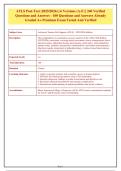
ATLS Post-Test (2025/2026) | 6 Versions (A-F) | 240 Verified
Questions and Answers - 100 Questions and Answers Already
Graded A+ Premium Exam Tested And Verified
Subject Area Advanced Trauma Life Support (ATLS) - 2025/2026 Edition
Description This comprehensive examination assesses mastery of the ATLS 10th Edition
(2025/2026) curriculum, covering initial assessment, airway management, shock,
thoracic trauma, abdominal trauma, head trauma, spine injury, musculoskeletal
trauma, burns, pediatric and geriatric considerations, and trauma team dynamics.
Questions require integration of pathophysiology, evidence-based interventions,
and nuanced clinical decision-making.
Expected Grade A+
Total Questions 100
Duration 3 hours
Learning Outcomes 1. Apply systematic primary and secondary survey in trauma patients
2. Prioritize life-threatening injuries using ATLS algorithms
3. Interpret diagnostic findings to guide resuscitation and definitive care
4. Recognize atypical presentations and manage complications
5. Demonstrate understanding of updated guidelines and recent evidence
Accreditation Meets American College of Surgeons (ACS) ATLS course examination standards
for Level I and II trauma center credentialing.
Page 1
,1. A trauma patient with suspected hemorrhagic shock has received 2 liters of
crystalloid and remains hypotensive. The decision is made to initiate massive
transfusion protocol. Which combination of blood products is most appropriate to
prevent dilutional coagulopathy and maintain oxygen-carrying capacity?
A. 6 units packed red blood cells, 4 units fresh frozen plasma, 1 unit platelets
B. 1:1:1 ratio of packed red blood cells, fresh frozen plasma, and platelets
C. 4 units packed red blood cells, 2 units fresh frozen plasma, 1 unit cryoprecipitate
D. 8 units packed red blood cells, 2 units fresh frozen plasma, 1 unit platelets
Answer: B. 1:1:1 ratio of packed red blood cells, fresh frozen plasma, and platelets
Current ATLS guidelines advocate a 1:1:1 ratio of PRBC:FFP:platelets to approximate
whole blood and prevent dilutional coagulopathy. Option B matches this ratio. Option
A has a lower platelet ratio; option C lacks adequate platelet support; option D has
insufficient FFP.
2. During the primary survey of a trauma patient, you note distended neck veins,
muffled heart sounds, and hypotension. Needle decompression of the chest does not
improve the condition. What is the most likely diagnosis and the next best step?
A. Tension pneumothorax; perform tube thoracostomy
B. Cardiac tamponade; perform pericardiocentesis
C. Massive hemothorax; place a chest tube
D. Aortic dissection; obtain urgent CT angiography
Answer: B. Cardiac tamponade; perform pericardiocentesis
Beck's triad (distended neck veins, muffled heart sounds, hypotension) is classic for
cardiac tamponade. Needle decompression is for tension pneumothorax, which would
not improve tamponade. Pericardiocentesis is the immediate life-saving intervention.
Tube thoracostomy is for hemothorax/pneumothorax; CT would delay treatment in
unstable patient.
Page 2
,3. In a patient with severe traumatic brain injury (GCS 6) and suspected increased
intracranial pressure, which of the following ventilation strategies is most
appropriate to achieve a PaCO2 target that optimizes cerebral perfusion while
avoiding secondary brain injury?
A. Hyperventilation to PaCO2 25-30 mmHg to reduce ICP
B. Mild hyperventilation to PaCO2 30-35 mmHg
C. Normoventilation to PaCO2 35-40 mmHg
D. Permissive hypercapnia to PaCO2 45-50 mmHg
Answer: C. Normoventilation to PaCO2 35-40 mmHg
Current ATLS and Brain Trauma Foundation guidelines recommend normoventilation
(PaCO2 35-40 mmHg) in the initial management of severe TBI. Hyperventilation
(PaCO2 < 35) can cause cerebral vasoconstriction and worsen ischemia. Permissive
hypercapnia is contraindicated in elevated ICP. Mild hyperventilation may be used
transiently for acute herniation but not as routine.
4. A patient with blunt abdominal trauma is hemodynamically stable but has diffuse
abdominal tenderness. Focused Assessment with Sonography in Trauma (FAST) is
negative. What is the most appropriate next step to evaluate for intra-abdominal
injury?
A. Diagnostic peritoneal lavage (DPL)
B. CT scan of abdomen and pelvis with IV contrast
C. Exploratory laparotomy
D. Serial abdominal examinations
Answer: B. CT scan of abdomen and pelvis with IV contrast
In a hemodynamically stable patient with a negative FAST but high suspicion for
injury, CT scan is the gold standard for detecting solid organ injuries and
retroperitoneal hematomas. DPL is invasive and less specific; laparotomy is reserved
for unstable patients or positive CT findings; serial exams may miss significant injuries.
Page 3
, 5. Which of the following represents the most significant change in the 2025/2026
ATLS guidelines regarding the use of tranexamic acid (TXA) in trauma?
A. TXA is now recommended only for patients with severe head injury
B. TXA should be administered within 3 hours of injury for patients at risk of hemorrhagic
shock
C. TXA is contraindicated in patients with pelvic fractures
D. TXA has been removed from the ATLS algorithm due to lack of benefit
Answer: B. TXA should be administered within 3 hours of injury for patients at
risk of hemorrhagic shock
The 2025/2026 ATLS update reaffirms the CRASH-2 trial evidence: TXA should be
given within 3 hours of injury to patients with significant hemorrhage or risk of
hemorrhagic shock. Option A is incorrect (no such restriction); option C is false; option
D is false as TXA remains recommended.
6. A patient with a suspected cervical spine injury is being immobilized. Which of the
following is the preferred method for airway management if the patient requires
intubation?
A. Nasotracheal intubation with manual in-line stabilization
B. Orotracheal intubation with manual in-line stabilization and video laryngoscopy
C. Surgical airway via cricothyroidotomy
D. Blind nasotracheal intubation without manipulation
Answer: B. Orotracheal intubation with manual in-line stabilization and video
laryngoscopy
Current ATLS and difficult airway guidelines recommend orotracheal intubation with
manual in-line stabilization and video laryngoscopy as the first-line method in
suspected cervical spine injury. Nasotracheal intubation requires patient cooperation
and may cause epistaxis; surgical airway is reserved for failed intubation. Blind
techniques are discouraged.
Page 4
Questions and Answers - 100 Questions and Answers Already
Graded A+ Premium Exam Tested And Verified
Subject Area Advanced Trauma Life Support (ATLS) - 2025/2026 Edition
Description This comprehensive examination assesses mastery of the ATLS 10th Edition
(2025/2026) curriculum, covering initial assessment, airway management, shock,
thoracic trauma, abdominal trauma, head trauma, spine injury, musculoskeletal
trauma, burns, pediatric and geriatric considerations, and trauma team dynamics.
Questions require integration of pathophysiology, evidence-based interventions,
and nuanced clinical decision-making.
Expected Grade A+
Total Questions 100
Duration 3 hours
Learning Outcomes 1. Apply systematic primary and secondary survey in trauma patients
2. Prioritize life-threatening injuries using ATLS algorithms
3. Interpret diagnostic findings to guide resuscitation and definitive care
4. Recognize atypical presentations and manage complications
5. Demonstrate understanding of updated guidelines and recent evidence
Accreditation Meets American College of Surgeons (ACS) ATLS course examination standards
for Level I and II trauma center credentialing.
Page 1
,1. A trauma patient with suspected hemorrhagic shock has received 2 liters of
crystalloid and remains hypotensive. The decision is made to initiate massive
transfusion protocol. Which combination of blood products is most appropriate to
prevent dilutional coagulopathy and maintain oxygen-carrying capacity?
A. 6 units packed red blood cells, 4 units fresh frozen plasma, 1 unit platelets
B. 1:1:1 ratio of packed red blood cells, fresh frozen plasma, and platelets
C. 4 units packed red blood cells, 2 units fresh frozen plasma, 1 unit cryoprecipitate
D. 8 units packed red blood cells, 2 units fresh frozen plasma, 1 unit platelets
Answer: B. 1:1:1 ratio of packed red blood cells, fresh frozen plasma, and platelets
Current ATLS guidelines advocate a 1:1:1 ratio of PRBC:FFP:platelets to approximate
whole blood and prevent dilutional coagulopathy. Option B matches this ratio. Option
A has a lower platelet ratio; option C lacks adequate platelet support; option D has
insufficient FFP.
2. During the primary survey of a trauma patient, you note distended neck veins,
muffled heart sounds, and hypotension. Needle decompression of the chest does not
improve the condition. What is the most likely diagnosis and the next best step?
A. Tension pneumothorax; perform tube thoracostomy
B. Cardiac tamponade; perform pericardiocentesis
C. Massive hemothorax; place a chest tube
D. Aortic dissection; obtain urgent CT angiography
Answer: B. Cardiac tamponade; perform pericardiocentesis
Beck's triad (distended neck veins, muffled heart sounds, hypotension) is classic for
cardiac tamponade. Needle decompression is for tension pneumothorax, which would
not improve tamponade. Pericardiocentesis is the immediate life-saving intervention.
Tube thoracostomy is for hemothorax/pneumothorax; CT would delay treatment in
unstable patient.
Page 2
,3. In a patient with severe traumatic brain injury (GCS 6) and suspected increased
intracranial pressure, which of the following ventilation strategies is most
appropriate to achieve a PaCO2 target that optimizes cerebral perfusion while
avoiding secondary brain injury?
A. Hyperventilation to PaCO2 25-30 mmHg to reduce ICP
B. Mild hyperventilation to PaCO2 30-35 mmHg
C. Normoventilation to PaCO2 35-40 mmHg
D. Permissive hypercapnia to PaCO2 45-50 mmHg
Answer: C. Normoventilation to PaCO2 35-40 mmHg
Current ATLS and Brain Trauma Foundation guidelines recommend normoventilation
(PaCO2 35-40 mmHg) in the initial management of severe TBI. Hyperventilation
(PaCO2 < 35) can cause cerebral vasoconstriction and worsen ischemia. Permissive
hypercapnia is contraindicated in elevated ICP. Mild hyperventilation may be used
transiently for acute herniation but not as routine.
4. A patient with blunt abdominal trauma is hemodynamically stable but has diffuse
abdominal tenderness. Focused Assessment with Sonography in Trauma (FAST) is
negative. What is the most appropriate next step to evaluate for intra-abdominal
injury?
A. Diagnostic peritoneal lavage (DPL)
B. CT scan of abdomen and pelvis with IV contrast
C. Exploratory laparotomy
D. Serial abdominal examinations
Answer: B. CT scan of abdomen and pelvis with IV contrast
In a hemodynamically stable patient with a negative FAST but high suspicion for
injury, CT scan is the gold standard for detecting solid organ injuries and
retroperitoneal hematomas. DPL is invasive and less specific; laparotomy is reserved
for unstable patients or positive CT findings; serial exams may miss significant injuries.
Page 3
, 5. Which of the following represents the most significant change in the 2025/2026
ATLS guidelines regarding the use of tranexamic acid (TXA) in trauma?
A. TXA is now recommended only for patients with severe head injury
B. TXA should be administered within 3 hours of injury for patients at risk of hemorrhagic
shock
C. TXA is contraindicated in patients with pelvic fractures
D. TXA has been removed from the ATLS algorithm due to lack of benefit
Answer: B. TXA should be administered within 3 hours of injury for patients at
risk of hemorrhagic shock
The 2025/2026 ATLS update reaffirms the CRASH-2 trial evidence: TXA should be
given within 3 hours of injury to patients with significant hemorrhage or risk of
hemorrhagic shock. Option A is incorrect (no such restriction); option C is false; option
D is false as TXA remains recommended.
6. A patient with a suspected cervical spine injury is being immobilized. Which of the
following is the preferred method for airway management if the patient requires
intubation?
A. Nasotracheal intubation with manual in-line stabilization
B. Orotracheal intubation with manual in-line stabilization and video laryngoscopy
C. Surgical airway via cricothyroidotomy
D. Blind nasotracheal intubation without manipulation
Answer: B. Orotracheal intubation with manual in-line stabilization and video
laryngoscopy
Current ATLS and difficult airway guidelines recommend orotracheal intubation with
manual in-line stabilization and video laryngoscopy as the first-line method in
suspected cervical spine injury. Nasotracheal intubation requires patient cooperation
and may cause epistaxis; surgical airway is reserved for failed intubation. Blind
techniques are discouraged.
Page 4


