

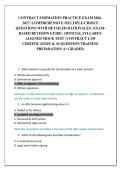
CONTRACT FORMATION PRACTICE EXAM 2026–
2027: COMPREHENSIVE MULTIPLE-CHOICE
QUESTIONS WITH DETAILED RATIONALES | EXAM-
BASED REVISION GUIDE | OFFICIAL SYLLABUS-
ALIGNED MOCK TEST | CONTRACT LAW
CERTIFICATION & ACQUISITION TRAINING
PREPARATION A+ GRADED.
1. Which element is essential for the formation of a valid contract?
A. Written documentation only
B. Government approval
C. Offer, acceptance, and consideration
D. Witness signatures
Rationale: A valid contract generally requires an offer, acceptance, consideration,
and the intent to create legal relations.
2. An offer becomes legally binding when it is:
A. Mailed to the offeree
B. Accepted according to its terms
C. Discussed by both parties
D. Reviewed by legal counsel
Rationale: Acceptance according to the terms of the offer creates mutual assent.
3. Which of the following best describes consideration?
A. A verbal promise only
B. Legal advice before signing
,C. Something of legal value exchanged between parties
D. A written acknowledgment
Rationale: Consideration involves each party giving or promising something of
value.
4. A counteroffer has what effect on the original offer?
A. It automatically accepts it.
B. It rejects the original offer and creates a new offer.
C. It extends the acceptance period.
D. It has no legal effect.
Rationale: A counteroffer terminates the original offer unless the offeror renews it.
5. Mutual assent is commonly demonstrated through:
A. Registration with a court
B. Payment of taxes
C. Offer and acceptance
D. Notarization
Rationale: Mutual assent, often called the "meeting of the minds," is established
through offer and acceptance.
6. Which party has the power to revoke an offer before acceptance?
A. The offeree
B. The offeror
C. Any interested third party
D. The court
Rationale: The offeror may generally revoke an offer before it is accepted unless
the offer is irrevocable.
7. Which contract element ensures that each party voluntarily agrees to the
terms?
A. Capacity
B. Consideration
, C. Mutual assent
D. Legality
Rationale: Mutual assent reflects voluntary agreement by all parties.
8. Which of the following would generally make a contract unenforceable?
A. Signed by both parties
B. Illegal subject matter
C. Exchange of consideration
D. Written terms
Rationale: Courts will not enforce contracts involving illegal activities.
9. A unilateral contract is accepted by:
A. Making another offer
B. Signing a document
C. Performing the requested act
D. Verbal acknowledgment only
Rationale: Acceptance of a unilateral contract occurs through performance.
10.Bilateral contracts involve:
A. One promise and one completed act
B. An exchange of promises
C. Only written agreements
D. Government participation
Rationale: Bilateral contracts consist of mutual promises between parties.
11.Which doctrine requires contracts to involve lawful objectives?
A. Capacity
B. Legality
C. Estoppel
D. Ratification
Rationale: Contracts must have lawful purposes to be enforceable.
2027: COMPREHENSIVE MULTIPLE-CHOICE
QUESTIONS WITH DETAILED RATIONALES | EXAM-
BASED REVISION GUIDE | OFFICIAL SYLLABUS-
ALIGNED MOCK TEST | CONTRACT LAW
CERTIFICATION & ACQUISITION TRAINING
PREPARATION A+ GRADED.
1. Which element is essential for the formation of a valid contract?
A. Written documentation only
B. Government approval
C. Offer, acceptance, and consideration
D. Witness signatures
Rationale: A valid contract generally requires an offer, acceptance, consideration,
and the intent to create legal relations.
2. An offer becomes legally binding when it is:
A. Mailed to the offeree
B. Accepted according to its terms
C. Discussed by both parties
D. Reviewed by legal counsel
Rationale: Acceptance according to the terms of the offer creates mutual assent.
3. Which of the following best describes consideration?
A. A verbal promise only
B. Legal advice before signing
,C. Something of legal value exchanged between parties
D. A written acknowledgment
Rationale: Consideration involves each party giving or promising something of
value.
4. A counteroffer has what effect on the original offer?
A. It automatically accepts it.
B. It rejects the original offer and creates a new offer.
C. It extends the acceptance period.
D. It has no legal effect.
Rationale: A counteroffer terminates the original offer unless the offeror renews it.
5. Mutual assent is commonly demonstrated through:
A. Registration with a court
B. Payment of taxes
C. Offer and acceptance
D. Notarization
Rationale: Mutual assent, often called the "meeting of the minds," is established
through offer and acceptance.
6. Which party has the power to revoke an offer before acceptance?
A. The offeree
B. The offeror
C. Any interested third party
D. The court
Rationale: The offeror may generally revoke an offer before it is accepted unless
the offer is irrevocable.
7. Which contract element ensures that each party voluntarily agrees to the
terms?
A. Capacity
B. Consideration
, C. Mutual assent
D. Legality
Rationale: Mutual assent reflects voluntary agreement by all parties.
8. Which of the following would generally make a contract unenforceable?
A. Signed by both parties
B. Illegal subject matter
C. Exchange of consideration
D. Written terms
Rationale: Courts will not enforce contracts involving illegal activities.
9. A unilateral contract is accepted by:
A. Making another offer
B. Signing a document
C. Performing the requested act
D. Verbal acknowledgment only
Rationale: Acceptance of a unilateral contract occurs through performance.
10.Bilateral contracts involve:
A. One promise and one completed act
B. An exchange of promises
C. Only written agreements
D. Government participation
Rationale: Bilateral contracts consist of mutual promises between parties.
11.Which doctrine requires contracts to involve lawful objectives?
A. Capacity
B. Legality
C. Estoppel
D. Ratification
Rationale: Contracts must have lawful purposes to be enforceable.


