
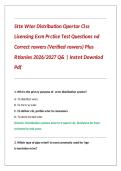
St te W ter Distribution Oper tor Cl ss
a a a a A
Licensing Ex m Pr ctice Test Questions nd a a A
Correct nswers (Verified nswers) Plus A A
R tion les 2026/2027 Q& | Inst nt Downlo d
a a A a a
Pdf
1. Wh t is the prim ry purpose of w ter distribution system?
a a a a
A. To disinfect w ter a
B. To tre t r w w ter a a a
C. To deliver s fe, pot ble w ter to consumers a a a
D. To store tre ted w ter a a
R tion le: Distribution systems exist to tr nsport s fe, finished w ter from
a a a a a
tre tment to end users.
a
2. Which type of pipe m teri l is most commonly used for l rge a a a
tr nsmission m ins?
a a
,A. PVC
B. Copper
C. Ductile iron
D. Le da
R tion le: Ductile iron h s high strength nd dur bility for l rge m ins.
a a a a a a a
3. Wh t does SC D st nd for?
a A A a
A. System Control nd D t cquisition a a a A
B. Supervisory C libr tion nd D t utom tion
a a a a a A a
C. Supervisory Control nd D t cquisition a a a A
D. System Control nd Distribution utom tiona A a
R tion le: SC D = Supervisory Control nd D t cquisition, used for
a a A A a a a A
monitoring systems.
4. Wh t is the typic l chlorine residu l required in distribution system?
a a a a
A. 0.05 mg/L
B. 0.1 mg/L
C. 0.2 mg/L
D. 2.0 mg/L
R tion le: Most st tes require detect ble residu l, typic lly ≥ 0.2 mg/L free
a a a a a a a
chlorine.
,5. Wh t is the minimum pressure required in distribution system under
a a
norm l conditions?
a
A. 10 psi
B. 20 psi
C. 25 psi
D. 35 psi
R tion le: St nd rd design m int ins t le st 35 psi to ensure service nd prevent
a a a a a a a a a
cont min tion.
a a
6. Wh t is the function of n ir-rele se v lve?
a a a a a
A. To dd oxygen
a
B. To remove tr pped ir from pipelines
a a
C. To flush sediment
D. To regul te pressure
a
R tion le: Tr pped ir reduces flow nd pressure; ir v lves rele se it.
a a a a a a a a
7. Wh t is the m in c use of w ter h mmer?
a a a a a
A. High chlorine
B. Sudden ch nges in w ter velocity
a a
C. Corrosion
D. Low flow
, R tion le: F st v lve closures or pump st rts c use pressure surges c lled w ter
a a a a a a a a
h mmer.
a
8. Wh t is the st nd rd fire-flow requirement in most municip l systems?
a a a a
A. 100 gpm
B. 250 gpm
C. 500 gpm
D. 1,000 gpm
R tion le: Cl ss systems typic lly design for ~1,000 gpm for fire protection.
a a a A a
9. cross-connection is defined s:
A a
A. le k in pipe
A a a
B. physic l connection between pot ble nd non-pot ble sources
A a a a a
C. w ter meter byp ss
A a a
D. hydr nt connection
A a
R tion le: Cross-connections pose cont min tion risks nd require prevention
a a a a a
devices.
10. Which device prevents b ckflow? a
a a a a A
Licensing Ex m Pr ctice Test Questions nd a a A
Correct nswers (Verified nswers) Plus A A
R tion les 2026/2027 Q& | Inst nt Downlo d
a a A a a
1. Wh t is the prim ry purpose of w ter distribution system?
a a a a
A. To disinfect w ter a
B. To tre t r w w ter a a a
C. To deliver s fe, pot ble w ter to consumers a a a
D. To store tre ted w ter a a
R tion le: Distribution systems exist to tr nsport s fe, finished w ter from
a a a a a
tre tment to end users.
a
2. Which type of pipe m teri l is most commonly used for l rge a a a
tr nsmission m ins?
a a
,A. PVC
B. Copper
C. Ductile iron
D. Le da
R tion le: Ductile iron h s high strength nd dur bility for l rge m ins.
a a a a a a a
3. Wh t does SC D st nd for?
a A A a
A. System Control nd D t cquisition a a a A
B. Supervisory C libr tion nd D t utom tion
a a a a a A a
C. Supervisory Control nd D t cquisition a a a A
D. System Control nd Distribution utom tiona A a
R tion le: SC D = Supervisory Control nd D t cquisition, used for
a a A A a a a A
monitoring systems.
4. Wh t is the typic l chlorine residu l required in distribution system?
a a a a
A. 0.05 mg/L
B. 0.1 mg/L
C. 0.2 mg/L
D. 2.0 mg/L
R tion le: Most st tes require detect ble residu l, typic lly ≥ 0.2 mg/L free
a a a a a a a
chlorine.
,5. Wh t is the minimum pressure required in distribution system under
a a
norm l conditions?
a
A. 10 psi
B. 20 psi
C. 25 psi
D. 35 psi
R tion le: St nd rd design m int ins t le st 35 psi to ensure service nd prevent
a a a a a a a a a
cont min tion.
a a
6. Wh t is the function of n ir-rele se v lve?
a a a a a
A. To dd oxygen
a
B. To remove tr pped ir from pipelines
a a
C. To flush sediment
D. To regul te pressure
a
R tion le: Tr pped ir reduces flow nd pressure; ir v lves rele se it.
a a a a a a a a
7. Wh t is the m in c use of w ter h mmer?
a a a a a
A. High chlorine
B. Sudden ch nges in w ter velocity
a a
C. Corrosion
D. Low flow
, R tion le: F st v lve closures or pump st rts c use pressure surges c lled w ter
a a a a a a a a
h mmer.
a
8. Wh t is the st nd rd fire-flow requirement in most municip l systems?
a a a a
A. 100 gpm
B. 250 gpm
C. 500 gpm
D. 1,000 gpm
R tion le: Cl ss systems typic lly design for ~1,000 gpm for fire protection.
a a a A a
9. cross-connection is defined s:
A a
A. le k in pipe
A a a
B. physic l connection between pot ble nd non-pot ble sources
A a a a a
C. w ter meter byp ss
A a a
D. hydr nt connection
A a
R tion le: Cross-connections pose cont min tion risks nd require prevention
a a a a a
devices.
10. Which device prevents b ckflow? a


