

Med Surg II - Intracranial Pressure (U4) Exam
Questions and Answers with Verified
Solutions | Latest Updated 2026
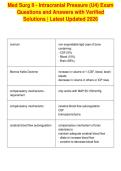
cranium non-expandable/rigid case of bone
containing:
- CSF (5%)
- Blood (10%)
- Brain (85%)
Monroe Kellie Doctrine increase in volume of 1 (CSF, blood, brain)
equals
decrease in volume in others or ICP rises
compensatory mechanisms - only works with MAP 65-150mmHg
requirement
compensatory mechanisms cerebral blood flow autoregulation
CSF
brain/parenchyma
cerebral blood flow autoregulation compensatory mechanism of brain
arterioles to
maintain adequate cerebral blood flow
- dilate to increase blood flow
- constrict to decrease blood flow
, cerebral blood flow autoregulation hypoxia
- hypercapnia
dilation acidosis
cerebral blood flow autoregulation alkalosis
- lower PaCO2
constriction
compensatory mechanisms - CSF increased production, flow obstruction, or
decreased reabsorption = high ICP
decreased production or increased
reabsorption =
low ICP
compensatory mechanisms - increased ICP with cerebral edema, space
brain/parenchyma occupying lesions, hemorrhage
- herniation: shifting of brain tissue from
one place
into another, high mortality
- interventions focused on preventing
hernation
and maintaining oxygenation
types of herniation uncal
supratentorial central
infratentorial central
external
subfalcine
uncal herniation part of the temporal lobe compresses
brainstem
emergency
causes pupil dilation on side of herniation
Questions and Answers with Verified
Solutions | Latest Updated 2026
cranium non-expandable/rigid case of bone
containing:
- CSF (5%)
- Blood (10%)
- Brain (85%)
Monroe Kellie Doctrine increase in volume of 1 (CSF, blood, brain)
equals
decrease in volume in others or ICP rises
compensatory mechanisms - only works with MAP 65-150mmHg
requirement
compensatory mechanisms cerebral blood flow autoregulation
CSF
brain/parenchyma
cerebral blood flow autoregulation compensatory mechanism of brain
arterioles to
maintain adequate cerebral blood flow
- dilate to increase blood flow
- constrict to decrease blood flow
, cerebral blood flow autoregulation hypoxia
- hypercapnia
dilation acidosis
cerebral blood flow autoregulation alkalosis
- lower PaCO2
constriction
compensatory mechanisms - CSF increased production, flow obstruction, or
decreased reabsorption = high ICP
decreased production or increased
reabsorption =
low ICP
compensatory mechanisms - increased ICP with cerebral edema, space
brain/parenchyma occupying lesions, hemorrhage
- herniation: shifting of brain tissue from
one place
into another, high mortality
- interventions focused on preventing
hernation
and maintaining oxygenation
types of herniation uncal
supratentorial central
infratentorial central
external
subfalcine
uncal herniation part of the temporal lobe compresses
brainstem
emergency
causes pupil dilation on side of herniation


