

med surg II midterm Exam Questions and
Answers with Verified Solutions | Latest
Updated 2026
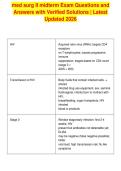
HIV Acquired retro virus (RNA); targets CD4
receptors
on T-lymphocytes; causes progressive
immune
suppression; stages based on CD4 count
(stage 3 =
AIDS < 200)
Transmission of HIV Body fluids that contain infected cells →
shared
infected drug use equipment, sex, seminal
fluid/vaginal, infants born to mothers with
HIV,
breastfeeding, organ transplants, HIV
infected
blood or products
Stage 0 Window stage/early infection: first 2-4
weeks; HIV
present but antibodies not detectable yet;
ELISA
may be negative (false negative possible);
HIGH
viral load: high transmission risk; flu like
symptoms
,Stage 1 Acute/primary infection: from infection until
HIV
antibodies develop; CD4 count begins to
drop
from normal (500-1500), viral load high,
may be
asymptomatic or fatigued, skin rash, flu
like
symptoms
Stage 2 CD4 count 200 - 499; immune system
weakened;
not considered AIDS yet
Stage 3 AIDS: CD4 count below 200; severe
immune
suppression; increased risk for
opportunistic
infection; AIDS defining illnesses may
occur
Unknown Stage No CD4 count or CD4 percentage
available
Early Manifestations of HIV Fatigue, skin rash, flu like symptoms, or
asymptomatic
Respiratory Manifestations SOB, dyspnea, cough, pneumonia, TB
GI Manifestations Loss of appetite, N/V, oral candidiasis,
diarrhea,
weight loss, wasting syndrome
, Oncologic Manifestations Kaposi sarcoma, lymphomas
Neurologic Manifestations Cognitive changes, neuropathy,
encephalopathy
Integumentary Manifestations Herpes zoster, dermatitis, folliculitis
Gynecologic Manifestations Ulcers, recurrent candidiasis, PID, cervical
cancer
Assessment/Diagnostic Test Viral load (high = worsening disease); CD4
count
(low = worsening disease)
ELISA Testing Used for initial screening test for HIV; tests
how
well the body is responding to antibodies;
may be
negative during the window stage (stage 0)
because antibodies are not yet detectable;
false
negatives can occur early in infection
Western Blot Confirmation Used AFTER a positive ELISA to confirm
HIV
infection; checks for specific HIV
antibodies/tags; if
multiple antibodies are positive →
confirmation
testing is done; helps confirm diagnosis &
determine stage of disease
Answers with Verified Solutions | Latest
Updated 2026
HIV Acquired retro virus (RNA); targets CD4
receptors
on T-lymphocytes; causes progressive
immune
suppression; stages based on CD4 count
(stage 3 =
AIDS < 200)
Transmission of HIV Body fluids that contain infected cells →
shared
infected drug use equipment, sex, seminal
fluid/vaginal, infants born to mothers with
HIV,
breastfeeding, organ transplants, HIV
infected
blood or products
Stage 0 Window stage/early infection: first 2-4
weeks; HIV
present but antibodies not detectable yet;
ELISA
may be negative (false negative possible);
HIGH
viral load: high transmission risk; flu like
symptoms
,Stage 1 Acute/primary infection: from infection until
HIV
antibodies develop; CD4 count begins to
drop
from normal (500-1500), viral load high,
may be
asymptomatic or fatigued, skin rash, flu
like
symptoms
Stage 2 CD4 count 200 - 499; immune system
weakened;
not considered AIDS yet
Stage 3 AIDS: CD4 count below 200; severe
immune
suppression; increased risk for
opportunistic
infection; AIDS defining illnesses may
occur
Unknown Stage No CD4 count or CD4 percentage
available
Early Manifestations of HIV Fatigue, skin rash, flu like symptoms, or
asymptomatic
Respiratory Manifestations SOB, dyspnea, cough, pneumonia, TB
GI Manifestations Loss of appetite, N/V, oral candidiasis,
diarrhea,
weight loss, wasting syndrome
, Oncologic Manifestations Kaposi sarcoma, lymphomas
Neurologic Manifestations Cognitive changes, neuropathy,
encephalopathy
Integumentary Manifestations Herpes zoster, dermatitis, folliculitis
Gynecologic Manifestations Ulcers, recurrent candidiasis, PID, cervical
cancer
Assessment/Diagnostic Test Viral load (high = worsening disease); CD4
count
(low = worsening disease)
ELISA Testing Used for initial screening test for HIV; tests
how
well the body is responding to antibodies;
may be
negative during the window stage (stage 0)
because antibodies are not yet detectable;
false
negatives can occur early in infection
Western Blot Confirmation Used AFTER a positive ELISA to confirm
HIV
infection; checks for specific HIV
antibodies/tags; if
multiple antibodies are positive →
confirmation
testing is done; helps confirm diagnosis &
determine stage of disease


