

lOMoARcPSD| 69226264
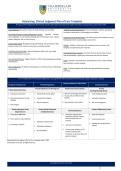
Relearning: Clinical Judgment Plan of Care Template
Nursing and HCP Collaborative Plan for Care: Include a description of priority client specific information, nursing actions, and provider orders
Cultural/Spiritual: No specific cultural or spiritual details were provided. Health Promotion/Development: Focus on hydration, nutrition, preventing
immobility complications, and managing comorbidities.
Neurological/Cognition/Coping/Adaptation/Function: Cognitive function
seems adequate, as S.A. tolerates feedings and communicates needs. Coping Infection/Immunity/Inflammation: No infection signs; skin breakdown around
appears adequate, with no major distress. feeding tube noted, requiring regular assessments.
Nutrition/Elimination: Managed through tube feeding, with oral intake at 50%.
Mobility: Mobility not discussed, but immobility may be a concern; skin
Output includes urine, emesis, and ice chips, monitored carefully.
integrity and repositioning are important.
Fluid/Electrolytes/Acid-Base: Signs of dehydration (dark urine, dry mouth)
present; fluid balance is a priority. Pain/Comfort/Tissue Integrity: Discomfort from dry mouth, tube irritation,
and skin breakdown; regular pain assessments and tube care needed.
Gas Exchange/Perfusion: Oxygen saturation at 99%, indicating good gas exchange
Safety: Aspiration, skin breakdown, and dehydration risks; monitor feeding
and perfusion.
tube, hydration, and skin integrity.
Glucose Regulation: No details on blood glucose; monitoring may be needed with
tube feeding. Other: Emotional support and comfort during hospitalization should be
prioritized.
START of Shift (CJSim™) Priorities (Complete after receiving REPORT AND reviewing the EHR connected to phase 1/Question 1 section)
Generate Solutions & Take Actions
Recognize & Analyze Cues Prioritize Hypotheses Evaluate Outcomes
Priority Hypotheses for Nursing Care Priority Interventions/Actions Priority
Priority Assessments/Cues
Teaching/Discharge Needs
1. Fluid status assessment 1. Risk for fluid volume defecit 1. Monitor and manage fluid balance 1. Tube feeding education
2. Ensure safe and effective tube
2. GI function/tolerance to tube 2. Impaired skin integrity feeding 2. Hydration importance
feedings
3. Risk for aspiration 3. Skin protection and comfort 3. Skin care managemtn
3. Skin integrity
Priority Laboratory Tests/ Priority Actual & Potential Priority Collaborative Actions
Priority Medications
Diagnostic Cues Complications/Cues
1. Electrolytes (BMP/CMP 1. Electrolyte replacements 1. Work with dietician
(potassium chloride, sodium
2. Serum albumin and prealbumin bicarb-if deficiencies are 2. Consult wound care
present)
1. Aspiration of penumonia
3. Collaborate with physician as
3. pH testing of aspirate 2. Anti-nausea medications
2. Electrolyte imbalances needed
3. Proton pump inhibitors or H2
3. Skin breakdown
blockers (pantoprazole,
famtidone- to prevent reflux and
gastric irritation)
Relearning Clinical Judgment Plan of Care Template-July24 2024
Chamberlain University. All Rights Reserved.
Vital Signs & Pertinent Lab Trends
©
Relearning: Clinical Judgment Plan of Care Template
Nursing and HCP Collaborative Plan for Care: Include a description of priority client specific information, nursing actions, and provider orders
Cultural/Spiritual: No specific cultural or spiritual details were provided. Health Promotion/Development: Focus on hydration, nutrition, preventing
immobility complications, and managing comorbidities.
Neurological/Cognition/Coping/Adaptation/Function: Cognitive function
seems adequate, as S.A. tolerates feedings and communicates needs. Coping Infection/Immunity/Inflammation: No infection signs; skin breakdown around
appears adequate, with no major distress. feeding tube noted, requiring regular assessments.
Nutrition/Elimination: Managed through tube feeding, with oral intake at 50%.
Mobility: Mobility not discussed, but immobility may be a concern; skin
Output includes urine, emesis, and ice chips, monitored carefully.
integrity and repositioning are important.
Fluid/Electrolytes/Acid-Base: Signs of dehydration (dark urine, dry mouth)
present; fluid balance is a priority. Pain/Comfort/Tissue Integrity: Discomfort from dry mouth, tube irritation,
and skin breakdown; regular pain assessments and tube care needed.
Gas Exchange/Perfusion: Oxygen saturation at 99%, indicating good gas exchange
Safety: Aspiration, skin breakdown, and dehydration risks; monitor feeding
and perfusion.
tube, hydration, and skin integrity.
Glucose Regulation: No details on blood glucose; monitoring may be needed with
tube feeding. Other: Emotional support and comfort during hospitalization should be
prioritized.
START of Shift (CJSim™) Priorities (Complete after receiving REPORT AND reviewing the EHR connected to phase 1/Question 1 section)
Generate Solutions & Take Actions
Recognize & Analyze Cues Prioritize Hypotheses Evaluate Outcomes
Priority Hypotheses for Nursing Care Priority Interventions/Actions Priority
Priority Assessments/Cues
Teaching/Discharge Needs
1. Fluid status assessment 1. Risk for fluid volume defecit 1. Monitor and manage fluid balance 1. Tube feeding education
2. Ensure safe and effective tube
2. GI function/tolerance to tube 2. Impaired skin integrity feeding 2. Hydration importance
feedings
3. Risk for aspiration 3. Skin protection and comfort 3. Skin care managemtn
3. Skin integrity
Priority Laboratory Tests/ Priority Actual & Potential Priority Collaborative Actions
Priority Medications
Diagnostic Cues Complications/Cues
1. Electrolytes (BMP/CMP 1. Electrolyte replacements 1. Work with dietician
(potassium chloride, sodium
2. Serum albumin and prealbumin bicarb-if deficiencies are 2. Consult wound care
present)
1. Aspiration of penumonia
3. Collaborate with physician as
3. pH testing of aspirate 2. Anti-nausea medications
2. Electrolyte imbalances needed
3. Proton pump inhibitors or H2
3. Skin breakdown
blockers (pantoprazole,
famtidone- to prevent reflux and
gastric irritation)
Relearning Clinical Judgment Plan of Care Template-July24 2024
Chamberlain University. All Rights Reserved.
Vital Signs & Pertinent Lab Trends
©


