CNA Nursing Education
2 RETPAHC · ANC
CNA★
★
NURSING Certified Nursing Assistant Training Program
NG · COMPASSION · EXCELL
C A R I N G · C O M P A S S I O N · E X C E L L E N C E I N H E A LT H C A R E
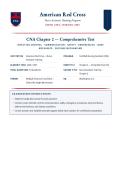
CNA Chapter 2 — Comprehensive Examination
S A F E TY · B O DY M E C H A N I CS · E M E R G E N C I E S · P O S I T I O N I N G · E T H I CS
PROGRAM Certified Nursing Assistant (CNA) CHAPTER 2 — Safety & Emergency
Procedures
SUBJECT Safety · Body Mechanics · Ethics · ACADEMIC YEAR
Positioning
ASSESSMENT Chapter 2 Comprehensive Test TOTAL QUESTIONS 115 Questions
TOPICS Safety · Emergencies · Body FORMAT Multiple Choice — Select the
Mechanics · Ethics Single Best Answer
EXAMINATION INSTRUCTIONS
▸ Select the single best answer for each question.
▸ Covers ethics and laws, resident rights, abuse reporting, HIPAA, safety and falls prevention, body
mechanics, emergency procedures, positioning, and transfers.
▸ Correct answers and detailed rationales appear below each question.
, CNA CHAPTER 2 — SAFETY · EMERGENCIES · BODY
Questions 1 – 115
MECHANICS · ETHICS
1. What is the difference between ethics and laws?
A. Ethics and laws are the same thing
B. Ethics are the knowledge of right and wrong; laws are what people must do and follow
C. Laws are optional; ethics are mandatory
D. Ethics only apply to doctors
CORRECT ANSWER B — Ethics are the knowledge of right and wrong; laws are what people
must do and follow
RATIONALE Ethics guide moral decision-making based on principles of right and wrong. Laws
are legally enforceable rules established by government. Ethics inform laws, but
they are distinct concepts.
2. Which of the following is an example of legal and ethical behavior for a nursing assistant?
A. Accepting a small gift from a grateful resident
B. Performing tasks outside the scope of practice when no one is watching
C. Documenting accurately and promptly
D. Sharing resident information with friends
CORRECT ANSWER C — Documenting accurately and promptly
RATIONALE Accurate, timely documentation is both an ethical and legal obligation. It ensures
continuity of care, provides a legal record, and protects both the resident and the
CNA.
, 3. What is the minimum number of training hours OBRA requires for nursing assistants?
A. 50 hours
B. 75 hours
C. 100 hours
D. 120 hours
CORRECT ANSWER B — 75 hours
RATIONALE OBRA mandates a minimum of 75 hours of training for nursing assistants,
including both classroom instruction and clinical practice. States may require
additional hours.
4. How soon must a Minimum Data Set (MDS) be completed after admission?
A. Within 7 days
B. Within 14 days
C. Within 30 days
D. Within 60 days
CORRECT ANSWER B — Within 14 days
RATIONALE Federal law requires the MDS to be completed within 14 days of a resident's
admission. This comprehensive assessment drives care planning and
reimbursement.
5. What is the purpose of Residents' Rights?
A. To provide a list of facility rules for residents
B. To provide an ethical code of conduct for healthcare workers
C. To outline the facility's budget
D. To establish visiting hours
CORRECT ANSWER B — To provide an ethical code of conduct for healthcare workers
RATIONALE Residents' Rights, established by OBRA, create an ethical framework that guides
how healthcare workers must treat residents — ensuring dignity, autonomy, and
quality care.
2 RETPAHC · ANC
CNA★
★
NURSING Certified Nursing Assistant Training Program
NG · COMPASSION · EXCELL
C A R I N G · C O M P A S S I O N · E X C E L L E N C E I N H E A LT H C A R E
CNA Chapter 2 — Comprehensive Examination
S A F E TY · B O DY M E C H A N I CS · E M E R G E N C I E S · P O S I T I O N I N G · E T H I CS
PROGRAM Certified Nursing Assistant (CNA) CHAPTER 2 — Safety & Emergency
Procedures
SUBJECT Safety · Body Mechanics · Ethics · ACADEMIC YEAR
Positioning
ASSESSMENT Chapter 2 Comprehensive Test TOTAL QUESTIONS 115 Questions
TOPICS Safety · Emergencies · Body FORMAT Multiple Choice — Select the
Mechanics · Ethics Single Best Answer
EXAMINATION INSTRUCTIONS
▸ Select the single best answer for each question.
▸ Covers ethics and laws, resident rights, abuse reporting, HIPAA, safety and falls prevention, body
mechanics, emergency procedures, positioning, and transfers.
▸ Correct answers and detailed rationales appear below each question.
, CNA CHAPTER 2 — SAFETY · EMERGENCIES · BODY
Questions 1 – 115
MECHANICS · ETHICS
1. What is the difference between ethics and laws?
A. Ethics and laws are the same thing
B. Ethics are the knowledge of right and wrong; laws are what people must do and follow
C. Laws are optional; ethics are mandatory
D. Ethics only apply to doctors
CORRECT ANSWER B — Ethics are the knowledge of right and wrong; laws are what people
must do and follow
RATIONALE Ethics guide moral decision-making based on principles of right and wrong. Laws
are legally enforceable rules established by government. Ethics inform laws, but
they are distinct concepts.
2. Which of the following is an example of legal and ethical behavior for a nursing assistant?
A. Accepting a small gift from a grateful resident
B. Performing tasks outside the scope of practice when no one is watching
C. Documenting accurately and promptly
D. Sharing resident information with friends
CORRECT ANSWER C — Documenting accurately and promptly
RATIONALE Accurate, timely documentation is both an ethical and legal obligation. It ensures
continuity of care, provides a legal record, and protects both the resident and the
CNA.
, 3. What is the minimum number of training hours OBRA requires for nursing assistants?
A. 50 hours
B. 75 hours
C. 100 hours
D. 120 hours
CORRECT ANSWER B — 75 hours
RATIONALE OBRA mandates a minimum of 75 hours of training for nursing assistants,
including both classroom instruction and clinical practice. States may require
additional hours.
4. How soon must a Minimum Data Set (MDS) be completed after admission?
A. Within 7 days
B. Within 14 days
C. Within 30 days
D. Within 60 days
CORRECT ANSWER B — Within 14 days
RATIONALE Federal law requires the MDS to be completed within 14 days of a resident's
admission. This comprehensive assessment drives care planning and
reimbursement.
5. What is the purpose of Residents' Rights?
A. To provide a list of facility rules for residents
B. To provide an ethical code of conduct for healthcare workers
C. To outline the facility's budget
D. To establish visiting hours
CORRECT ANSWER B — To provide an ethical code of conduct for healthcare workers
RATIONALE Residents' Rights, established by OBRA, create an ethical framework that guides
how healthcare workers must treat residents — ensuring dignity, autonomy, and
quality care.