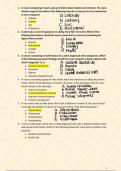
1. A nurse is preparing to teach a group of clients about vitamins and minerals. The nurse
should recognize that which of the following minerals is necessary for the transmission
of nerve impulses?
a. Chloride
b. Calcium
c. Zinc
d. Phosphorus
2. A client asks a nurse for guidance on adding more fiber to his diet. Which of the
following food choices should the nurse recommend as a source of containing the
highest fiber content?
a. Broccoli
b. Kidney bean
c. Oranges
d. Prunes
3. A nurse is conducting a health history for a client diagnosed with osteoporosis. Which
of the following assessment findings should the nurse recognize as being related to the
client’s diagnosis? Pg 16
a. Excessive alcohol use
b. Dementia
c. Obesity
d. Elevated cholesterol level
4. A nurse is educating a group of older adults about the importance of adequate protein
intake. Which of the following is a function of protein in this population that the nurse
should include in the teaching?
a. Improve circulation
b. Prevents Alzheimer’s disease
c. Improves immune response
d. Prevents osteoporosis
5. A nurse notes that an older adult client’s diet is deficient in vitamin D. the nurse should
encourage the addition of vitamin D to prevent which of the following disease?
a. Osteomalacia
b. Thalassemia
c. Keratomalacia
d. Xeropthalmia
6. A nurse is educating a client who is newly diagnosed with type 2 diabetes mellitus about
appropriate food choices. Which of the following should the nurse plan to include in the
teaching?
a. Breaded chicken breast
b. Broiled fish
1
, c. Cream of broccoli soup
d. Sautéed mushrooms
7. A nurse is providing teaching about a weight reduction plan for a client who is obese and
has type 2 diabetes mellitus. Which of the following statements made by the client
indicates an understanding of the teaching?
a. “I need to lose 5% of my body weight to improve my glycemic control”.
b. “if my blood glucose level drops during exercise, I should drink 16 ounces of
apple juice”.
c. “I must exercise for 30 minutes three times a week to lose 1 lb per week”.
d. “I should reduce my caloric intake by 200 calories a day to lose 1 lb a week”.
8. A nurse is providing a dietary teaching to a client newly diagnosed with celiac disease.
Which of the following should the nurse include in the teaching?
a. “A normal diet may resume after a period of remission”.
b. “Dietary restrictions will eventually allow the intake of gluten to resume”.
c. “nutritional therapy for this condition includes limiting proteins and calories”.
d. “this condition may cause secondary lactose intoleranc e”.
9. A nurse is caring for a client who has chronic dehydration. Which of the following foods
should the nurse recommend the client to consume on a regular basis to most
effectively increase fluid intake”?
a. Cottage cheese
b. Sweet potato
c. Tomatoes
d. Beans
10. A nurse is caring for a client who consumed 40,000 mcg of vitamin A daily for 3 months.
Which of the following findings is an indication that the client is developing vitamin A
toxicity?
a. Abdominal pain
b. Moon face
c. Double vision
d. Tachycardia
11. A nurse is teaching participants in a nutrition class about reading canned food labels. A
label for canned stew indicates that a serving contains 348 calories and 25g protein.
There are 4 calories/g for protein. Which of the following is the percent of the total
calories obtained from protein?
a. 25
b. 56
c. 64.7
d. 28.7
12. During a community health fair, a nurse discusses dietary choices with a client who is
Jewish. Which of the following cultural factors should the nurse consider when providing
dietary teaching?
2